


The brain metabolite kynurenic acid inhibits alpha7 nicotinic receptor activity and increases non-alpha7 nicotinic receptor expression: physiopathological implications
- PMID: 11567036
- PMCID: PMC6762893
- DOI: 10.1523/JNEUROSCI.21-19-07463.2001
The brain metabolite kynurenic acid inhibits alpha7 nicotinic receptor activity and increases non-alpha7 nicotinic receptor expression: physiopathological implications
Abstract
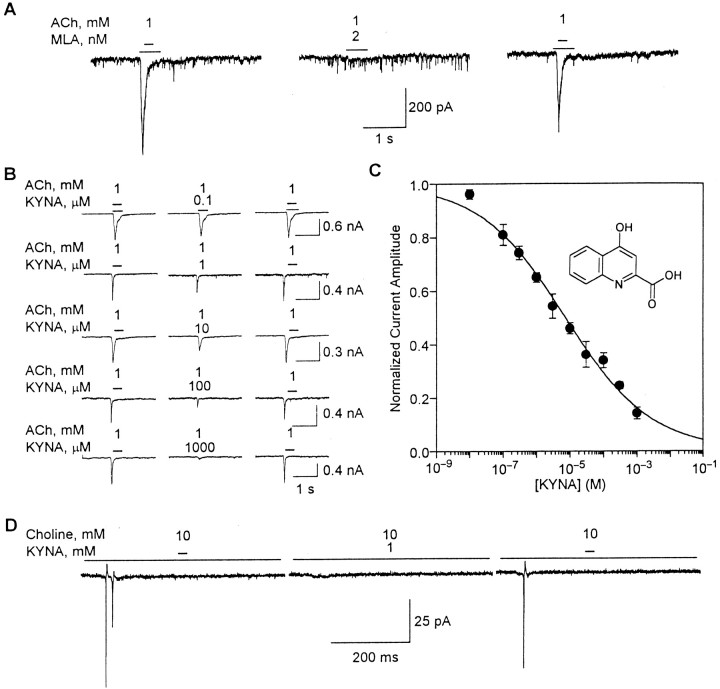
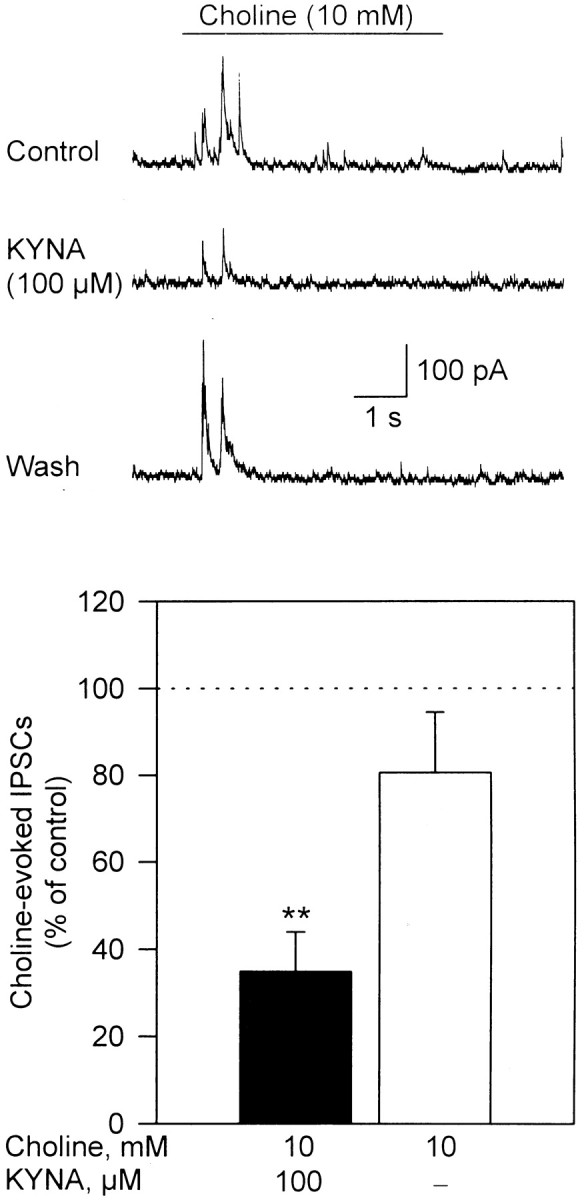
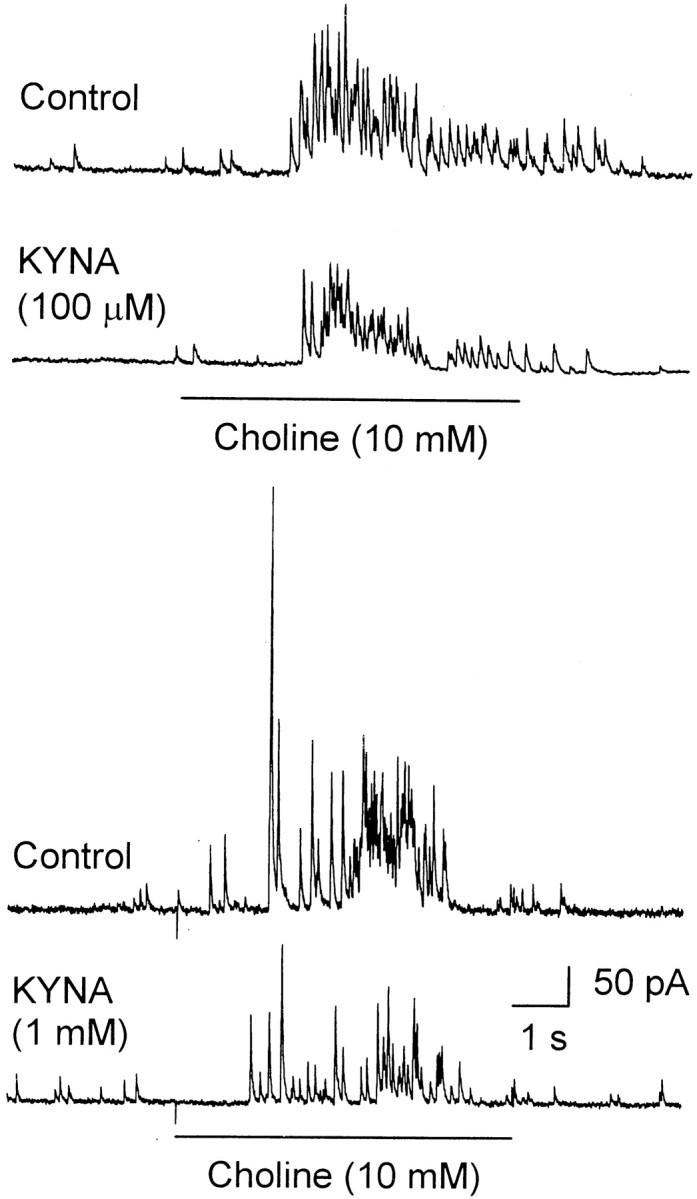
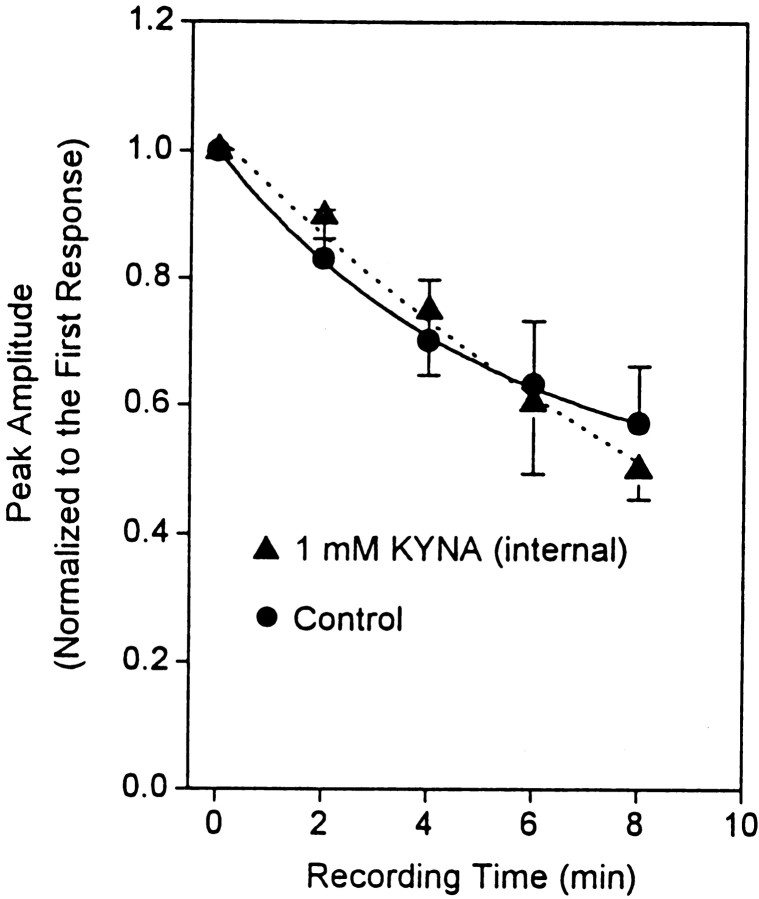
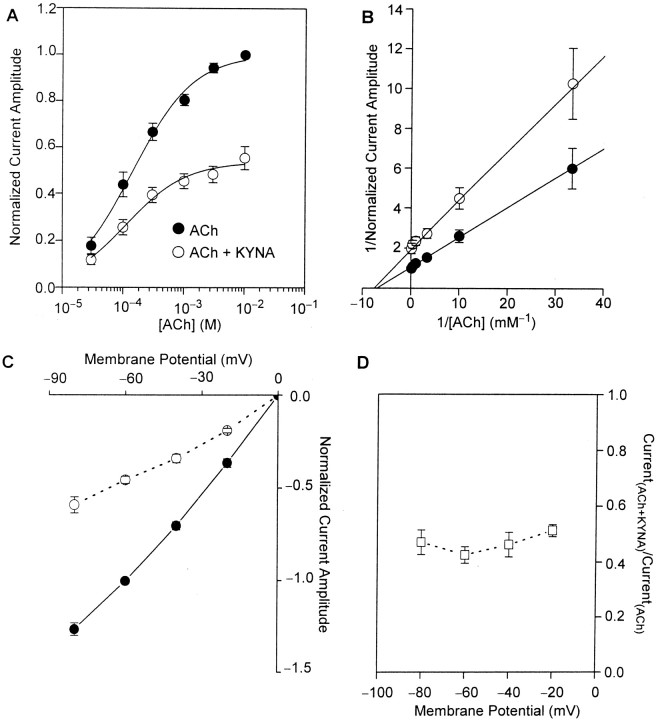
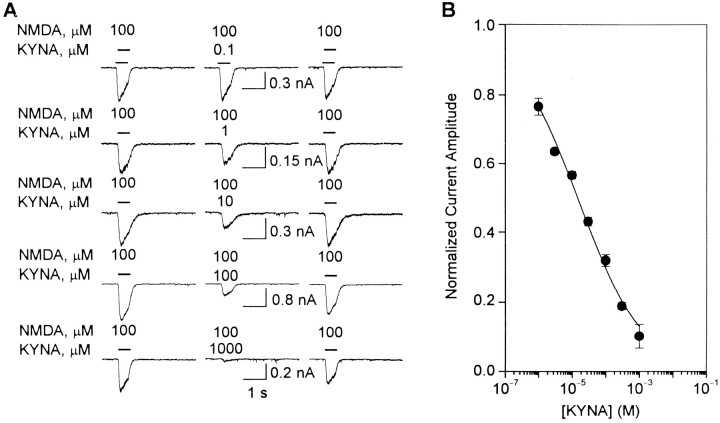
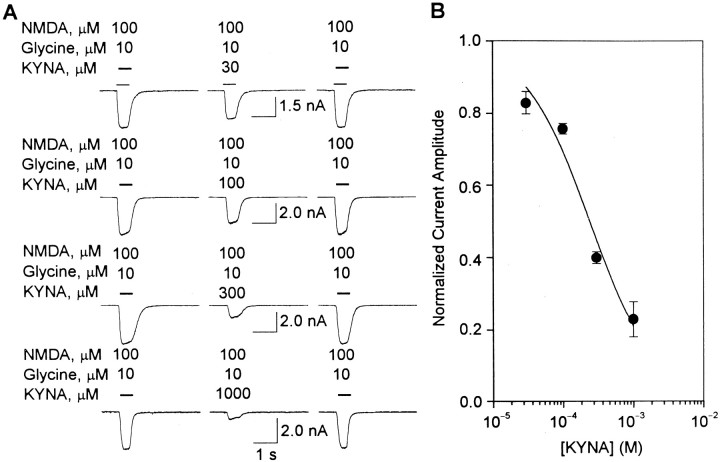
The tryptophan metabolite kynurenic acid (KYNA) has long been recognized as an NMDA receptor antagonist. Here, interactions between KYNA and the nicotinic system in the brain were investigated using the patch-clamp technique and HPLC. In the electrophysiological studies, agonists were delivered via a U-shaped tube, and KYNA was applied in admixture with agonists and via the background perfusion. Exposure (>/=4 min) of cultured hippocampal neurons to KYNA (>/=100 nm) inhibited activation of somatodendritic alpha7 nAChRs; the IC(50) for KYNA was approximately 7 microm. The inhibition of alpha7 nAChRs was noncompetitive with respect to the agonist and voltage independent. The slow onset of this effect could not be accounted for by an intracellular action because KYNA (1 mm) in the pipette solution had no effect on alpha7 nAChR activity. KYNA also blocked the activity of preterminal/presynaptic alpha7 nAChRs in hippocampal neurons in cultures and in slices. NMDA receptors were less sensitive than alpha7 nAChRs to KYNA. The IC(50) values for KYNA-induced blockade of NMDA receptors in the absence and presence of glycine (10 microm) were approximately 15 and 235 microm, respectively. Prolonged (3 d) exposure of cultured hippocampal neurons to KYNA increased their nicotinic sensitivity, apparently by enhancing alpha4beta2 nAChR expression. Furthermore, as determined by HPLC with fluorescence detection, repeated systemic treatment of rats with nicotine caused a transient reduction followed by an increase in brain KYNA levels. These results demonstrate that nAChRs are targets for KYNA and suggest a functionally significant cross talk between the nicotinic cholinergic system and the kynurenine pathway in the brain.
Figures
References
-
- Albuquerque EX, Alkondon M, Pereira EFR, Castro NG, Schrattenholz A, Barbosa CTF, Bonfante-Cabarcas R, Aracava Y, Eisenberg HM, Maelicke A. Properties of neuronal nicotinic acetylcholine receptors: pharmacological characterization and modulation of synaptic function. J Pharmacol Exp Ther. 1997;280:1117–1136. - PubMed
-
- Alkondon M, Albuquerque EX. Diversity of nicotinic acetylcholine receptors in rat hippocampal neurons. I. Pharmacological and functional evidence for distinct structural subtypes. J Pharmacol Exp Ther. 1993;265:1455–1473. - PubMed
-
- Alkondon M, Pereira EFR, Almeida LEF, Randall WR, Albuquerque EX. Nicotine at concentrations found in cigarette smokers activates and desensitizes nicotinic acetylcholine receptors in CA1 interneurons of rat hippocampus. Neuropharmacology. 2000;39:2726–2739. - PubMed
-
- Almeida LEF, Pereira EFR, Alkondon M, Fawcett WP, Randall WR, Albuquerque EX. The opioid antagonist naltrexone inhibits activity and alters expression of α7 and α4β2 nicotinic receptors: implications for smoking cessation programs. Neuropharmacology. 2000;39:2740–2755. - PubMed
Publication types
MeSH terms
Substances
Grants and funding
LinkOut - more resources
Full Text Sources
Other Literature Sources
Medical
