


Migratory properties of naive, effector, and memory CD8(+) T cells
- PMID: 11581317
- PMCID: PMC2193483
- DOI: 10.1084/jem.194.7.953
Migratory properties of naive, effector, and memory CD8(+) T cells
Abstract
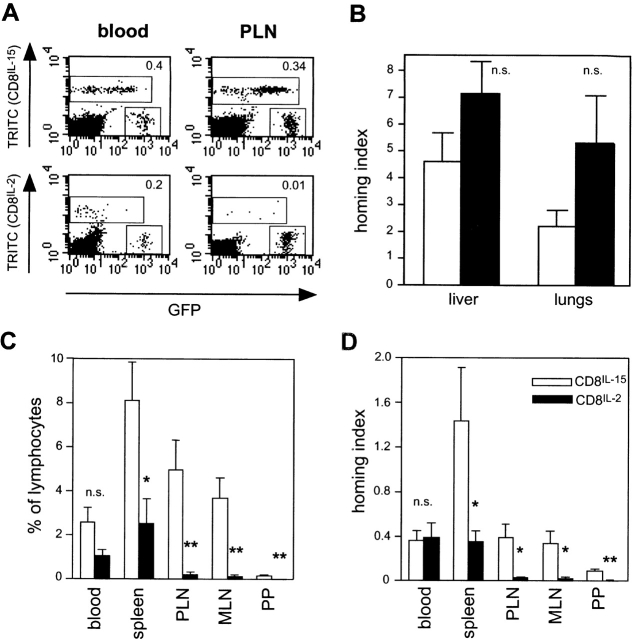
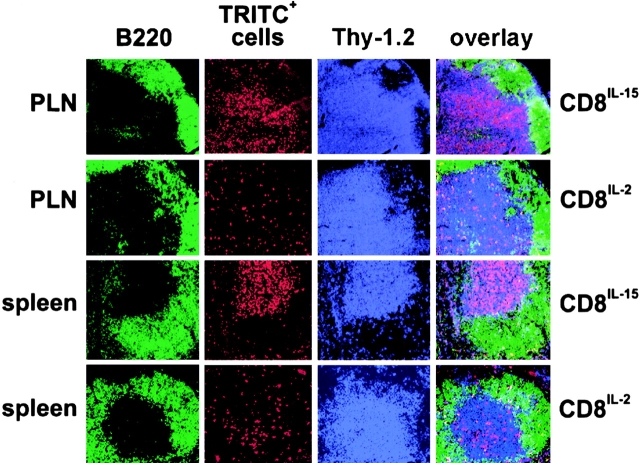
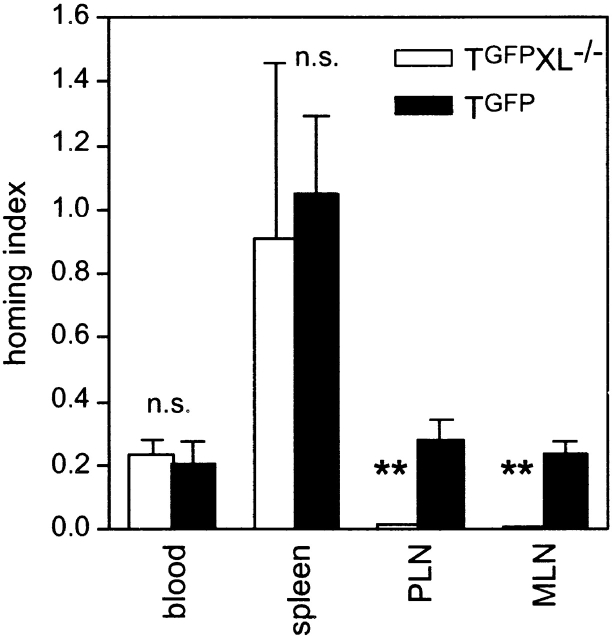
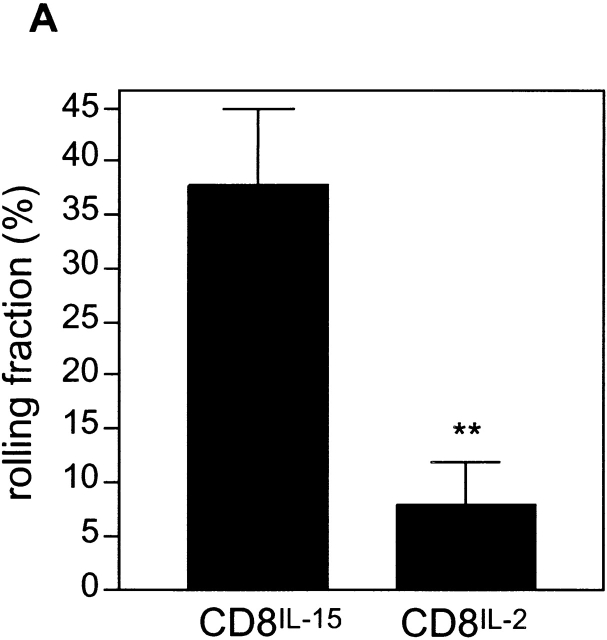
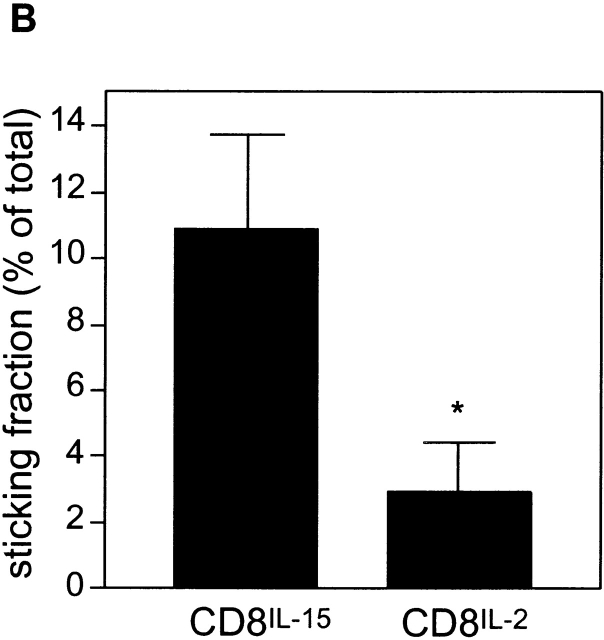
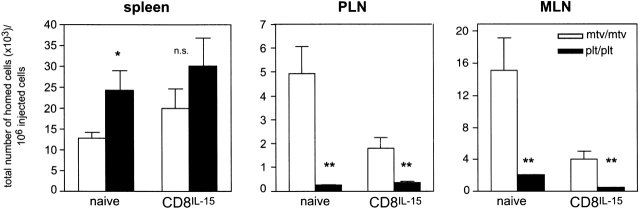
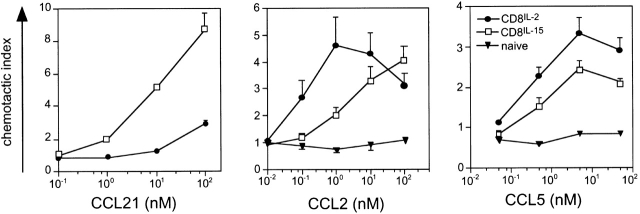
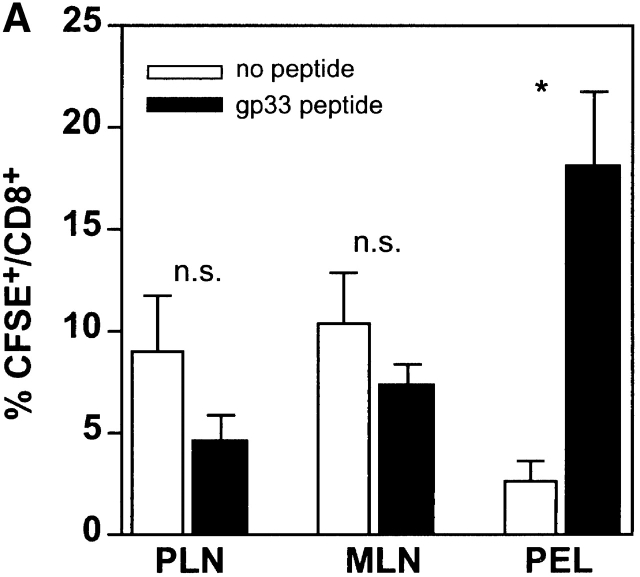
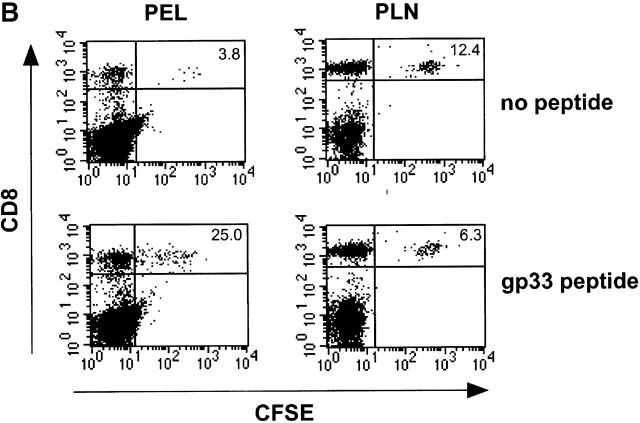
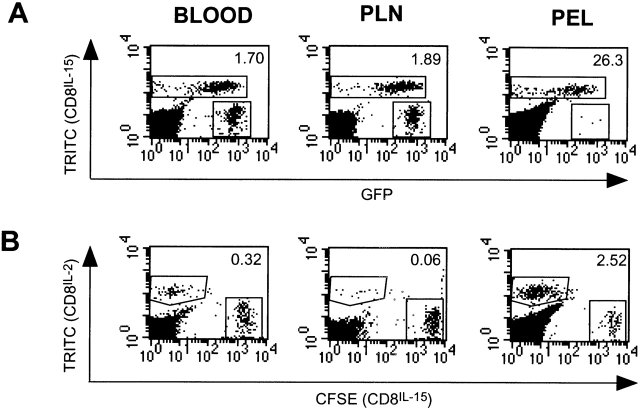
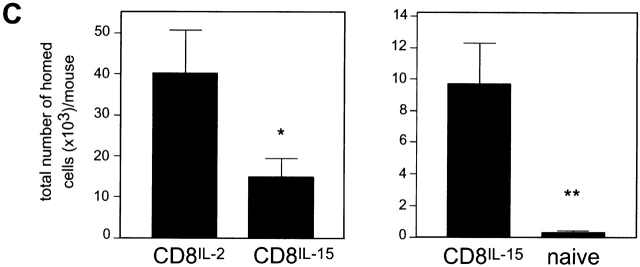
It has been proposed that two different antigen-experienced T cell subsets may be distinguishable by their preferential ability to home to lymphoid organs (central memory cells) or nonlymphoid tissues (effector memory/effector cells). We have shown recently that murine antigen-primed CD8(+) T cells cultured in interleukin (IL)-15 (CD8(IL-15)) resemble central memory cells in phenotype and function. In contrast, primed CD8(+) T cells cultured in IL-2 (CD8(IL-2)) become cytotoxic effector cells. Here, the migratory behavior of these two subsets was investigated. Naive, CD8(IL-15) cells and, to a lesser degree, CD8(IL-2) cells localized to T cell areas in the spleen, but only naive and CD8(IL-15) cells homed to lymph nodes (LNs) and Peyer's patches. Intravital microscopy of peripheral LNs revealed that CD8(IL-15) cells, but not CD8(IL-2) cells, rolled and arrested in high endothelial venules (HEVs). Migration of CD8(IL-15) cells to LNs depended on L-selectin and required chemokines that bind CC chemokine receptor (CCR)7. Both antigen-experienced populations, but not naive T cells, responded to inflammatory chemokines and accumulated at sites of inflammation. However, CD8(IL-2) cells were 12 times more efficient in migrating to inflamed peritoneum than CD8(IL-15) cells. Furthermore, CD8(IL-15) cells proliferated rapidly upon reencounter with antigen at sites of inflammation. Thus, central memory-like CD8(IL-15) cells home avidly to lymphoid organs and moderately to sites of inflammation, where they mediate rapid recall responses, whereas CD8(IL-2) effector T cells accumulate in inflamed tissues, but are excluded from most lymphoid organs.
Figures
References
-
- Butcher E.C., Picker L.J. Lymphocyte homing and homeostasis. Science. 1996;272:60–66. - PubMed
-
- von Andrian U.H., Mackay C.R. T-cell function and migration. Two sides of the same coin. N. Engl. J. Med. 2000;343:1020–1034. - PubMed
-
- Kagi D., Ledermann B., Burki K., Zinkernagel R.M., Hengartner H. Molecular mechanisms of lymphocyte-mediated cytotoxicity and their role in immunological protection and pathogenesis in vivo. Annu. Rev. Immunol. 1996;14:207–232. - PubMed
-
- Clark W.R., Walsh C.M., Glass A.A., Hayashi F., Matloubian M., Ahmed R. Molecular pathways of CTL-mediated cytotoxicity. Immunol. Rev. 1995;146:33–44. - PubMed
-
- Springer T.A. Traffic signals for lymphocyte recirculation and leukocyte emigrationThe multi-step paradigm. Cell. 1994;76:301–314. - PubMed
Publication types
MeSH terms
Substances
Grants and funding
LinkOut - more resources
Full Text Sources
Other Literature Sources
Research Materials
