


The Hsp90 family of proteins in Arabidopsis thaliana
- PMID: 11599565
- PMCID: PMC434405
- DOI: 10.1379/1466-1268(2001)006<0238:thfopi>2.0.co;2
The Hsp90 family of proteins in Arabidopsis thaliana
Abstract
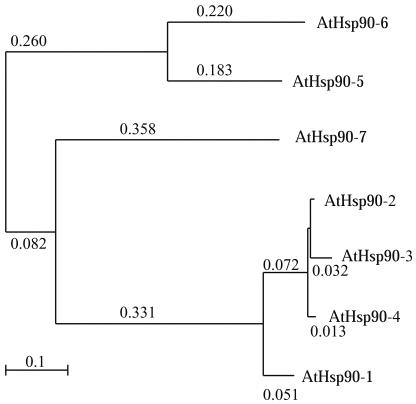
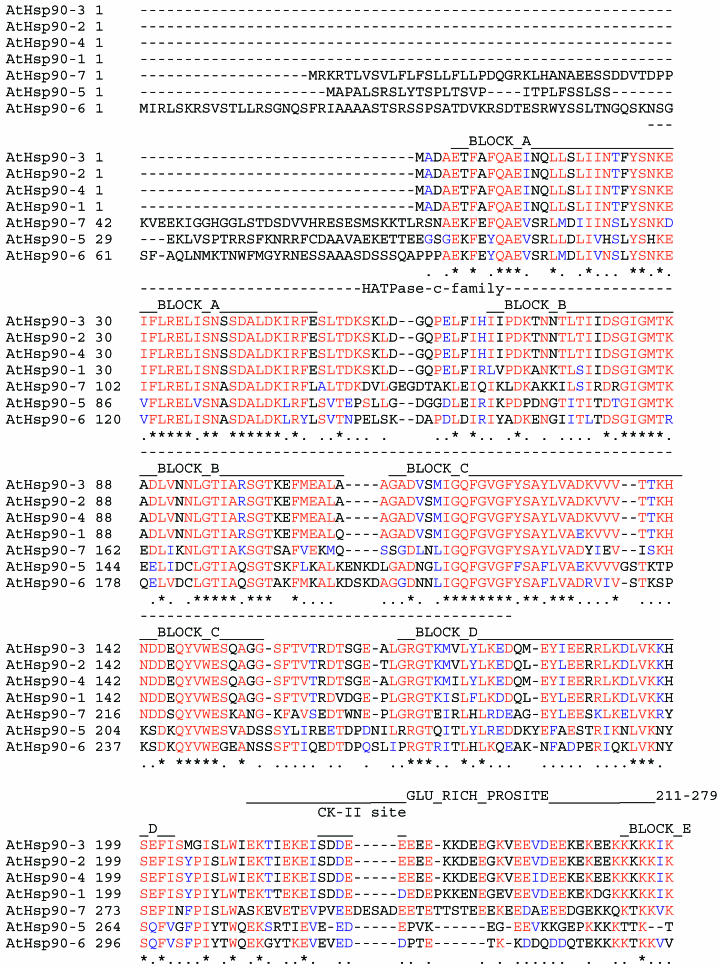
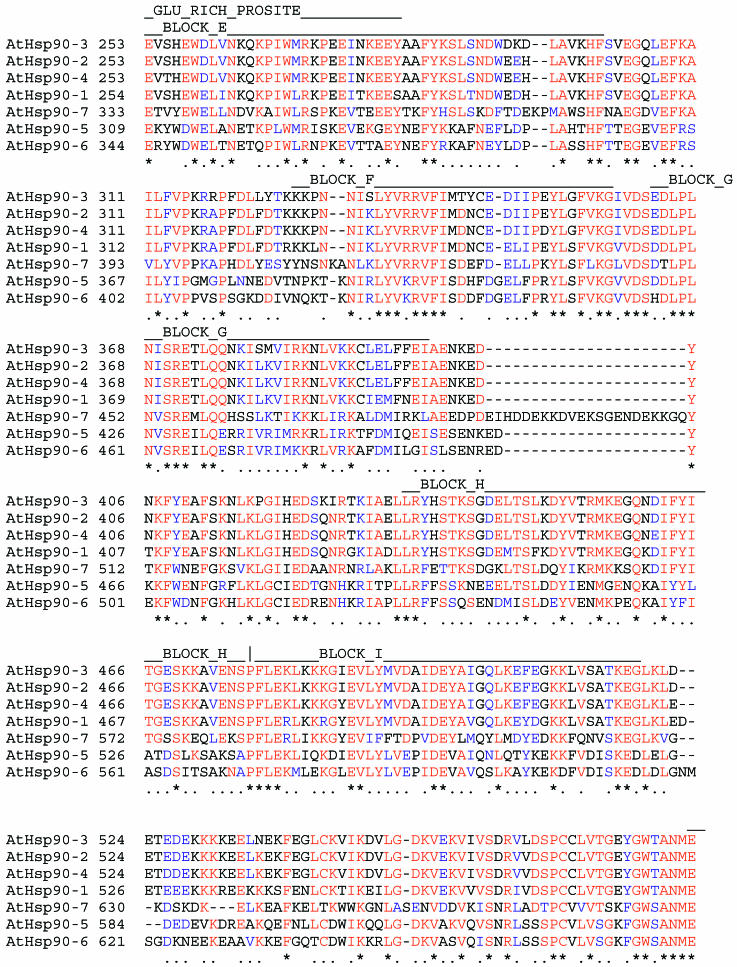
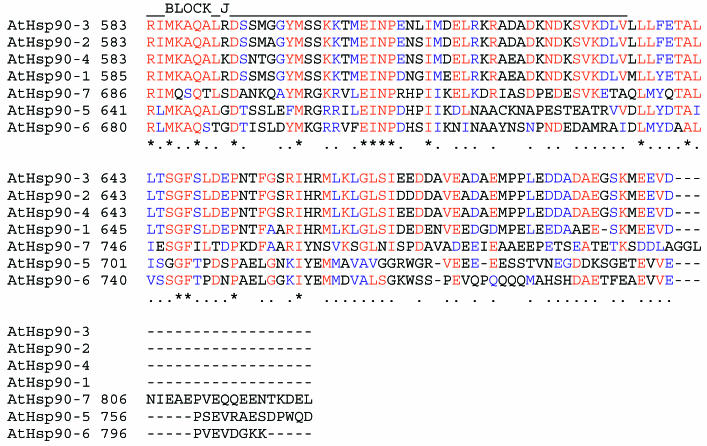
The 90-kDa heat shock protein (Hsp90) is an essential molecular chaperone in eukaryotic cells, with key roles in the folding and activation of proteins involved in signal transduction and control of the cell cycle. A search for Hsp90 sequences in the Arabidopsis thaliana genome revealed that this family includes 7 members. The AtHsp90-1 through AtHsp90-4 proteins constitute the cytoplasmic subfamily, whereas the AtHsp90-5, AtHsp90-6, and AtHsp90-7 proteins are predicted to be within the plastidial, mitochondrial, and endoplasmic reticulum compartments, respectively. The deduced amino acid sequences of each of the cytoplasmic proteins contains the highly conserved C-terminal pentapeptide MEEVD. All of the AtHsp90 sequences include a conserved adenosine triphosphate-binding domain, whereas only the cytoplasmic and endoplasmic reticulum-resident sequences include an adjacent charged linker domain that is common in mammalian and yeast sequences. The occurrence of multiple AtHsp90 proteins in the cytoplasm and of family members in other subcellular compartments suggests a range of specific functions and target polypeptides.
Figures
References
-
- The Arabidopsis Genome Initiative. Analysis of the genome sequence of the flowering plant. Arabidopsis thaliana. Nature. 2000;408:796–815. - PubMed
-
- Buchner J. Hsp90 & Co.: a holding for folding. Trends Biochem Sci. 1999;24:136–141. - PubMed
-
- Cadepond F, Jibard N, Binart N, Schweizer-Groyer G, Segard-Maurel I, Baulieu E-E. Selective deletions in the 90 kDa heat shock protein (Hsp90) impede heterooligomeric complex formation with the glucocorticosteroid receptor (GR) or hormone binding by GR. J Steroid Biochem Mol Biol. 1994;48:361–367. - PubMed
-
- Claros MG, Vincens P. Computational method to predict mitochondrially imported proteins and their targeting sequences. Eur J Biochem. 1996;241:779–786. - PubMed
MeSH terms
Substances
LinkOut - more resources
Full Text Sources
Molecular Biology Databases
Research Materials