


Genetic engineering of Escherichia coli for enhanced uptake and bioaccumulation of mercury
- PMID: 11679366
- PMCID: PMC93311
- DOI: 10.1128/AEM.67.11.5335-5338.2001
Genetic engineering of Escherichia coli for enhanced uptake and bioaccumulation of mercury
Abstract
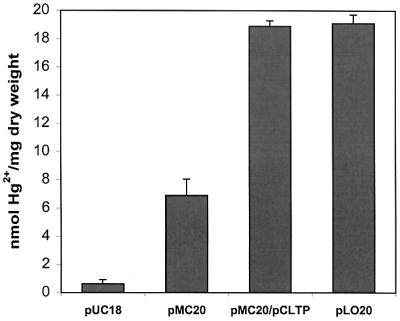
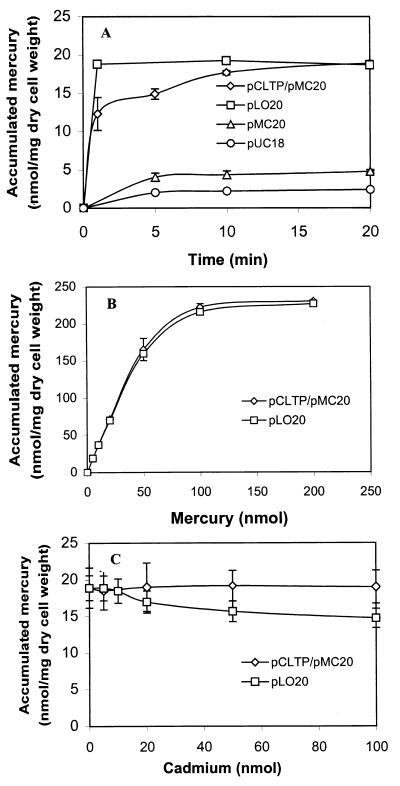
Synthetic phytochelatins (ECs) are a new class of metal-binding peptides with a repetitive metal-binding motif, (Glu-Cys)(n)Gly, which were shown to bind heavy metals more effectively than metallothioneins. However, the limited uptake across the cell membrane is often the rate-limiting factor for the intracellular bioaccumulation of heavy metals by genetically engineered organisms expressing these metal-binding peptides. In this paper, two potential solutions were investigated to overcome this uptake limitation either by coexpressing an Hg(2+) transport system with (Glu-Cys)(20)Gly (EC20) or by directly expressing EC20 on the cell surface. Both approaches were equally effective in increasing the bioaccumulation of Hg(2+). Since the available transport systems are presently limited to only a few heavy metals, our results suggest that bioaccumulation by bacterial sorbents with surface-expressed metal-binding peptides may be useful as a universal strategy for the cleanup of heavy metal contamination.
Figures
References
-
- Bae W, Chen W, Mulchandani A, Mehra R. Enhanced bioaccumulation of heavy metals by bacterial cells displaying synthetic phytochelatins. Biotechnol Bioeng. 2000;70:518–523. - PubMed
-
- Chen S, Wilson D B. Genetic engineering of bacteria and their potential for Hg2+ bioremediation. Biodegradation. 1997;8:97–103. - PubMed
-
- Harada M. Minamata disease: methylmercury poisoning in Japan caused by environmental pollution. Crit Rev Toxicol. 1995;25:1–24. - PubMed
Publication types
MeSH terms
Substances
LinkOut - more resources
Full Text Sources
Other Literature Sources
Medical
