


Clinical and environmental isolates of Vibrio cholerae serogroup O141 carry the CTX phage and the genes encoding the toxin-coregulated pili
- PMID: 11682534
- PMCID: PMC88491
- DOI: 10.1128/JCM.39.11.4086-4092.2001
Clinical and environmental isolates of Vibrio cholerae serogroup O141 carry the CTX phage and the genes encoding the toxin-coregulated pili
Abstract
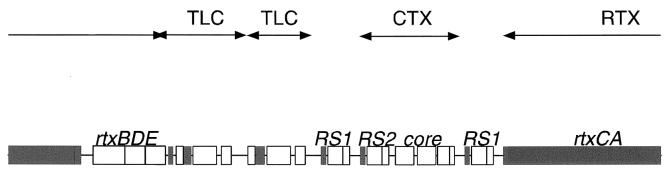
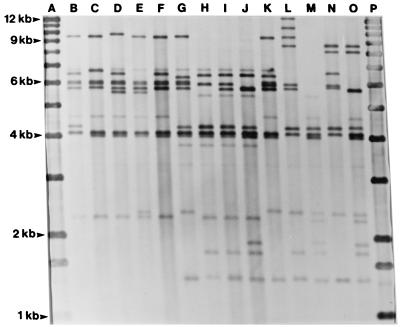
We report sporadic cases of a severe gastroenteritis associated with Vibrio cholerae serogroup O141. Like O1 and O139 serogroup strains of V. cholerae isolated from cholera cases, the O141 clinical isolates carry DNA sequences that hybridize to cholera toxin (CT) gene probes. The CT genes of O1 and O139 strains are carried by a filamentous bacteriophage (termed CTX phage) which is known to use toxin-coregulated pili (TCP) as its receptor. In an effort to understand the mechanism of emergence of toxigenic O141 V. cholerae, we probed a collection of O141 clinical and environmental isolates for genes involved in TCP production, toxigenicity, virulence regulation, and other phylogenetic markers. The collection included strains isolated between 1964 and 1995 from diverse geographical locations, including eight countries and five U.S. states. Information collected about the clinical and environmental sources of these isolates suggests that they had no epidemiological association. All clinical O141 isolates hybridized to probes specific for genes encoding CT (ctx), zonula occludens toxin (zot), repetitive sequence 1 (RS1), RTX toxin (rtxA), the major subunit of TCP (tcpA), and the essential regulatory gene that controls expression of both CT and TCP (toxR). In contrast, all but one of the nonclinical O141 isolates were negative for ctx, zot, RS1, and tcpA, although these strains were positive for rtxA and toxR. The one toxigenic environmental O141 isolate was also positive for tcpA. Ribotyping and CT typing showed that the O141 clinical isolates were indistinguishable or closely related, while a toxigenic water isolate from Louisiana showed a distantly related ribotype. Nonclinical O141 isolates displayed a variety of unrelated ribotypes. These data support a model for emergence of toxigenic O141 that involves acquisition of the CTX phage sometime after these strains had acquired the pathogenicity island encoding TCP. The clonal nature of toxigenic O141 strains isolated from diverse geographical locations suggests that the emergence is a rare event but that once it occurs, toxigenic O141 strains are capable of regional and perhaps even global dissemination. This study stresses the importance of monitoring V. cholerae non-O1, non-O139 serogroup strains for their virulence gene content as a means of assessing their epidemic potential.
Figures
References
-
- Braun V, Schonherr R, Hobbie S. Enterobacterial hemolysins: activation, secretion and pore formation. Trends Microbiol. 1993;1:211–216. - PubMed
Publication types
MeSH terms
Substances
Grants and funding
LinkOut - more resources
Full Text Sources
Medical
