


Reducing the native tropism of adenovirus vectors requires removal of both CAR and integrin interactions
- PMID: 11689608
- PMCID: PMC114713
- DOI: 10.1128/JVI.75.23.11284-11291.2001
Reducing the native tropism of adenovirus vectors requires removal of both CAR and integrin interactions
Abstract
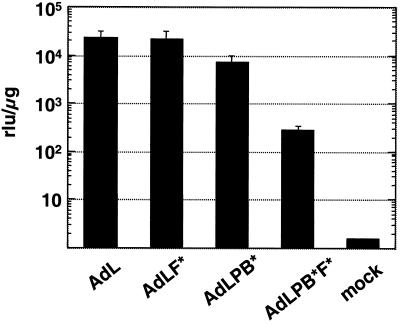
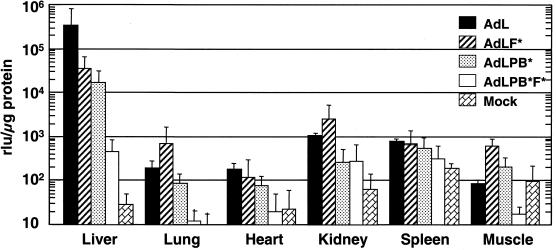
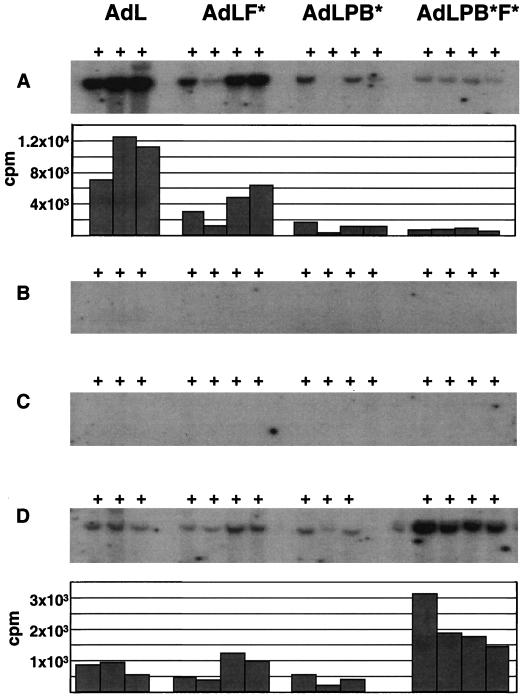
The development of tissue-selective virus-based vectors requires a better understanding of the role of receptors in gene transfer in vivo, both to rid the vectors of their native tropism and to introduce new specificity. CAR and alphav integrins have been identified as the primary cell surface components that interact with adenovirus type 5 (Ad5)-based vectors during in vitro transduction. We have constructed a set of four vectors, which individually retain the wild-type cell interactions, lack CAR binding, lack alphav integrin binding, or lack both CAR and alphav integrin binding. These vectors have been used to examine the roles of CAR and alphav integrin in determining the tropism of Ad vectors in a mouse model following intrajugular or intramuscular injection. CAR was found to play a significant role in liver transduction. The absence of CAR binding alone, however, had little effect on the low level of expression from Ad in other tissues. Binding of alphav integrins appeared to have more influence than did binding of CAR in promoting the expression in these tissues and was also found to be important in liver transduction by Ad vectors. An effect of the penton base modification was a reduction in the number of vector genomes that could be detected in several tissues. In the liver, where CAR binding is important, combining defects in CAR and alphav integrin binding was essential to effectively reduce the high level of expression from Ad vectors. While there may be differences in Ad vector tropism among species, our results indicate that both CAR and alphav integrins can impact vector distribution in vivo. Disruption of both CAR and alphav integrin interactions may be critical for effectively reducing native tropism and enhancing the efficacy of specific targeting ligands in redirecting Ad vectors to target tissues.
Figures
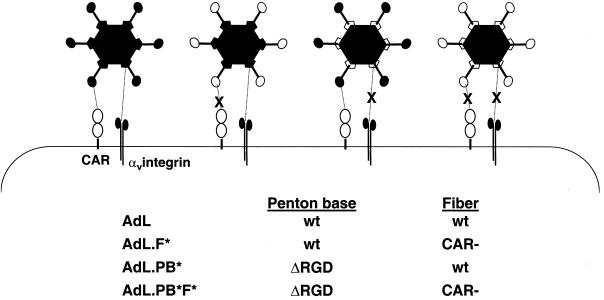
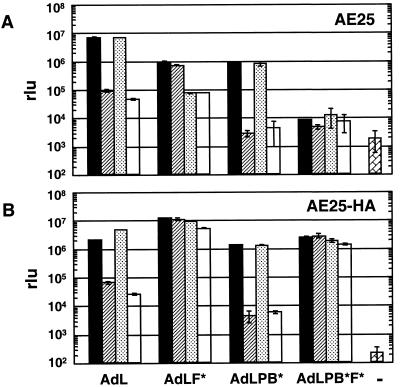
 , fiber; ░⃞, penton base;
□, fiber plus penton base.
, fiber; ░⃞, penton base;
□, fiber plus penton base.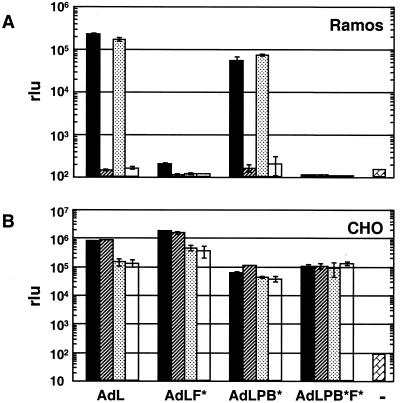
References
-
- Alemany R, Suzuki K, Curiel D T. Blood clearance rates of adenovirus type 5 in mice. J Gen Virol. 2000;81:2605–2609. - PubMed
-
- Arap W, Pasqualini R, Ruoslahti E. Cancer treatment by targeted drug delivery to tumor vasculature in a mouse model. Science. 1998;279:377–380. - PubMed
-
- Cho W K, Ebihara S, Nalbantoglu J, Gilbert R, Massie B, Holland P, Karpati G, Petrof B J. Modulation of Starling forces and muscle fiber maturity permits adenovirus-mediated gene transfer to adult dystrophic (mdx) mice by the intravascular route. Hum Gene Ther. 2000;11:701–714. - PubMed
MeSH terms
Substances
LinkOut - more resources
Full Text Sources
Other Literature Sources
