


Lesions of the basolateral amygdala disrupt selective aspects of reinforcer representation in rats
- PMID: 11698612
- PMCID: PMC6762271
- DOI: 10.1523/JNEUROSCI.21-22-09018.2001
Lesions of the basolateral amygdala disrupt selective aspects of reinforcer representation in rats
Abstract
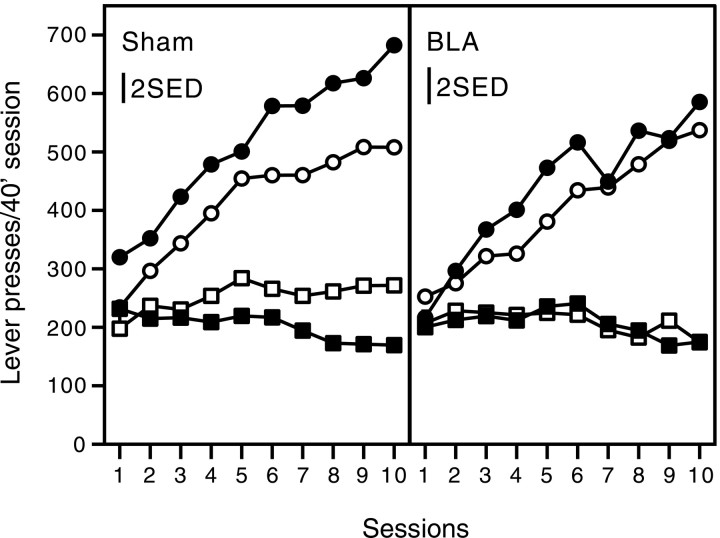
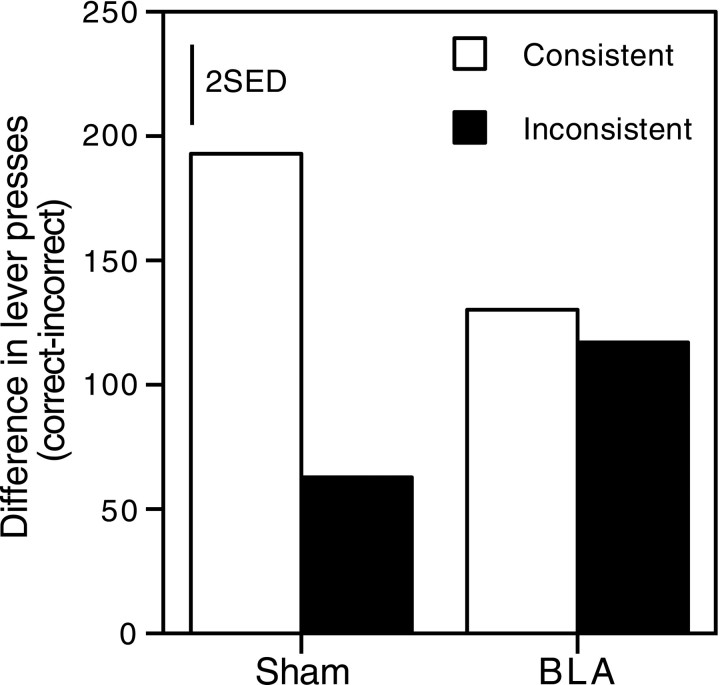
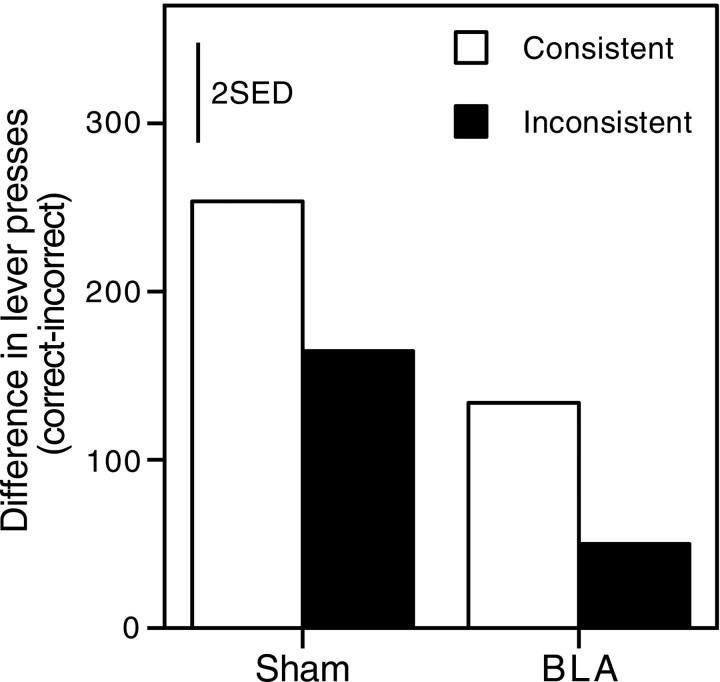
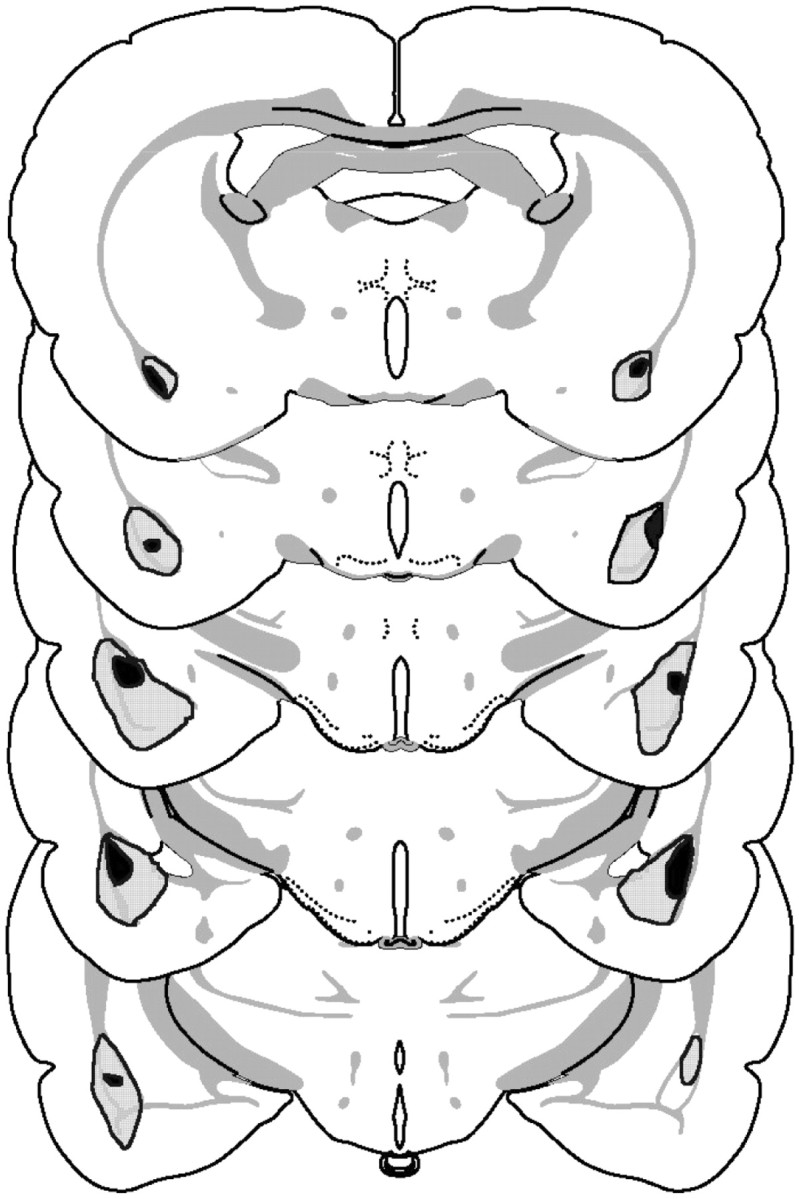
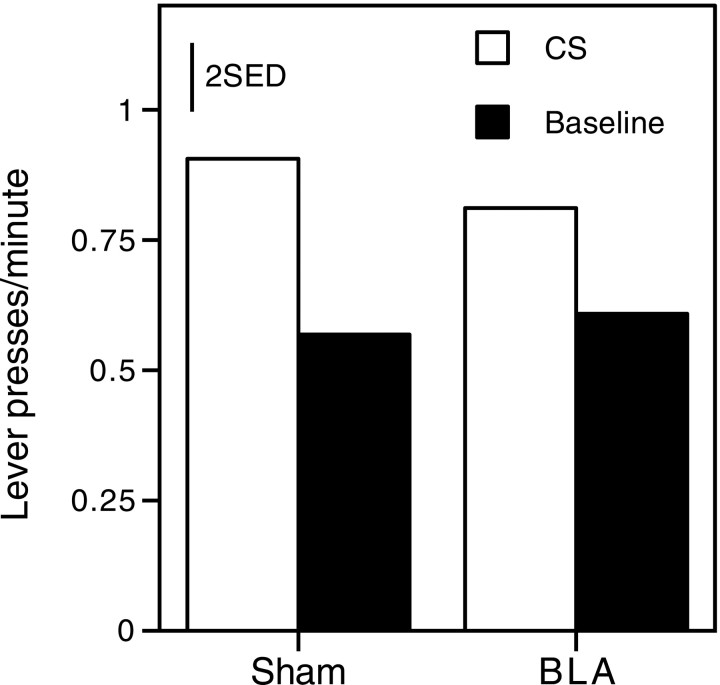
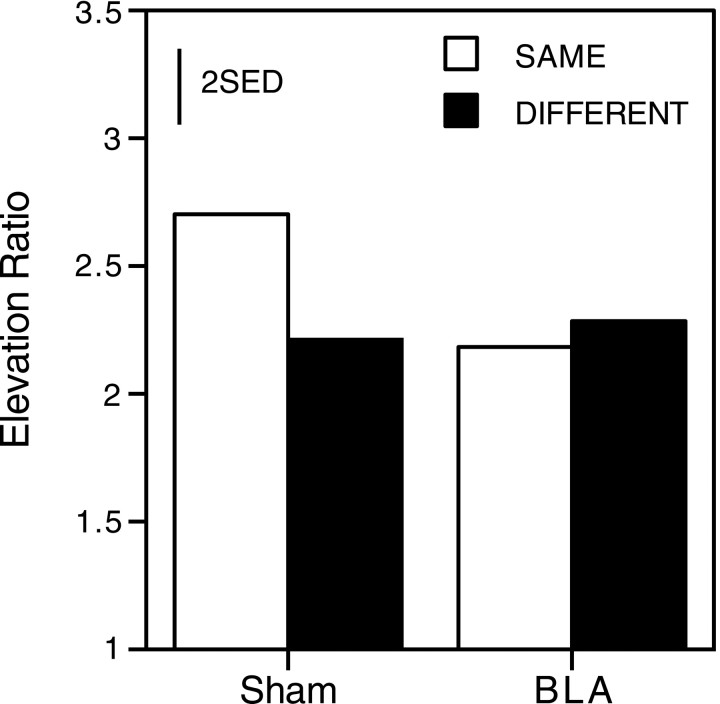
The amygdala is known to play a role in learning about motivationally significant events. We investigated this role further by examining the effects of excitotoxic lesions of the basolateral amygdala on the ability of rats to use instrumental outcomes to direct responding (the differential outcomes effect) and on the ability of Pavlovian cues to modulate instrumental performance based on shared outcomes (reinforcer-selective Pavlovian-to-instrumental transfer). We found that basolateral amygdala (BLA) lesions did not affect the ability of rats to learn a basic instrumental conditional discrimination, but did disrupt the ability of differential outcomes to facilitate acquisition. In Pavlovian-to-instrumental transfer, BLA lesions did not disrupt the basic enhancement of instrumental performance but did abolish the reinforcer specificity of that enhancement. These results suggest that the BLA is involved in the representation of the sensory aspects of motivationally significant events.
Figures
References
-
- Alderson HL, Robbins TW, Everitt BJ. The effects of excitotoxic lesions of the basolateral amygdala on the acquisition of heroin-seeking behavior in rats. Psychopharmacology. 2000;153:111–119. - PubMed
-
- Balleine BW. Asymmetrical interactions between thirst and hunger in Pavlovian-instrumental transfer. Q J Exp Psychol. 1994;47B:211–231. - PubMed
-
- Balleine BW. Incentive processes in instrumental conditioning. In: Mowrer RR, Klein SB, editors. Handbook of contemporary learning theories. Lawrence Erlbaum; Mahwah, NJ: 2000. pp. 307–366.
-
- Balleine BW, Dickinson A. The role of incentive learning in instrumental outcome revaluation by specific satiety. Anim Learn Behav. 1998a;26:46–59.
-
- Balleine BW, Dickinson A. Goal-directed instrumental action: contingency and incentive learning and their cortical substrates. Neuropsychopharmacology. 1998b;37:407–419. - PubMed
Publication types
MeSH terms
Substances
LinkOut - more resources
Full Text Sources
