


Mutation frequency and biological cost of antibiotic resistance in Helicobacter pylori
- PMID: 11717398
- PMCID: PMC64729
- DOI: 10.1073/pnas.241517298
Mutation frequency and biological cost of antibiotic resistance in Helicobacter pylori
Abstract
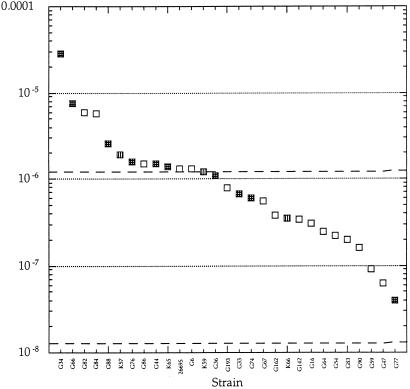
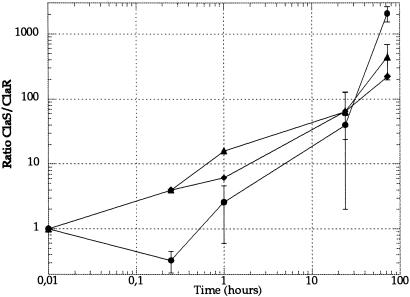
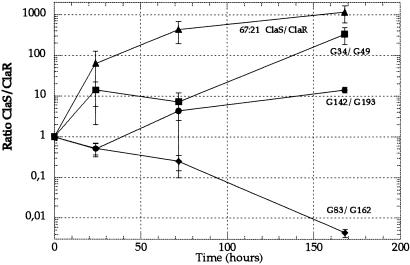
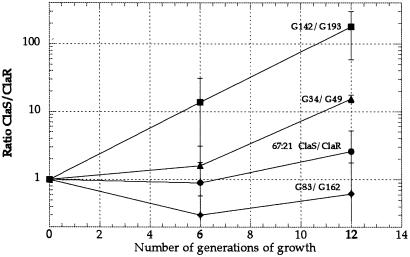
Among the several factors that affect the appearance and spread of acquired antibiotic resistance, the mutation frequency and the biological cost of resistance are of special importance. Measurements of the mutation frequency to rifampicin resistance in Helicobacter pylori strains isolated from dyspeptic patients showed that approximately 1/4 of the isolates had higher mutation frequencies than Enterobacteriaceae mismatch-repair defective mutants. This high mutation frequency could explain why resistance is so frequently acquired during antibiotic treatment of H. pylori infections. Inactivation of the mutS gene had no substantial effect on the mutation frequency, suggesting that MutS-dependent mismatch repair is absent in this bacterium. Furthermore, clarithromycin resistance conferred a biological cost, as measured by a decreased competitive ability of the resistant mutants in mice. In clinical isolates this cost could be reduced, indicating that compensation is a clinically relevant phenomenon that could act to stabilize resistant bacteria in a population.
Figures
References
-
- Parsonnet J, Friedman G D, Vandersteen D P, Chang Y, Vogelman J H, Orentreich N, Sibley R K. New Engl J Med. 1991;325:1127–1131. - PubMed
-
- Graham D Y, Go M F, Genta R M. Ann Med. 1995;27:89–94.
-
- de Boer A W, Tytgat G N J. Brit Med J. 2000;320:31–34.
Publication types
MeSH terms
Substances
LinkOut - more resources
Full Text Sources
