


Staphylococcus aureus isolated in cases of impetigo produces both epidermolysin A or B and LukE-LukD in 78% of 131 retrospective and prospective cases
- PMID: 11724844
- PMCID: PMC88548
- DOI: 10.1128/JCM.39.12.4349-4356.2001
Staphylococcus aureus isolated in cases of impetigo produces both epidermolysin A or B and LukE-LukD in 78% of 131 retrospective and prospective cases
Abstract
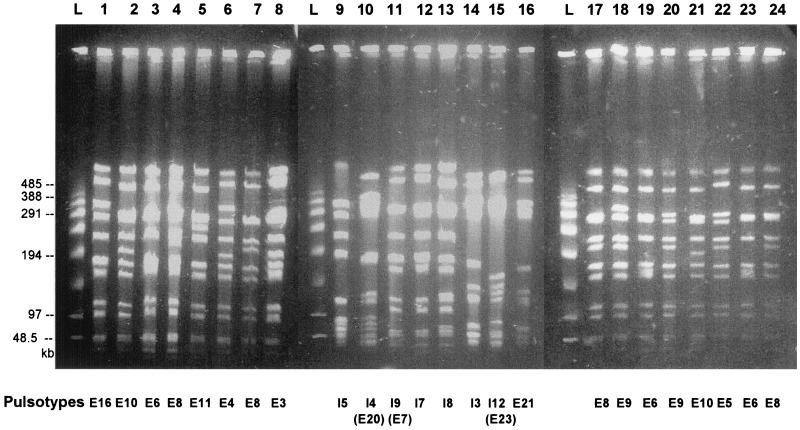
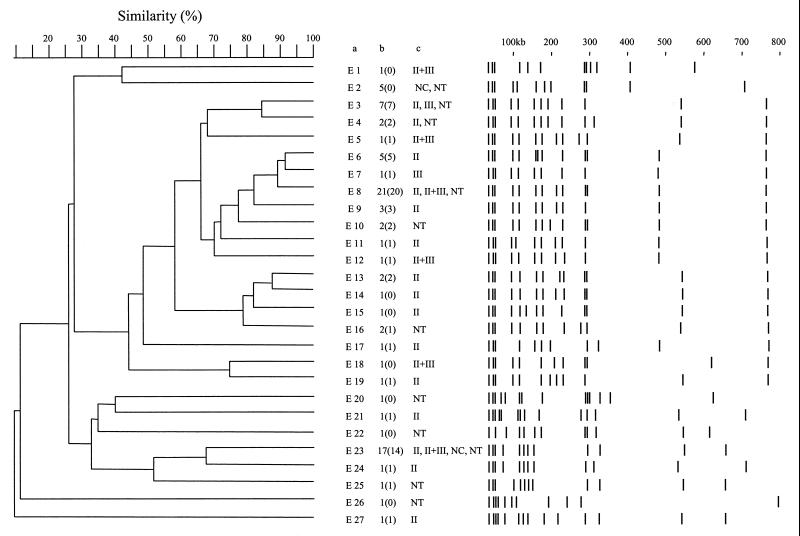
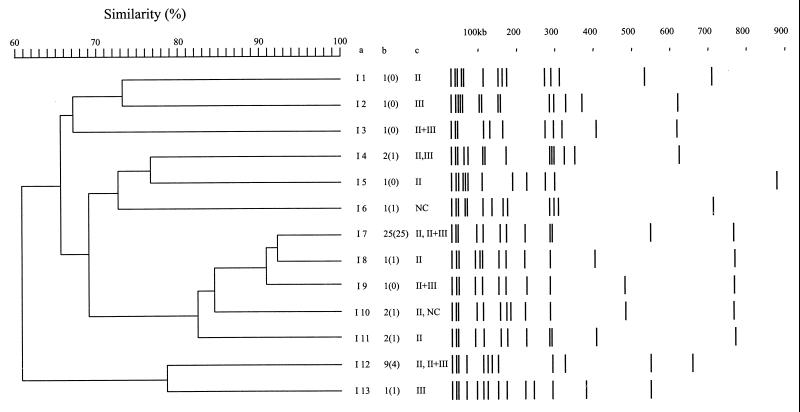
Clinical symptoms of impetigo and staphylococcal scalded skin syndrome may not only be expressed as the splitting of cell layers within the epidermis but are often accompanied by some localized inflammation. Toxin patterns of Staphylococcus aureus isolates originating from patients with impetigo and also from those with other primary and secondary skin infections in a retrospective isolate collection in France and a prospective isolate collection in French Guiana revealed a significant association (75% of the cases studied) of impetigo with production of at least one of the epidermolysins A and B and the bicomponent leucotoxin LukE-LukD (P < 0.001). However, most of the isolates were able to produce one of the nonubiquitous enterotoxins. Pulsed-field gel electrophoresis (PFGE) of genomic DNA hydrolyzed with SmaI showed a polymorphism of the two groups of isolates despite the fact that endemic clones were suspected in French Guiana and France. The combination of toxin patterns with PFGE fingerprinting may provide further discrimination among isolates defined in a given cluster or a given pulsotype and account for a specific virulence. The new association of toxins with a clinical syndrome may reveal principles of the pathological process.
Figures
References
-
- Amagai M, Matsuyoshi N, Wang Z H, Andl C, Stanley J R. Toxin in bullous impetigo and staphylococcal scalded-skin syndrome targets desmoglein 1. Nat Med. 2000;6:1275–1277. - PubMed
-
- Baba Moussa L, Sanni A, Dagnra A Y, Anagonou S, Prince David M, Edoh V, Befort J J, Prévost G, Monteil H. Approche épidémiologique de l'antibiorésistance et de la production de leucotoxines par les souches de Staphylococcus aureus isolées en Afrique de l'Ouest. Med Mal Infect. 1999;29:689–696.
-
- Brett M. Kits for the detection of some bacterial food poisoning toxins: problems, pitfalls and benefits. J Appl Microbiol. 1998;84:S110–S118. - PubMed
-
- Cavarelli J, Prévost G, Bourguet W, Moulinier L, Chevrier B, Delagoutte B, Bilwes A, Mourey L, Rifai S, Piémont Y, Moras D. The structure of Staphylococcus aureus epidermolytic toxin A, an atypic serine protease, at 1.7 Å resolution. Structure. 1997;5:813–824. - PubMed
Publication types
MeSH terms
Substances
LinkOut - more resources
Full Text Sources
Medical
