


CBP/p300 and muscle differentiation: no HAT, no muscle
- PMID: 11726517
- PMCID: PMC125755
- DOI: 10.1093/emboj/20.23.6816
CBP/p300 and muscle differentiation: no HAT, no muscle
Abstract
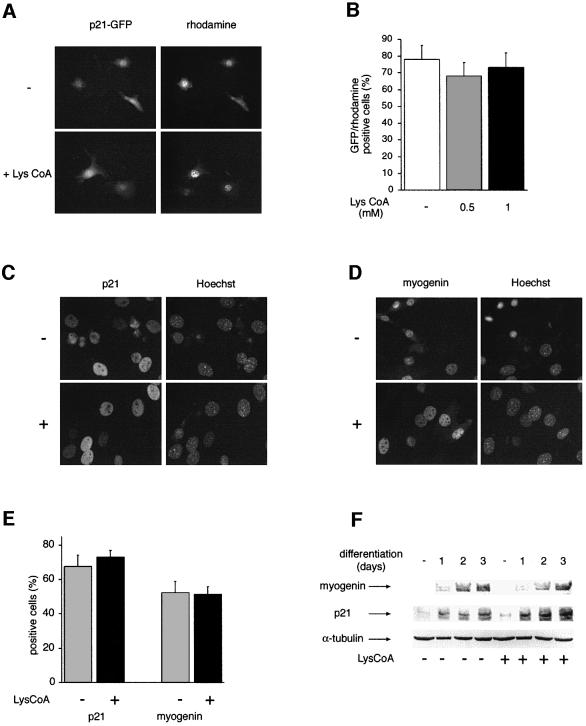
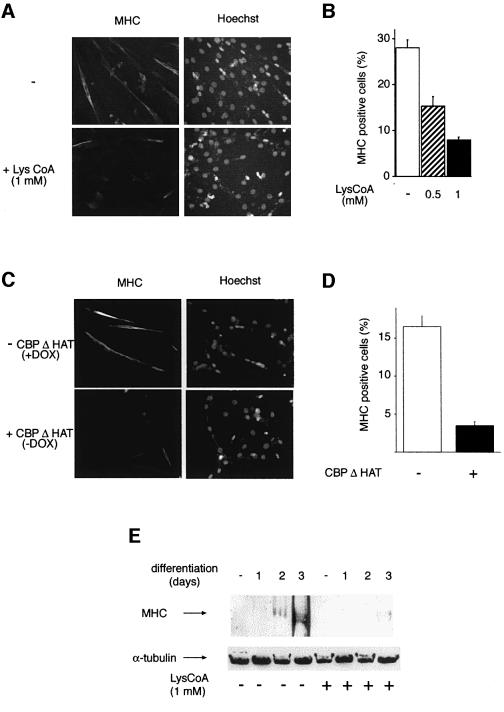
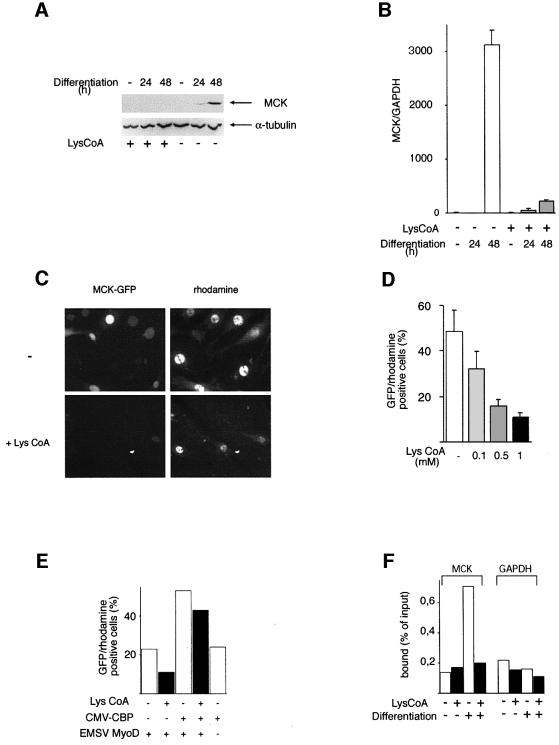
Terminal differentiation of muscle cells follows a precisely orchestrated program of transcriptional regulatory events at the promoters of both muscle-specific and ubiquitous genes. Two distinct families of transcriptional co-activators, GCN5/PCAF and CREB-binding protein (CBP)/p300, are crucial to this process. While both possess histone acetyl-transferase (HAT) activity, previous studies have failed to identify a requirement for CBP/p300 HAT function in myogenic differentiation. We have addressed this issue directly using a chemical inhibitor of CBP/p300 in addition to a negative transdominant mutant. Our results clearly demonstrate that CBP/p300 HAT activity is critical for myogenic terminal differentiation. Furthermore, this requirement is restricted to a subset of events in the differentiation program: cell fusion and specific gene expression. These data help to define the requirements for enzymatic function of distinct coactivators at different stages of the muscle cell differentiation program.
Figures
References
-
- Ait-Si-Ali S. et al. (2000) CBP/p300 histone acetyl-transferase activity is important for the G1/S transition. Oncogene, 19, 2430–2437. - PubMed
-
- Arany Z., Sellers,W.R., Livingston,D.M. and Eckner,R. (1994) E1A-associated p300 and CREB-associated CBP belong to a conserved family of coactivators. Cell, 77, 799–800. - PubMed
-
- Bannister A.J. and Kouzarides,T. (1996) The CBP co-activator is a histone acetyltransferase. Nature, 384, 641–643. - PubMed
-
- Brownell J.E. and Allis,C.D. (1996) Special HATs for special occasions: linking histone acetylation to chromatin assembly and gene activation. Curr. Opin. Genet. Dev., 6, 176–184. - PubMed
Publication types
MeSH terms
Substances
LinkOut - more resources
Full Text Sources
Miscellaneous
