


Antimicrobial drug resistance in pathogens causing nosocomial infections at a university hospital in Taiwan, 1981-1999
- PMID: 11749750
- PMCID: PMC2730256
- DOI: 10.3201/eid0801.000454
Antimicrobial drug resistance in pathogens causing nosocomial infections at a university hospital in Taiwan, 1981-1999
Abstract
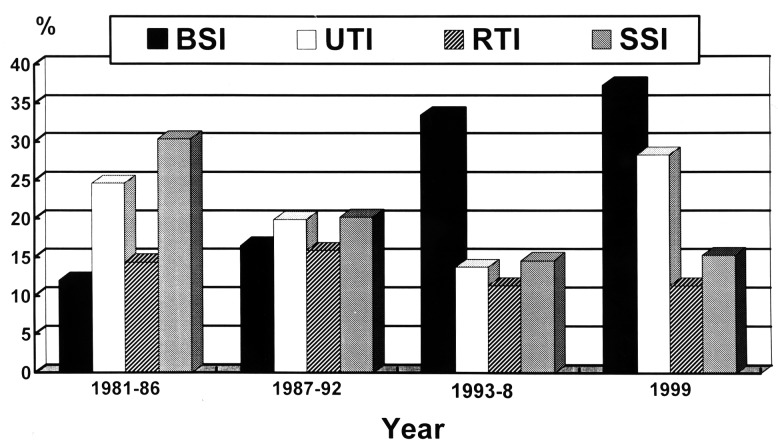
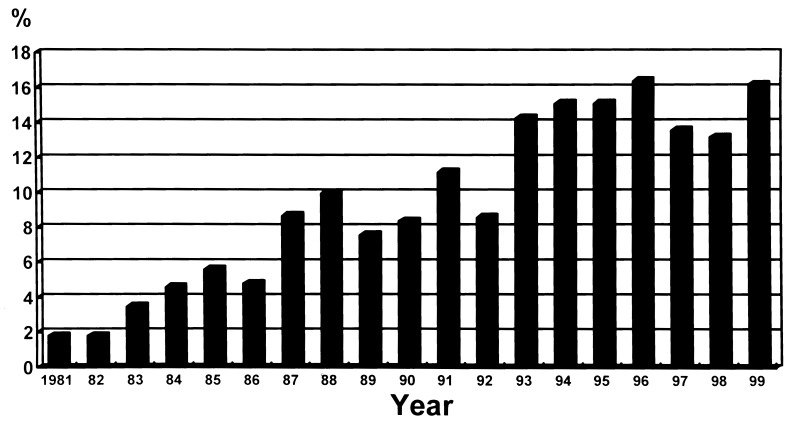
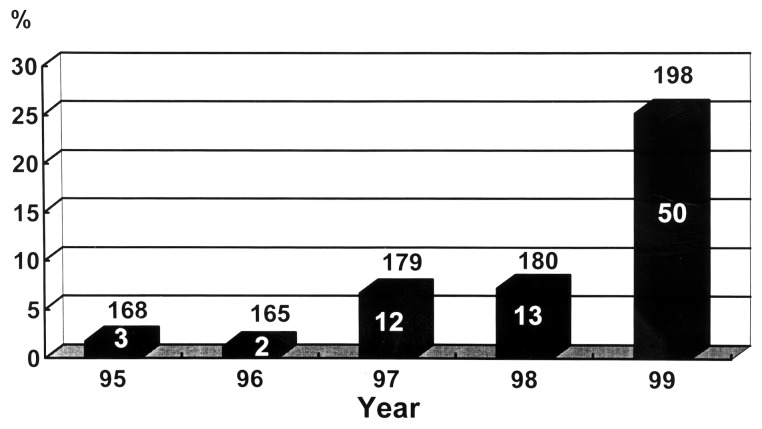
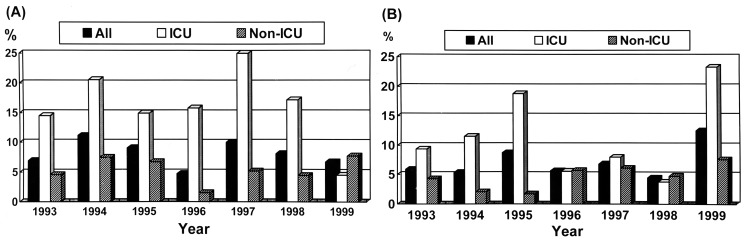
To determine the distribution and antimicrobial drug resistance in bacterial pathogens causing nosocomial infections, surveillance data on nosocomial infections documented from 1981 to 1999 at National Taiwan University Hospital were analyzed. During this period, 35,580 bacterial pathogens causing nosocomial infections were identified. Candida species increased considerably, ranking first by 1999 in the incidence of pathogens causing all nosocomial infections, followed by Staphylococcus aureus and Pseudomonas aeruginosa. Candida species also increased in importance as bloodstream infection isolates, from 1.0% in 1981-1986 to 16.2% in 1999. The most frequent isolates from urinary tract infections were Candida species (23.6%), followed by Escherichia coli (18.6%) and P. aeruginosa (11.0%). P. aeruginosa remained the most frequent isolates for respiratory tract and surgical site infections in the past 13 years. A remarkable increase in incidence was found in methicillin-resistant S. aureus (from 4.3% in 1981-1986 to 58.9% in 1993-1998), cefotaxime-resistant E. coli (from 0% in 1981-1986 to 6.1% in 1993-1998), and cefotaxime-resistant Klebsiella pneumoniae (from 4.0% in 1981-1986 to 25.8% in 1993-1998). Etiologic shifts in nosocomial infections and an upsurge of antimicrobial resistance among these pathogens, particularly those isolated from intensive care units, are impressive and alarming.
Figures
References
-
- Archibald L, Phillips L, Monnet D, McGowan JE Jr, Tenover FC, Gaynes RP. Antimicrobial resistance in isolates from inpatients and outpatients in the United States: increasing importance of the intensive care unit. Clin Infect Dis. 1997;24:211–5. - PubMed
MeSH terms
Substances
LinkOut - more resources
Full Text Sources
Other Literature Sources
Miscellaneous