


Drug dependence, parenting responsibilities, and treatment history: why doesn't mom go for help?
- PMID: 11772472
- PMCID: PMC3314385
- DOI: 10.1016/s0376-8716(01)00153-3
Drug dependence, parenting responsibilities, and treatment history: why doesn't mom go for help?
Abstract
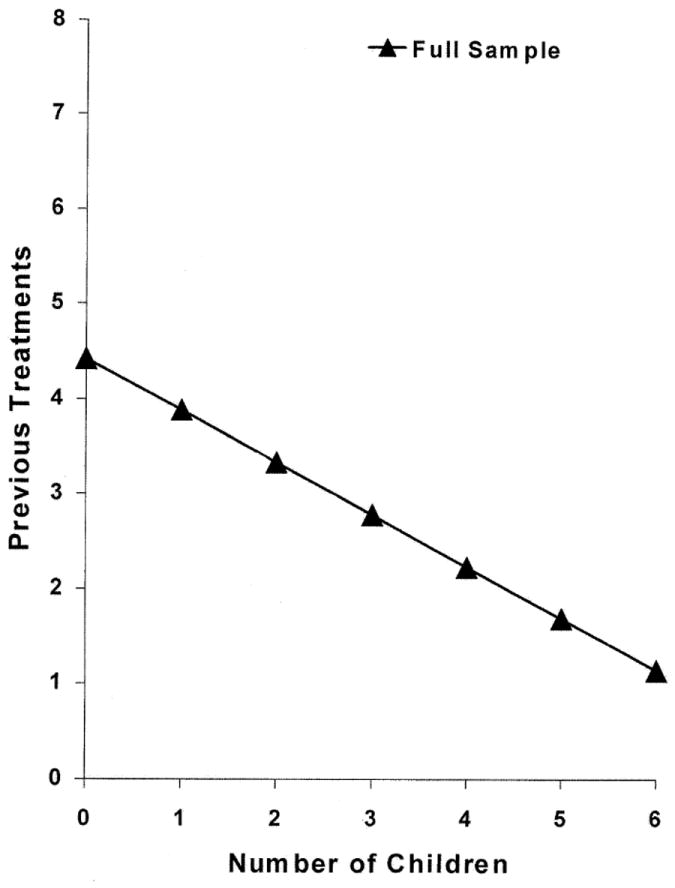
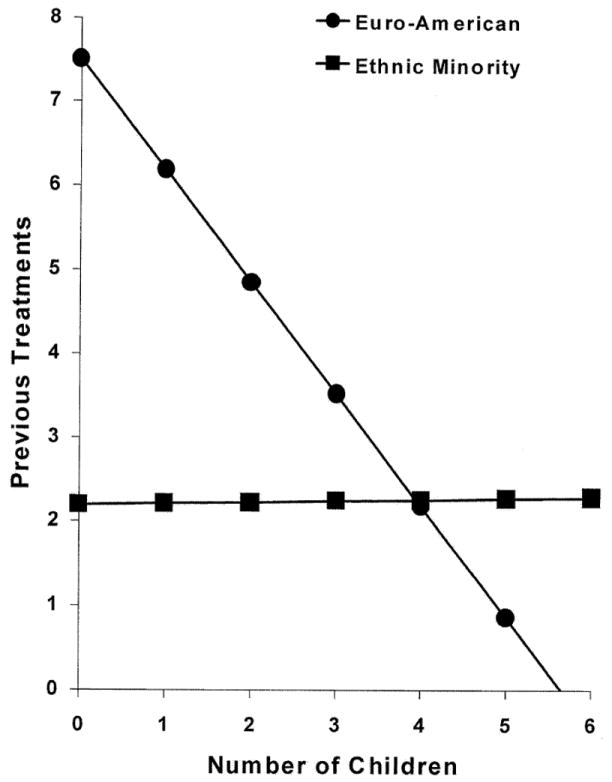
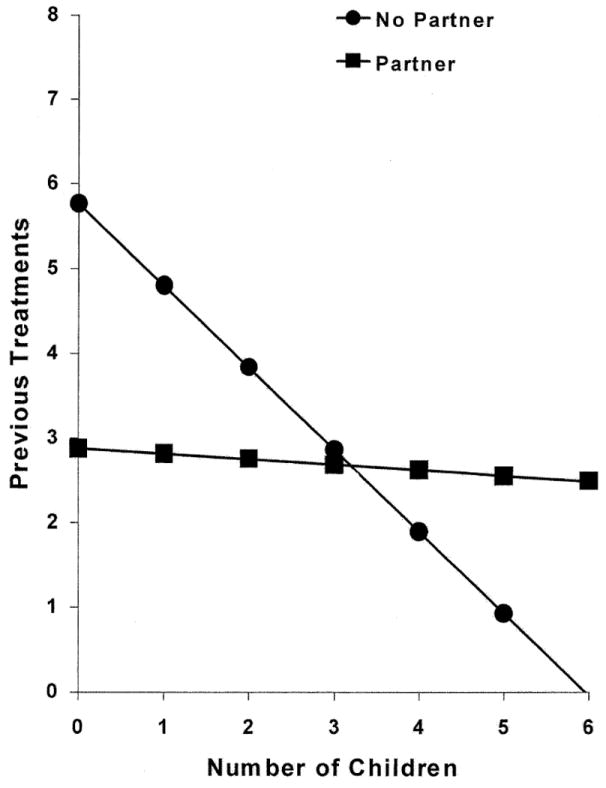
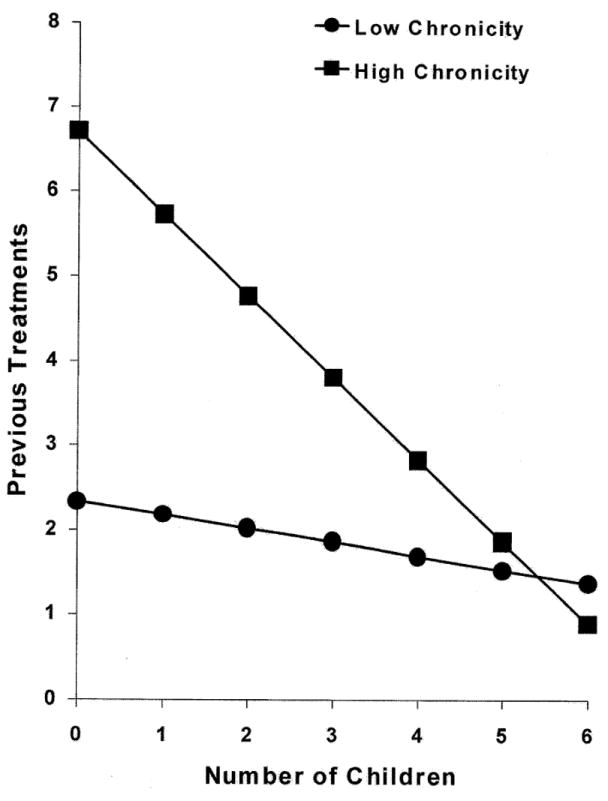
Despite longstanding concern that the presence of children deters drug-dependent women from entering treatment, there have been few empirical tests of the relationship between parenting responsibilities and treatment-seeking behavior. In this study, the relationship between number of biological children and treatment history was examined in a cohort of 153 women seeking methadone maintenance treatment. In a standard multiple regression analysis that also allowed for the potential influence of (a) age, (b) education, (c) ethnic minority status, (d) cohabitation with a sexual partner, (e) chronicity of opioid use, and (f) knowledge of HIV infection, there was a significant, negative relationship between number of children and number of earlier contacts for drug abuse treatment. Ethnic minority status and cohabitation with a sexual partner were also associated with fewer earlier contacts; greater chronicity and knowledge of HIV infection were associated with more earlier contacts. Moreover, there was significant moderation of the negative relationship between parenting responsibilities and treatment history by (a) ethnic minority status, (b) cohabitation, and (c) chronicity of use. Within a cross-sectional research design, the findings highlight ways parenting responsibilities may interact with other factors over time to influence the treatment-seeking behavior of drug-dependent women.
Figures
References
-
- Aiken LS, West SG. Multiple Regression: Testing and Interpreting Interactions. Sage Publications; Newbury Park, CA: 1991.
-
- Alicea M, Friedman J. Motherhood, heroin, and methadone. In: Romero M, Abigail J, editors. Women’s Untold Stories: Breaking Silence, Talking Back, Voicing Complexity. Routledge; New York: 1999. pp. 159–173.
-
- Amaro H, Hardy-Fanta C. Gender relations in addiction and recovery. J Psychoact Drugs. 1995;27:325–337. - PubMed
-
- Anglin MD, Hser Y, Booth MW. Sex differences in addict careers. 4. Treatment. Am J Drug Alcohol Abuse. 1987a;13:253–280. - PubMed
Publication types
MeSH terms
Substances
Grants and funding
LinkOut - more resources
Full Text Sources
Medical
