


Phase I study of the intravenous administration of attenuated Salmonella typhimurium to patients with metastatic melanoma
- PMID: 11773163
- PMCID: PMC2064865
- DOI: 10.1200/JCO.2002.20.1.142
Phase I study of the intravenous administration of attenuated Salmonella typhimurium to patients with metastatic melanoma
Abstract
Purpose: A strain of Salmonella typhimurium (VNP20009), attenuated by chromosomal deletion of the purI and msbB genes, was found to target to tumor and inhibit tumor growth in mice. These findings led to the present phase I study of the intravenous infusion of VNP20009 to patients with metastatic cancer.
Patients and methods: In cohorts consisting of three to six patients, 24 patients with metastatic melanoma and one patient with metastatic renal cell carcinoma received 30-minute intravenous bolus infusions containing 10(6) to 10(9) cfu/m(2) of VNP20009. Patients were evaluated for dose-related toxicities, selective replication within tumors, and antitumor effects.
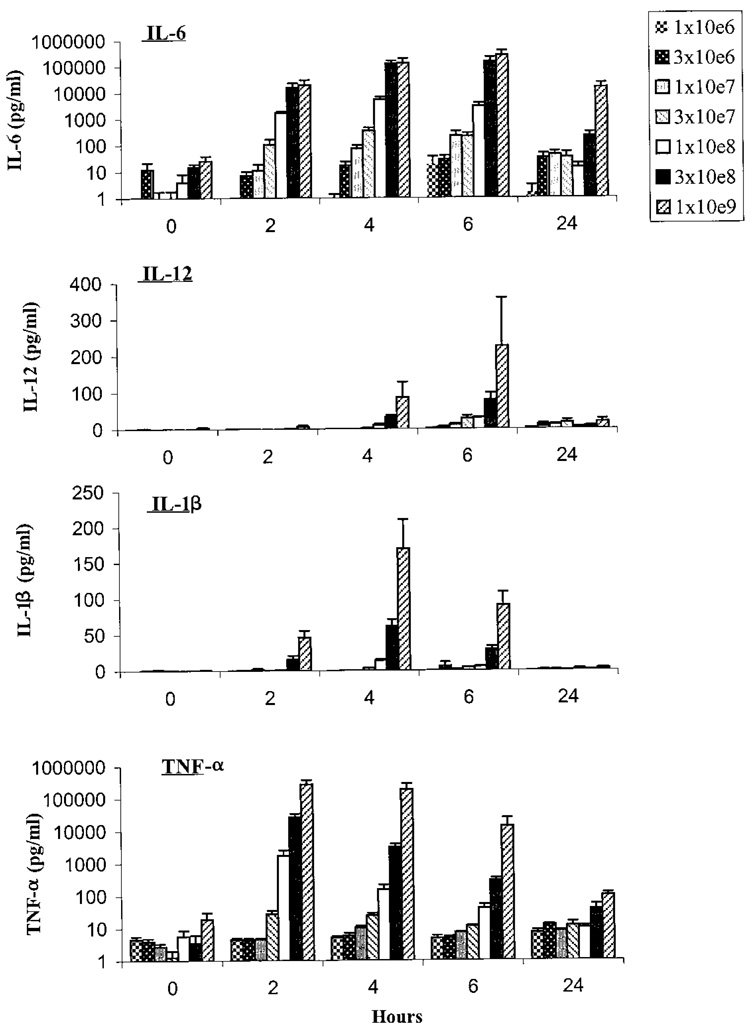
Results: The maximum-tolerated dose was 3 x 10(8) cfu/m(2). Dose-limiting toxicity was observed in patients receiving 1 x 10(9) cfu/m(2), which included thrombocytopenia, anemia, persistent bacteremia, hyperbilirubinemia, diarrhea, vomiting, nausea, elevated alkaline phosphatase, and hypophosphatemia. VNP20009 induced a dose-related increase in the circulation of proinflammatory cytokines, such as interleukin (IL)-1beta, tumor necrosis factor alpha, IL-6, and IL-12. Focal tumor colonization was observed in two patients receiving 1 x 10(9) cfu/m(2) and in one patient receiving 3 x 10(8) cfu/m(2). None of the patients experienced objective tumor regression, including those patients with colonized tumors.
Conclusion: The VNP20009 strain of Salmonella typhimurium can be safely administered to patients, and at the highest tolerated dose, some tumor colonization was observed. No antitumor effects were seen, and additional studies are required to reduce dose-related toxicity and improve tumor localization.
Figures
Comment in
-
Continuous intravenous administration of live genetically modified salmonella typhimurium in patients with metastatic melanoma.J Immunother. 2003 Mar-Apr;26(2):179-80. doi: 10.1097/00002371-200303000-00011. J Immunother. 2003. PMID: 12616110 Free PMC article. No abstract available.
References
-
- Pawelek JM, Low KB, Bermudes D. Tumor-targeted Salmonella as a novel anticancer vector. Cancer Res. 1997;57:4537–4544. - PubMed
-
- Low KB, Ittensohn M, Le T, et al. Lipid A mutant Salmonella with suppressed virulence and TNF-α induction retain tumor-targeting in vivo. Nat Biotechnol. 1999;17:37–41. - PubMed
-
- Giel CP. Abscess formation in pheochromocytoma. N Engl J Med. 1954;251:980–982. - PubMed
-
- Simmers TA, Mijnhout GS, Van Meyel JJ. Salmonellosis: An unusual complication of hepatocellular carcinoma. Scand J Gastroenterol. 1997;32:1180–1182. - PubMed
-
- Noguerado A, Cabanyes J, Vivancos J, et al. Abscess caused by Salmonella enteritidis within a glioblastoma multiforme. J Infect. 1987;15:61–63. - PubMed
Publication types
MeSH terms
Substances
Grants and funding
LinkOut - more resources
Full Text Sources
Other Literature Sources
Medical
