


Characterization of opiates, neuroleptics, and synthetic analogs at ORL1 and opioid receptors
- PMID: 11779034
- PMCID: PMC3852903
- DOI: 10.1016/s0014-2999(01)01282-1
Characterization of opiates, neuroleptics, and synthetic analogs at ORL1 and opioid receptors
Abstract
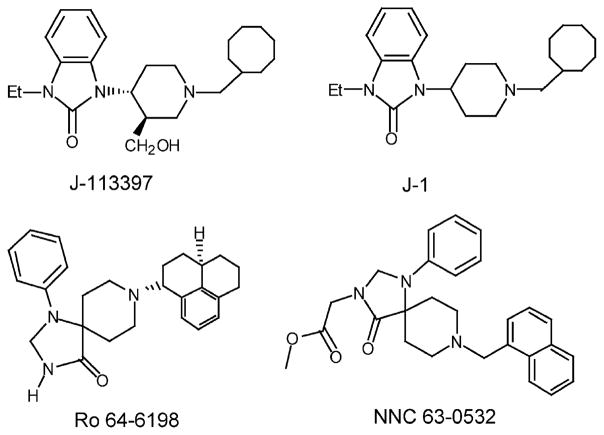
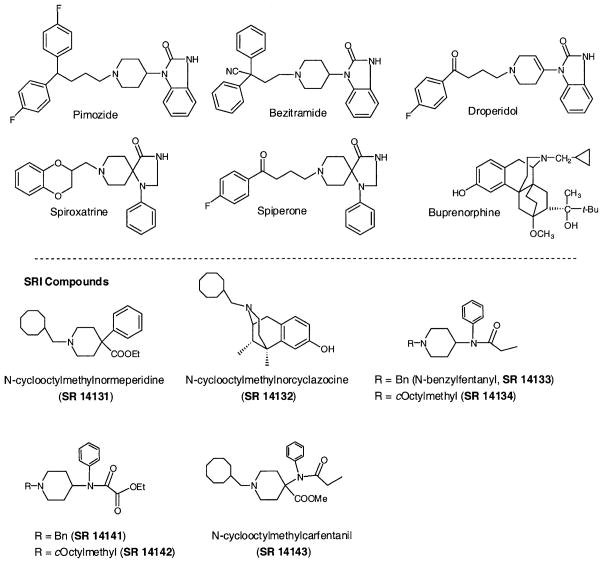
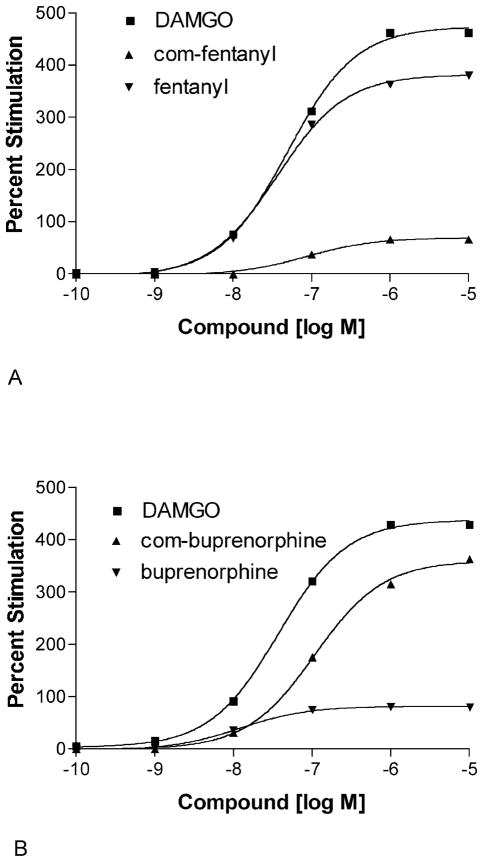
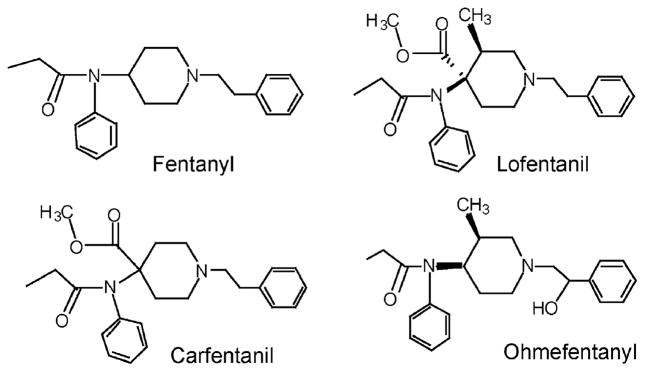
Nociceptin/orphanin FQ (N/OFQ) was recently identified as the endogenous ligand for the opioid-receptor like (ORL1) receptor. Although the ORL1 receptor shows sequence homology with the opioid receptors, the nociceptin/ORL1 ligand-receptor system has very distinct pharmacological actions compared to the opioid receptor system. Recently, several small-molecule ORLI receptor ligands were reported by pharmaceutical companies. Most of these ligands had close structural similarities with known neuroleptics and opiates. In this study, we screened several available neuroleptics and opiates for their binding affinity and functional activity at ORL1 and the opioid receptors. We also synthesized several analogs of known opiates with modified piperidine N-substituents in order to characterize the ORL1 receptor ligand binding pocket. Substitution with the large, lipophilic cyclooctylmethyl moiety increased ORL1 receptor affinity and decreased mu receptor affinity and efficacy in the fentanyl series of ligands but had a different effect in the oripavine class of opiate ligands. Our results indicate that opiates and neuroleptics may be good starting points for ORL1 receptor ligand design, and the selectivity may be modulated by appropriate structural modifications.
Figures
References
-
- Adapa IP, Toll L. Relationship between binding affinity and functional activity of nociceptin/orphanin FQ. Neuropeptides. 1997;31:403–408. - PubMed
-
- Bagley JR, Wynn RL, Rudo FG, Doorley BM, Spencer HK, Spaulding T. New 4-(heteroanilido)piperidines, structurally related to the pure opioid agonist fentanyl, with agonist and/or antagonist properties. J Med Chem. 1989;32:663–671. - PubMed
-
- Bagley JR, Thomas SA, Rudo FG, Spencer HK, Doorley BM, Ossipov MH, Jerussi TP, Benvenga MJ, Spaulding T. New 1-(heterocyclylalkyl)-4-propionanilido-4-piperidinyl methyl ester and methylene methyl ether analgesics. J Med Chem. 1991;34:827–841. - PubMed
-
- Bigoni R, Calo G, Rizzi A, Mitri S, Regoli D. Naloxone benzoylhydrazone acts as a non selective nociceptin receptor antagonist. Fundam Clin Pharmacol. 1999;13:214s.
-
- Butour JL, Moisand C, Mazarguil H, Mollereau C, Meunier JC. Recognition and activation of the opioid receptor-like ORL 1 receptor by nociceptin, nociceptin analogs and opioids. Eur J Pharmacol. 1997;321:97–103. - PubMed
Publication types
MeSH terms
Substances
Grants and funding
LinkOut - more resources
Full Text Sources
Other Literature Sources
Research Materials
