


Differential binding of host complement inhibitor factor H by Borrelia burgdorferi Erp surface proteins: a possible mechanism underlying the expansive host range of Lyme disease spirochetes
- PMID: 11796574
- PMCID: PMC127719
- DOI: 10.1128/IAI.70.2.491-497.2002
Differential binding of host complement inhibitor factor H by Borrelia burgdorferi Erp surface proteins: a possible mechanism underlying the expansive host range of Lyme disease spirochetes
Abstract
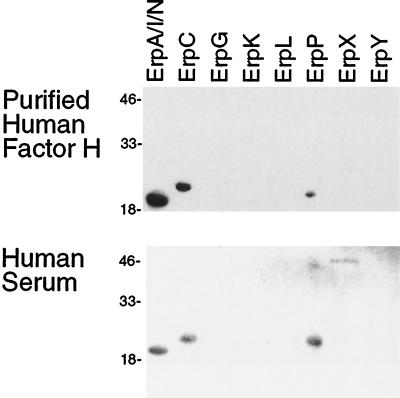
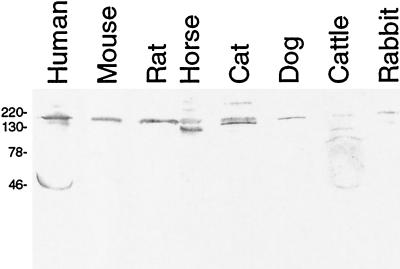
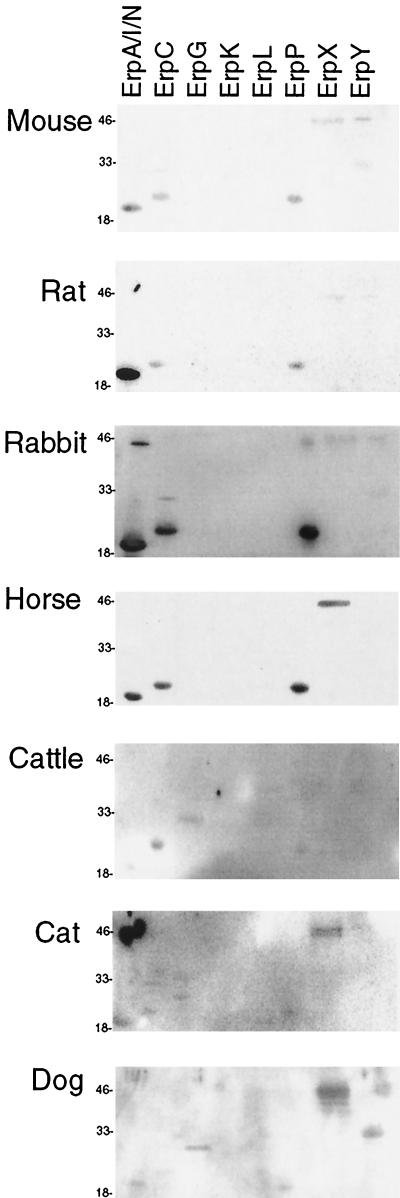
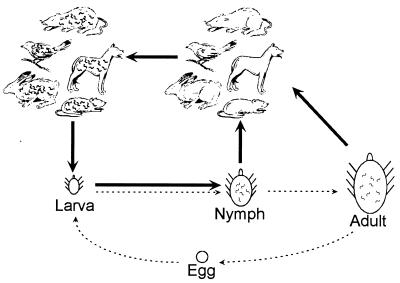
The Lyme disease spirochete, Borrelia burgdorferi, is capable of infecting a wide variety of vertebrates. This broad host range implies that B. burgdorferi possesses the ability to contravene the immune defenses of many potential hosts. B. burgdorferi produces multiple different Erp proteins on its outer membrane during mammalian infection. It was reported previously that one Erp protein can bind human factor H (J. Hellwage, T. Meri, T. Heikkilä, A. Alitalo, J. Panelius, P. Lahdenne, I. J. T. Seppälä, and S. Meri, J. Biol. Chem. 276:8427-8435, 2001). In this paper we report that the ability to bind the complement inhibitor factor H is a general characteristic of Erp proteins. Furthermore, each Erp protein exhibits different relative affinities for the complement inhibitors of various potential animal hosts. The data suggest that the presence of multiple Erp proteins on the surface can allow a single B. burgdorferi bacterium to resist complement-mediated killing in any of the wide range of potential hosts that it might infect. Thus, Erp proteins likely contribute to the persistence of B. burgdorferi in nature and to the ability of this bacterium to cause Lyme disease in humans and other animals.
Figures
References
-
- Alexander, J. J., B. K. Hack, P. N. Cunningham, and R. J. Quigg. 2001. A protein with characteristics of factor H is present on rodent platelets and functions as the immune adherence receptor. J. Biol. Chem. 276:32129–32135. - PubMed
-
- Appel, M. J. G., S. Allan, R. H. Jacobson, T. L. Lauderdale, Y. F. Chang, S. J. Shin, J. W. Thomford, R. J. Todhunter, and B. A. Summers. 1993. Experimental Lyme disease in dogs produces arthritis and persistent infection. J. Infect. Dis. 167:651–664. - PubMed
Publication types
MeSH terms
Substances
Grants and funding
LinkOut - more resources
Full Text Sources
Miscellaneous
