


Mycoplasma pneumoniae induces chronic respiratory infection, airway hyperreactivity, and pulmonary inflammation: a murine model of infection-associated chronic reactive airway disease
- PMID: 11796594
- PMCID: PMC127700
- DOI: 10.1128/IAI.70.2.649-654.2002
Mycoplasma pneumoniae induces chronic respiratory infection, airway hyperreactivity, and pulmonary inflammation: a murine model of infection-associated chronic reactive airway disease
Abstract
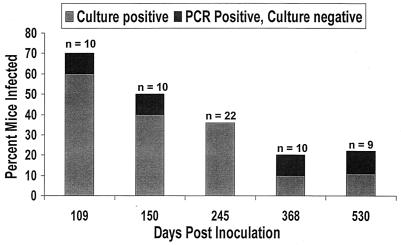
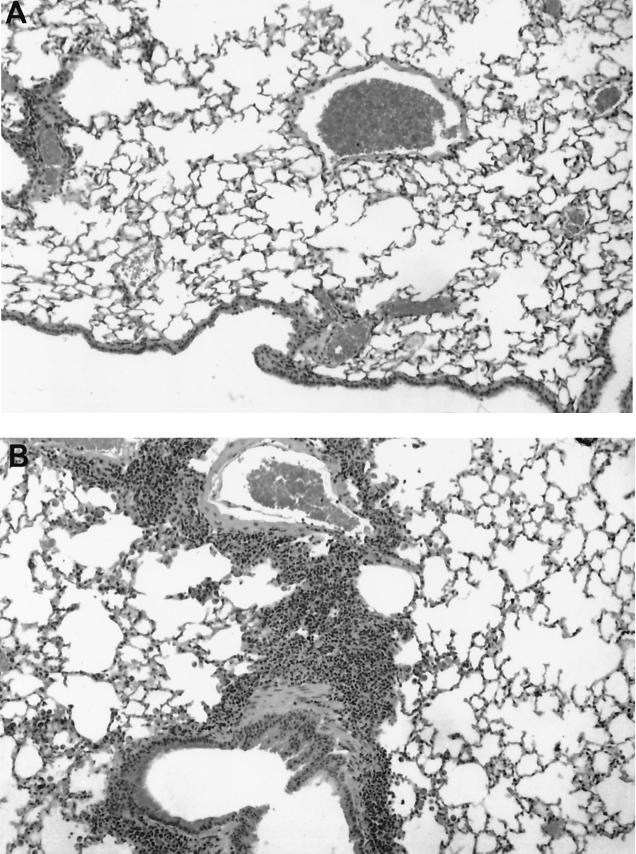
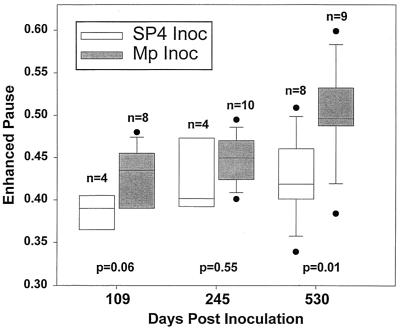
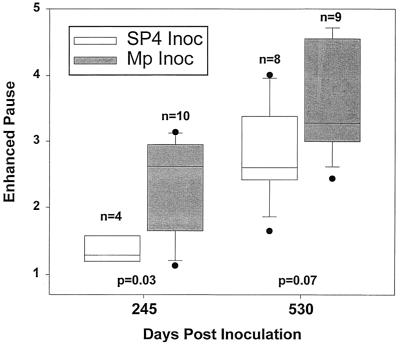
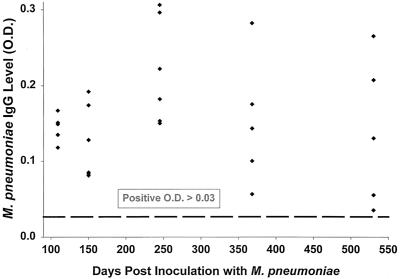
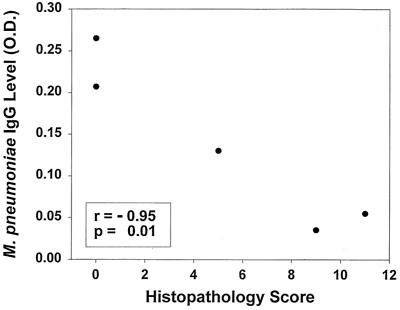
Because chronic Mycoplasma pneumoniae respiratory infection is hypothesized to play a role in asthma, the potential of M. pneumoniae to establish chronic respiratory infection with associated pulmonary disease was investigated in a murine model. BALB/c mice were intranasally inoculated once with M. pneumoniae and examined at 109, 150, 245, 368, and 530 days postinoculation. M. pneumoniae was detected in bronchoalveolar lavage fluid by culture or PCR in 70 and 22% of mice at 109 and 530 days postinoculation, respectively. Lung histopathology was normal up to 368 days postinoculation. At 530 days, however, 78% of the mice inoculated with M. pneumoniae demonstrated abnormal histopathology characterized by peribronchial and perivascular mononuclear infiltrates. A mean histopathologic score (HPS) at 530 days of 5.1 was significantly greater (P < 0.01) than that for controls (HPS score of 0). Serum anti-M. pneumoniae immunoglobulin G was detectable in all of the mice inoculated with M. pneumoniae and was inversely correlated with HPS (r = -0.95, P = 0.01) at 530 days postinoculation. Unrestrained whole-body plethysmography measurement of enhanced pause revealed significantly elevated airway methacholine reactivity in M. pneumoniae-inoculated mice compared with that in controls at 245 days (P = 0.03) and increased airway obstruction at 530 days (P = 0.01). Murine M. pneumoniae respiratory infection can lead to chronic pulmonary disease characterized by airway hyperreactivity, airway obstruction, and histologic inflammation.
Figures
References
-
- Bowden, J. J., T. R. Schoeb, J. R. Lindsey, and D. M. McDonald. 1994. Dexamethasone and oxytetracycline reverse the potentiation of neurogenic inflammation in airways of rats with Mycoplasma pulmonis infection. Am. J. Respir. Crit. Care Med. 150:1391-1401. - PubMed
-
- Cassell, G. H., G. Gambill, and L. Duffy. 1996. ELISA in respiratory infections of humans, p. 123-136. In J. G. Tully and S. Razin (ed.), Molecular and diagnostic procedures in mycoplasmology, vol. 2. Academic Press, San Diego, Calif.
-
- Cimolai, N., G. P. Taylor, D. Mah, and B. J. Morrison. 1992. Definition and application of a histopathological scoring scheme for an animal model of acute Mycoplasma pneumoniae pulmonary infection. Microbiol. Immunol. 36:465-478. - PubMed
-
- Dallo, S. F., and J. B. Baseman. 2000. Intracellular DNA replication and long-term survival of pathogenic mycoplasmas. Microb. Pathog. 29:301-309. - PubMed
-
- Denny, F. W., W. A. Clyde, Jr., and W. P. Glezen. 1971. Mycoplasma pneumoniae disease: clinical spectrum, pathophysiology, epidemiology, and control. J. Infect. Dis. 123:74-92. - PubMed
Publication types
MeSH terms
Substances
LinkOut - more resources
Full Text Sources
