


Effect of latent human immunodeficiency virus infection on cell surface phenotype
- PMID: 11799162
- PMCID: PMC135922
- DOI: 10.1128/jvi.76.4.1673-1681.2002
Effect of latent human immunodeficiency virus infection on cell surface phenotype
Abstract
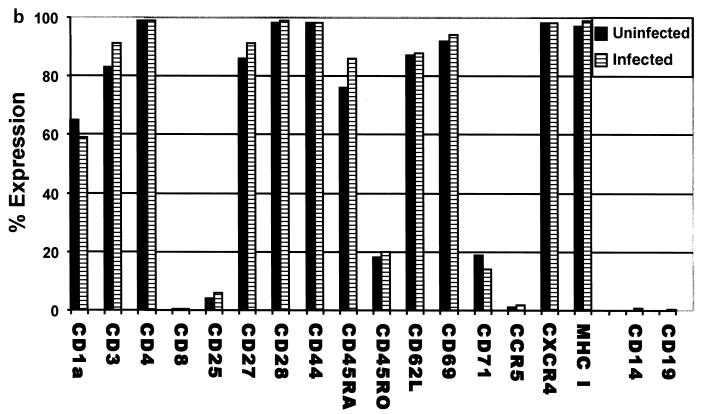
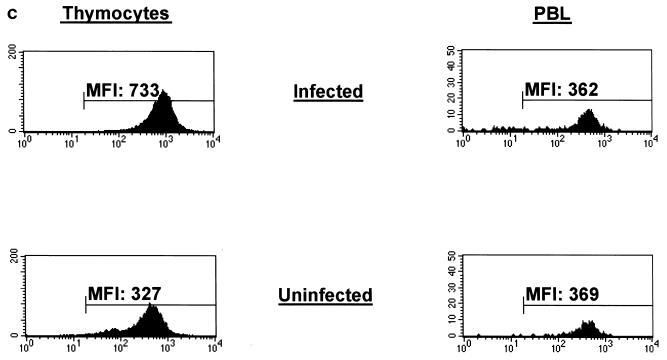
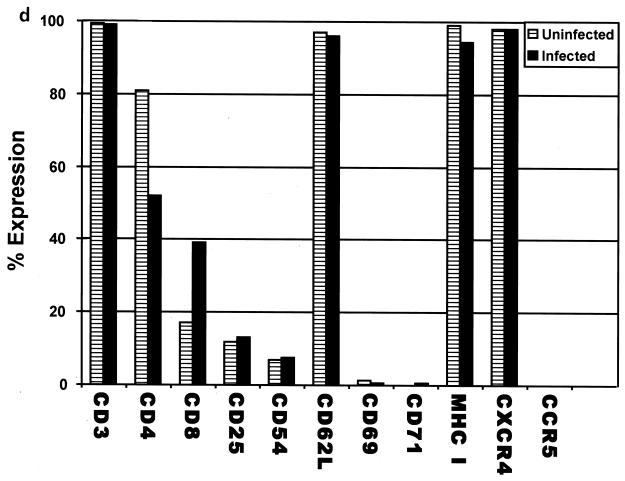
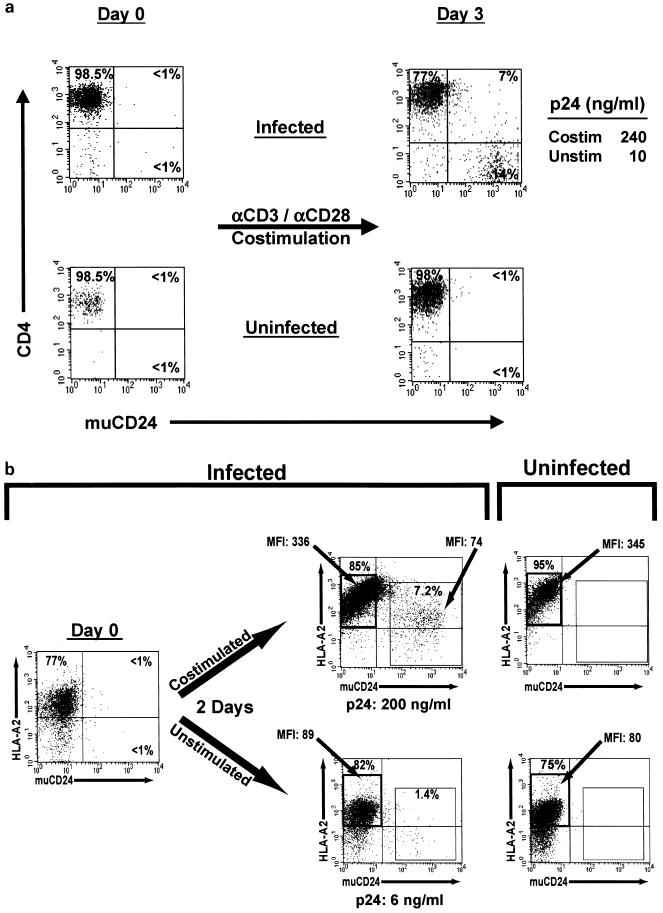
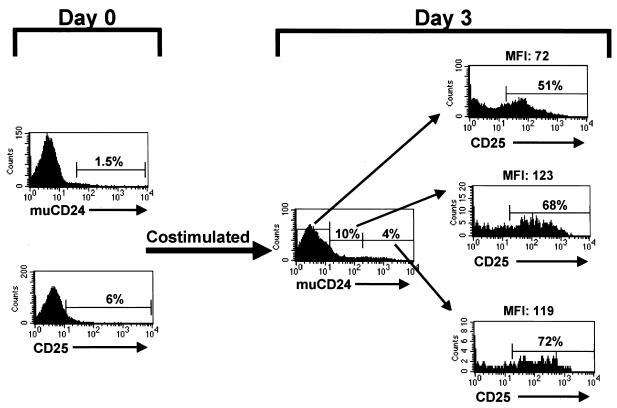
Highly active antiretroviral therapy has succeeded in many cases in suppressing virus production in patients infected with human immunodeficiency virus (HIV); however, once treatment is discontinued, virus replication is rekindled. One reservoir capable of harboring HIV in a latent state and igniting renewed infection once therapy is terminated is a resting T cell. Due to the sparsity of T cells latently infected with HIV in vivo, it has been difficult to study viral and cellular interactions during latency. The SCID-hu (Thy/Liv) mouse model of HIV latency, however, provides high percentages of latently infected cells, allowing a detailed analysis of phenotype. Herein we show that latently infected cells appear phenotypically normal. Following cellular stimulation, the virus completes its life cycle and induces phenotypic changes, such as CD4 and major histocompatibility complex class I down-regulation, in the infected cell. In addition, HIV expression following activation did not correlate with expression of the cellular activation marker CD25. The apparently normal phenotype and lack of HIV expression in latently infected cells could prevent recognition by the immune response and contribute to the long-lived nature of this reservoir.
Figures
References
-
- Aiken, C., J. Konner, N. R. Landau, M. E. Lenburg, and D. Trono. 1994. Nef induces CD4 endocytosis: requirement for a critical dileucine motif in the membrane-proximal CD4 cytoplasmic domain. Cell 76:853-864. - PubMed
-
- Aldrovandi, G. M., G. Feuer, L. Gao, B. Jamieson, M. Kristeva, I. S. Chen, and J. A. Zack. 1993. The SCID-hu mouse as a model for HIV-1 infection. Nature 363:732-736. - PubMed
-
- Blaak, H., A. B. van't Wout, M. Brouwer, B. Hooibrink, E. Hovenkamp, and H. Schuitemaker. 2000. In vivo HIV-1 infection of CD45RA(+)CD4(+) T cells is established primarily by syncytium-inducing variants and correlates with the rate of CD4(+) T cell decline. Proc. Natl. Acad. Sci. USA 97:1269-1274. - PMC - PubMed
-
- Borvak, J., C. S. Chou, K. Bell, G. Van Dyke, H. Zola, O. Ramilo, and E. S. Vitetta. 1995. Expression of CD25 defines peripheral blood mononuclear cells with productive versus latent HIV infection. J. Immunol. 155:3196-3204. - PubMed
-
- Brooks, D. G., S. G. Kitchen, C. M. Kitchen, D. D. Scripture-Adams, and J. A. Zack. 2001. Generation of HIV latency during thymopoiesis. Nat. Med. 7:459-464. - PubMed
Publication types
MeSH terms
Substances
Grants and funding
LinkOut - more resources
Full Text Sources
Medical
Research Materials
