


Stereotyped and specific gene expression programs in human innate immune responses to bacteria
- PMID: 11805339
- PMCID: PMC117415
- DOI: 10.1073/pnas.231625398
Stereotyped and specific gene expression programs in human innate immune responses to bacteria
Abstract
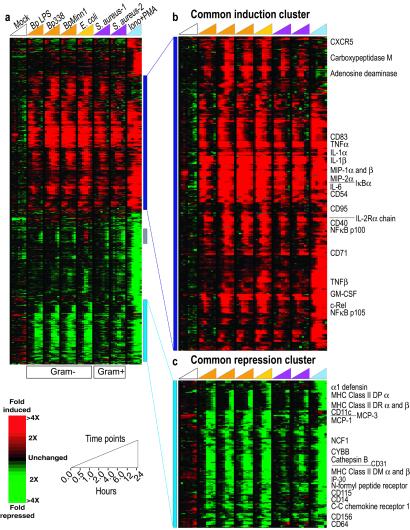
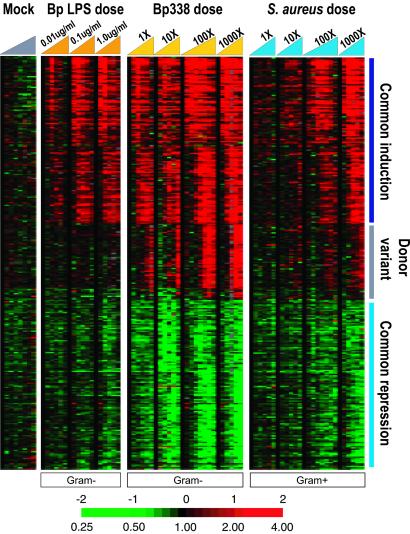
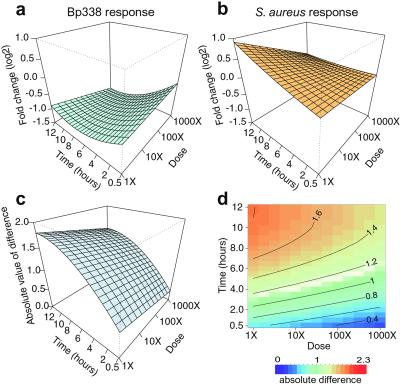
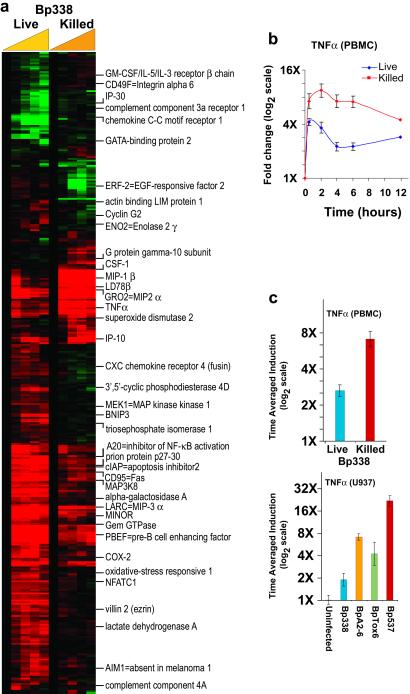
The innate immune response is crucial for defense against microbial pathogens. To investigate the molecular choreography of this response, we carried out a systematic examination of the gene expression program in human peripheral blood mononuclear cells responding to bacteria and bacterial products. We found a remarkably stereotyped program of gene expression induced by bacterial lipopolysaccharide and diverse killed bacteria. An intricately choreographed expression program devoted to communication between cells was a prominent feature of the response. Other features suggested a molecular program for commitment of antigen-presenting cells to antigens captured in the context of bacterial infection. Despite the striking similarities, there were qualitative and quantitative differences in the responses to different bacteria. Modulation of this host-response program by bacterial virulence mechanisms was an important source of variation in the response to different bacteria.
Figures
References
Publication types
MeSH terms
Substances
Grants and funding
LinkOut - more resources
Full Text Sources
Other Literature Sources
Medical
Molecular Biology Databases
