


Stable suppression of gene expression by RNAi in mammalian cells
- PMID: 11818553
- PMCID: PMC122210
- DOI: 10.1073/pnas.032652399
Stable suppression of gene expression by RNAi in mammalian cells
Abstract
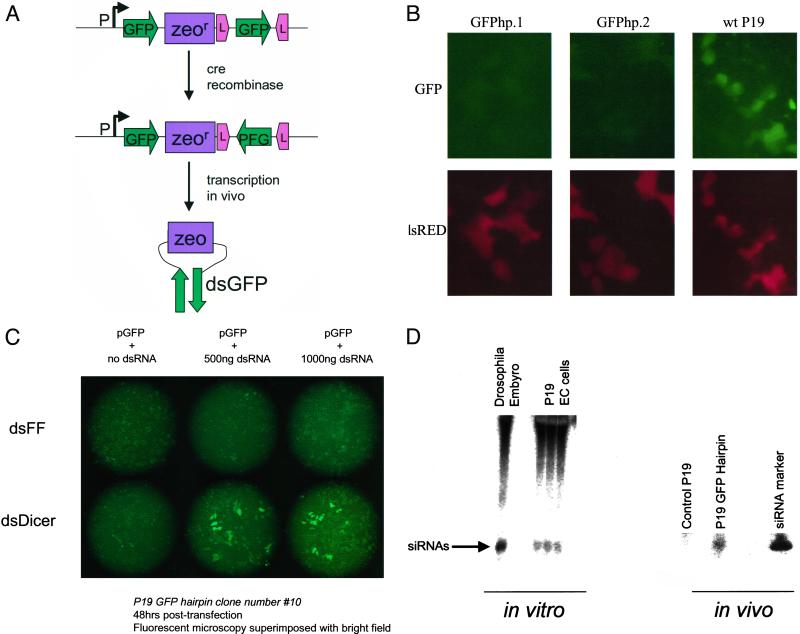
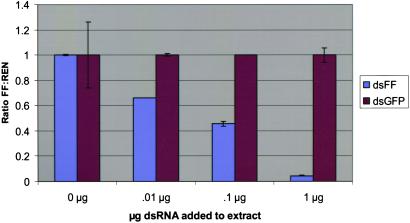
In a diverse group of organisms including plants, Caenorhabditis elegans, Drosophila, and trypanosomes, double-stranded RNA (dsRNA) is a potent trigger of gene silencing. In several model systems, this natural response has been developed into a powerful tool for the investigation of gene function. Use of RNA interference (RNAi) as a genetic tool has recently been extended to mammalian cells, being inducible by treatment with small, approximately 22-nt RNAs that mimic those produced in the first step of the silencing process. Here, we show that some cultured murine cells specifically silence gene expression upon treatment with long dsRNAs (approximately 500 nt). This response shows hallmarks of conventional RNAi including silencing at the posttranscriptional level and the endogenous production of approximately 22-nt small RNAs. Furthermore, enforced expression of long, hairpin dsRNAs induced stable gene silencing. The ability to create stable "knock-down" cell lines expands the utility of RNAi in mammalian cells by enabling examination of phenotypes that develop over long time periods and lays the groundwork for by using RNAi in phenotype-based, forward genetic selections.
Figures
References
-
- Hartwell L H, Culotti J, Pringle J R, Reid B J. Science. 1974;183:46–51. - PubMed
-
- Hartwell L H, Weinert T A. Science. 1989;246:629–634. - PubMed
-
- Hammond S M, Caudy A A, Hannon G J. Nat Rev Genet. 2001;2:110–119. - PubMed
-
- Elbashir S M, Harborth J, Lendeckel W, Yalcin A, Weber K, Tuschl T. Nature (London) 2001;411:494–498. - PubMed
Publication types
MeSH terms
Substances
Grants and funding
LinkOut - more resources
Full Text Sources
Other Literature Sources
Research Materials
