


Sensitive PCR-restriction fragment length polymorphism assay for detection and genotyping of Giardia duodenalis in human feces
- PMID: 11825955
- PMCID: PMC153413
- DOI: 10.1128/JCM.40.2.446-452.2002
Sensitive PCR-restriction fragment length polymorphism assay for detection and genotyping of Giardia duodenalis in human feces
Abstract
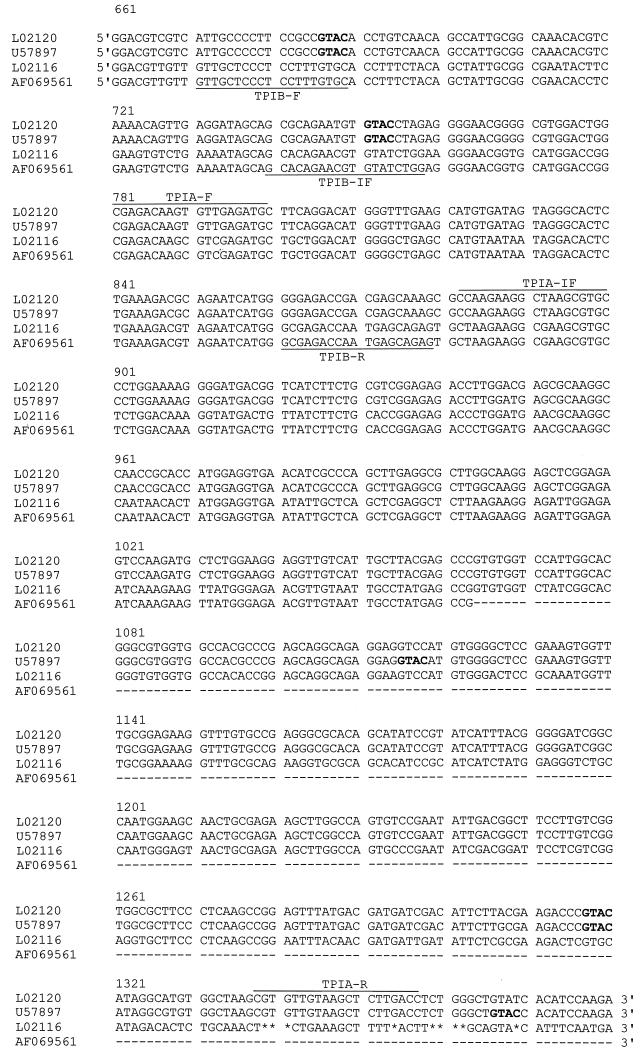
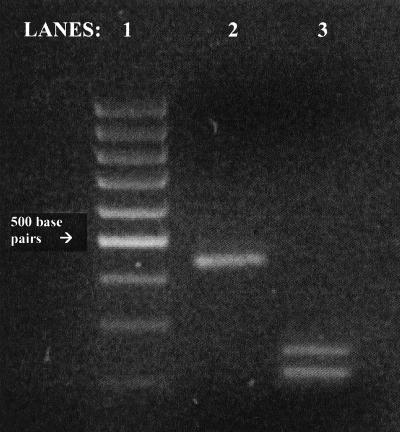
An assay that uses heminested PCR-restriction fragment length polymorphism analysis for the detection and genotyping of Giardia duodenalis on the basis of polymorphism in the triose phosphate isomerase (tpi) gene was developed. This assay was evaluated with DNA extracted from purified parasite material, bacterial cultures, whole human feces containing G. duodenalis and other parasites, and their corresponding immunofluorescence-stained fecal smears on glass microscope slides. The assay was specific and discriminated between G. duodenalis assemblages A and B. RFLP analysis further distinguished two groups (designated groups I and II) within assemblage A. Among 35 DNA samples extracted from whole feces from patients with confirmed sporadic giardiasis, the tpi gene was amplified from 33 (94%). Of these, nine (27%) samples contained assemblage A group II, 21 (64%) contained assemblage B, and 3 (9%) contained a mixture of assemblage A group II and assemblage B. The tpi gene of G. duodenalis assemblage B was amplified from 21 of 24 (88%) DNA samples extracted from whole feces from patients with confirmed cases of infection in a nursery outbreak. No amplification was detected from the remaining three DNA samples. Overall, analysis of DNA extracted from material recovered from stained microscope slides identified identical G. duodenalis genotypes in 35 (65%) of the 54 samples for which a genotype was established with DNA from whole feces. The heminested PCR method developed is sensitive, simple, and rapid to perform and is applicable for the analysis of other intestinal pathogens.
Figures
References
-
- Adam, R. D. 2000. The Giardia lamblia genome. Int. J. Parasitol. 30:475-484. - PubMed
-
- Astiazarán-García, H., M. Espinosa-Cantellano, G. Castañón, B. Chávez-Munguia, and A. Martinez-Palomo. 2000. Giardia lamblia: effect of infection with symptomatic and asymptomatic isolates on the growth of gerbils (Meriones unguiculatus). Exp. Parasitol. 95:128-135. - PubMed
-
- Da Silva, A. J., F. J. Bornay-Llinares, I. N. Moura, S. B. Slemenda, J. L. Tuttle, and N. J. Pieniazek. 1999. Fast and reliable extraction of protozoan parasite DNA from faecal specimens. Mol. Diagn. 4:57-64. - PubMed
Publication types
MeSH terms
Substances
LinkOut - more resources
Full Text Sources
Other Literature Sources
Medical
Molecular Biology Databases
Miscellaneous
