


Milestones in chloroplast genetic engineering: an environmentally friendly era in biotechnology
- PMID: 11832280
- PMCID: PMC3476055
- DOI: 10.1016/s1360-1385(01)02193-8
Milestones in chloroplast genetic engineering: an environmentally friendly era in biotechnology
Abstract
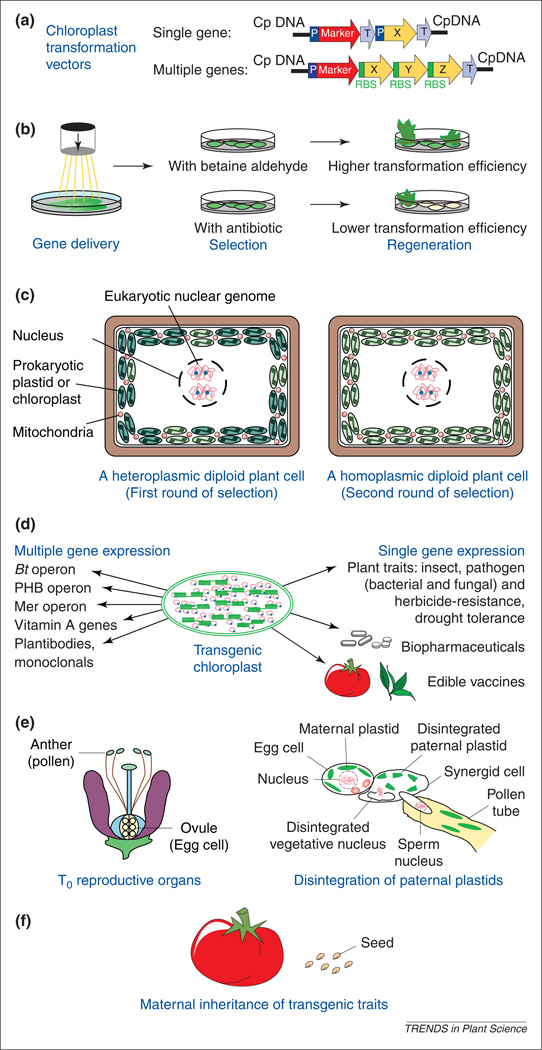
Chloroplast genomes defied the laws of Mendelian inheritance at the dawn of plant genetics, and continue to defy the mainstream approach to biotechnology, leading the field in an environmentally friendly direction. Recent success in engineering the chloroplast genome for resistance to herbicides, insects, disease and drought, and for production of biopharmaceuticals, has opened the door to a new era in biotechnology. The successful engineering of tomato chromoplasts for high-level transgene expression in fruits, coupled to hyper-expression of vaccine antigens, and the use of plant-derived antibiotic-free selectable markers, augur well for oral delivery of edible vaccines and biopharmaceuticals that are currently beyond the reach of those who need them most.
Figures
References
-
- Scott SE, Wilkinson MJ. Low probability of chloroplast movement from oilseed rape (Brassica napus) into wild Brassica rapa. Nat. Biotechnol. 1999;17:390–392. - PubMed
-
- Daniell H, et al. Marker free transgenic plants: engineering the chloroplast genome without the use of antibiotic selection. Curr. Genet. 2001;39:109–116. - PubMed
-
- Daniell H, et al. Antibiotic free chloroplast genetic engineering – an environmentally friendly approach. Trends Plant Sci. 2001;6:237–239. - PubMed
Publication types
MeSH terms
Substances
Grants and funding
LinkOut - more resources
Full Text Sources
Other Literature Sources
