Pharmacokinetics and anticonvulsant effects of diazepam in children with severe falciparum malaria and convulsions
- PMID: 11849195
- PMCID: PMC1874558
- DOI: 10.1046/j.0306-5251.2001.01529.x
Pharmacokinetics and anticonvulsant effects of diazepam in children with severe falciparum malaria and convulsions
Abstract
Aims: Convulsions are a common complication of severe malaria in children and are associated with poor outcome. Diazepam is used to terminate convulsions but its pharmacokinetics and pharmacodynamics have not been studied in this group. Accordingly, we carried out a comparative study of the pharmacokinetics of intravenous (i.v.) and rectal (p.r.) diazepam.
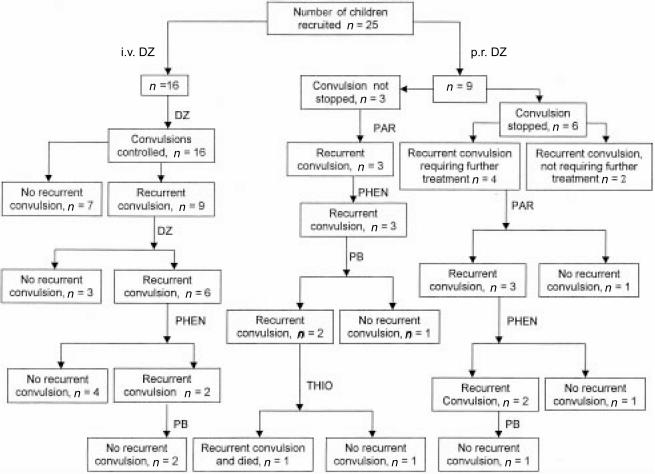
Methods: Twenty-five children with severe malaria and a convulsion lasting >5 min were studied. Sixteen children received diazepam intravenously (i.v.; 0.3 mg kg(-1)) and nine rectally (p.r.; 0.5 mg kg(-1)). Plasma diazepam concentrations were measured by reversed phase high-performance liquid chromatography. The duration of convulsions, depth of coma, respiratory and cardiovascular parameters were monitored.
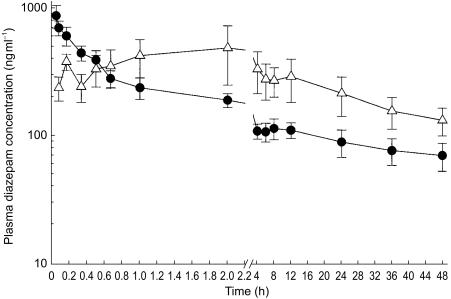
Results: Median maximum plasma diazepam concentrations of 634 (range 402-1507) ng ml(-1) and 423 (range 112-1953) ng ml(-1) were achieved at 5 and 25 min following i.v. and p.r. administration, respectively. All patients except three (one i.v. and two p.r.) achieved plasma diazepam concentration >200 ng ml(-1) within 5 min. Following p.r. administration, plasma diazepam concentrations were more variable than i.v. administration. A single dose of i.v. diazepam terminated convulsions in all children but in only 6/9 after p.r. administration. However, nine children treated with i.v. and all those treated with p.r. diazepam had a recurrence of convulsions occurring at median plasma diazepam concentrations of 157 (range: 67-169) and 172 (range: 74-393) ng ml(-1) , respectively. All the children in the i.v. and four in the PR diazepam group who had recurrence of convulsions required treatment. None of the children developed respiratory depression or hypotension.
Conclusions: Administration of diazepam i.v. or p.r. resulted in achievement of therapeutic concentrations of diazepam rapidly, without significant cardio-respiratory adverse effects. However, following p.r. administration, diazepam did not terminate all convulsions and plasma drug concentrations were more variable.
Figures
References
-
- Asindi AA, Ekanem EE, Ibia EO, Nwangwa MA. Upsurge of malaria-related convulsions in a paediatric emergency room in Nigeria. Consequence of emergence of chloroquine-resistant Plasmodium falciparum. Trop Geogr Med. 1993;45:110–113. - PubMed
-
- Waruiru CM, Newton CR, Forster D, et al. Epileptic seizures and malaria in Kenyan children. Trans R Soc Trop Med Hyg. 1996;90:152–155. - PubMed
-
- Wattanagoon Y, Srivilairit S, Looareesuwan S, White NJ. Convulsions in childhood malaria. Trans R Soc Trop Med Hyg. 1994;88:426–428. - PubMed
-
- Newton CRJC, Krishna S. Severe falciparum malaria in children; current understanding of pathophysiology and supportive treatment. Pharmacol Ther. 1998;79:1–53. - PubMed
-
- Molyneux ME, Taylor TE, Wirima JJ, Borgstein A. Clinical features and prognostic indicators in paediatric cerebral malaria: a study of 131 comatose Malawian children. Q J Med. 1989;71:441–459. - PubMed
Publication types
MeSH terms
Substances
LinkOut - more resources
Full Text Sources
Medical
Research Materials