


Helicobacter pylori associated gastric diseases and lymphoid tissue hyperplasia in gastric antral mucosa
- PMID: 11865009
- PMCID: PMC1769586
- DOI: 10.1136/jcp.55.2.133
Helicobacter pylori associated gastric diseases and lymphoid tissue hyperplasia in gastric antral mucosa
Abstract
Aim: To investigate the relation between Helicobacter pylori associated gastroduodenal diseases and lymphoid tissue hyperplasia in the antral mucosa and to pursue its evolution after eradication of H pylori.
Methods: Gastric antral biopsy specimens were obtained from 438 patients with H pylori positive gastroduodenal diseases (185 chronic gastritis, 69 gastric ulcer, and 184 duodenal ulcer) and 50 H pylori negative healthy controls. Lymphoid follicles and aggregates were counted and other pathological features were scored according to the updated Sydney system for classification of chronic gastritis. After a course of anti-H pylori treatment, biopsy specimens were obtained at four to six weeks, 12 months, and 24 months in the chronic gastritis patient group.
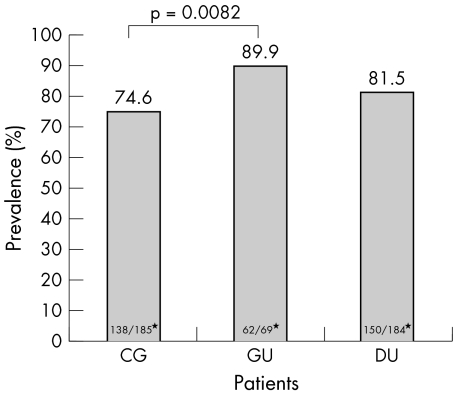
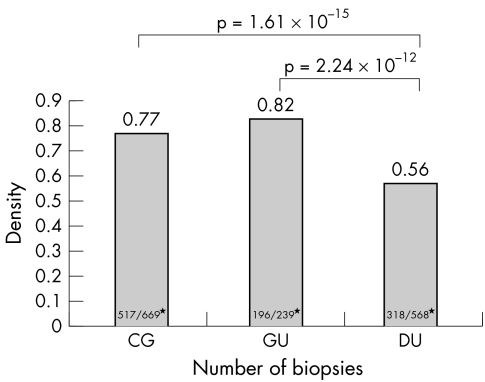
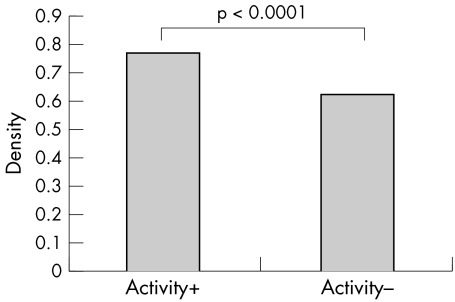
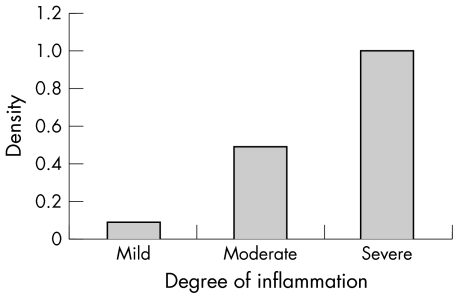
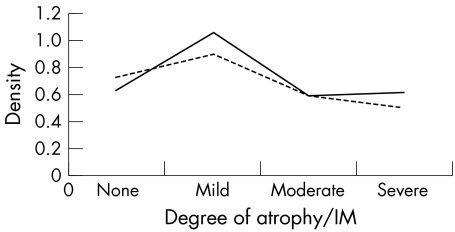
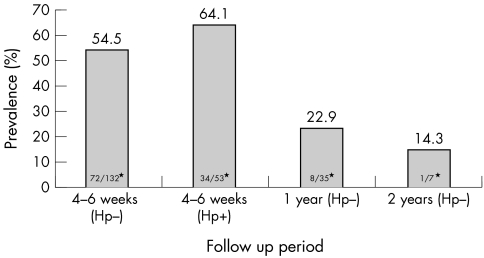
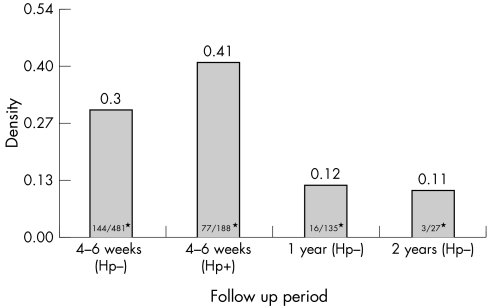
Results: The total prevalence of lymphoid follicles and aggregates in the biopsies was 79.9% (350 of 438; 95% confidence intervals (CI), 0.76 to 0.84). The prevalence and density of lymphoid follicles and aggregates were significantly different in the various gastroduodenal diseases. The highest prevalence (89.9%; 95% CI, 0.83 to 0.97) and density (0.82) of lymphoid follicles and aggregates occurred in patients with gastric ulcers. The lowest prevalence of lymphoid follicles and aggregates was found in patients with chronic gastritis (74.6%; 95% CI, 0.68 to 0.81), and the lowest density of lymphoid follicles and aggregates (0.56) was seen in patients with duodenal ulcers. The prevalence and density of lymphoid follicles and aggregates correlated strongly with the activity and severity of gastric antral mucosal inflammation. The eradication of H pylori resulted in a decrease in the prevalence and density of lymphoid follicles and aggregates.
Conclusion: The prevalence and density of lymphoid follicles and aggregates in gastric antral mucosal biopsies correlated closely with H pylori infection.
Figures
References
-
- Wothespoon A, Doglionil C, Diss T, et al. Regression of primary low-grade B-cell gastric lymphoma of mucosa-associated lymphoid tissue type after eradication of Helicobacter pylori. Lancet 1993;342:575–9. - PubMed
-
- Isaacson PG. Recent developments in our understanding of gastric lymphomas. Am J Surg Pathol 1996;20(suppl 1):s1–7. - PubMed
-
- Owen DA. Normal histology of the stomach. Am J Surg Pathol 1986;10:48–61. - PubMed
-
- Dixon MF, Genta RM, Yardley JH, et al. Classification and grading of gastritis, the update Sydney system. Am J Surg Pathol 1996;20:1161–81. - PubMed
Publication types
MeSH terms
LinkOut - more resources
Full Text Sources
Other Literature Sources
Medical
