


Vascular immunotargeting of glucose oxidase to the endothelial antigens induces distinct forms of oxidant acute lung injury: targeting to thrombomodulin, but not to PECAM-1, causes pulmonary thrombosis and neutrophil transmigration
- PMID: 11891211
- PMCID: PMC1867171
- DOI: 10.1016/S0002-9440(10)64935-8
Vascular immunotargeting of glucose oxidase to the endothelial antigens induces distinct forms of oxidant acute lung injury: targeting to thrombomodulin, but not to PECAM-1, causes pulmonary thrombosis and neutrophil transmigration
Abstract
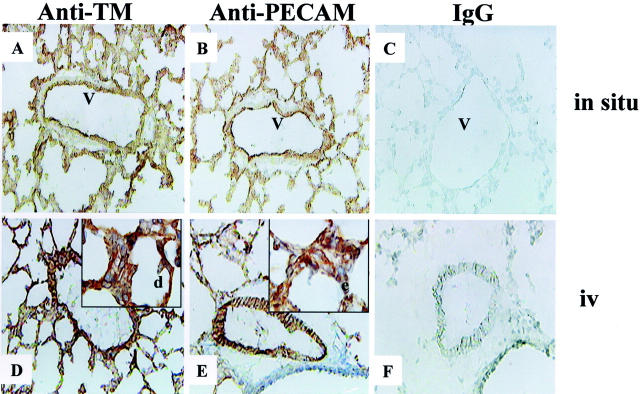
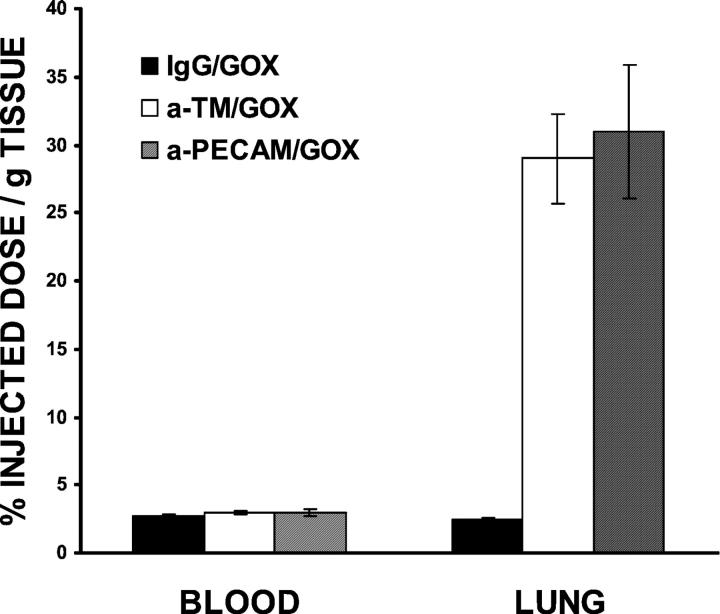
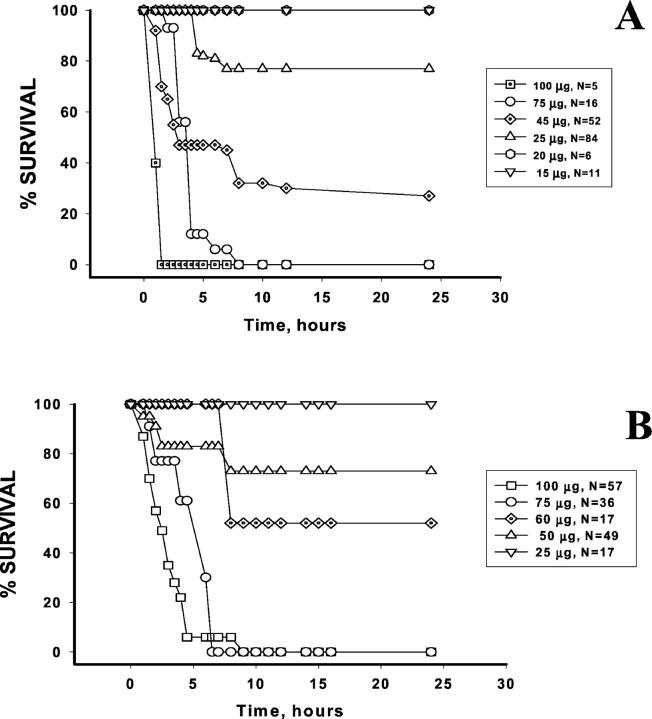
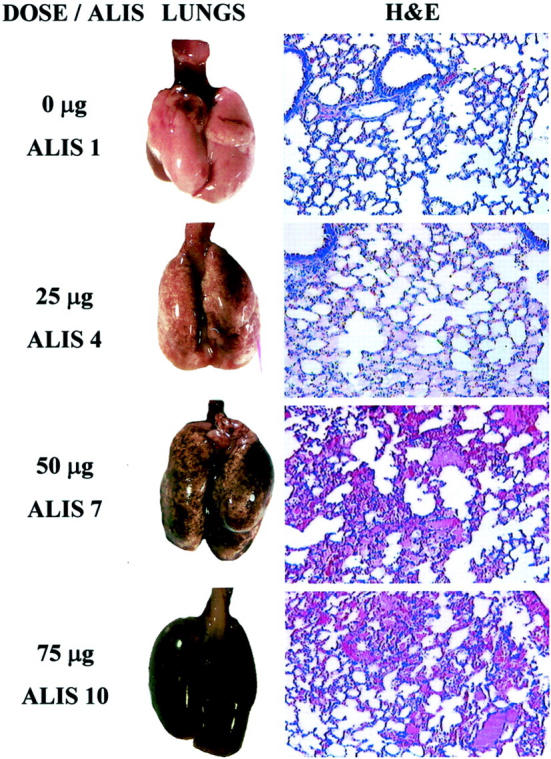
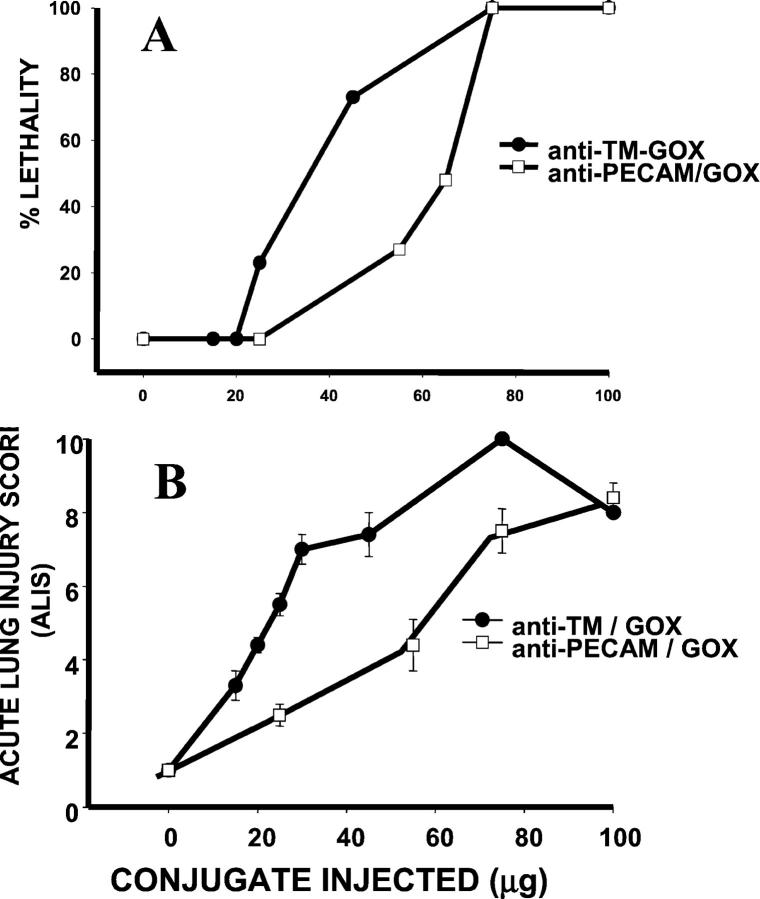
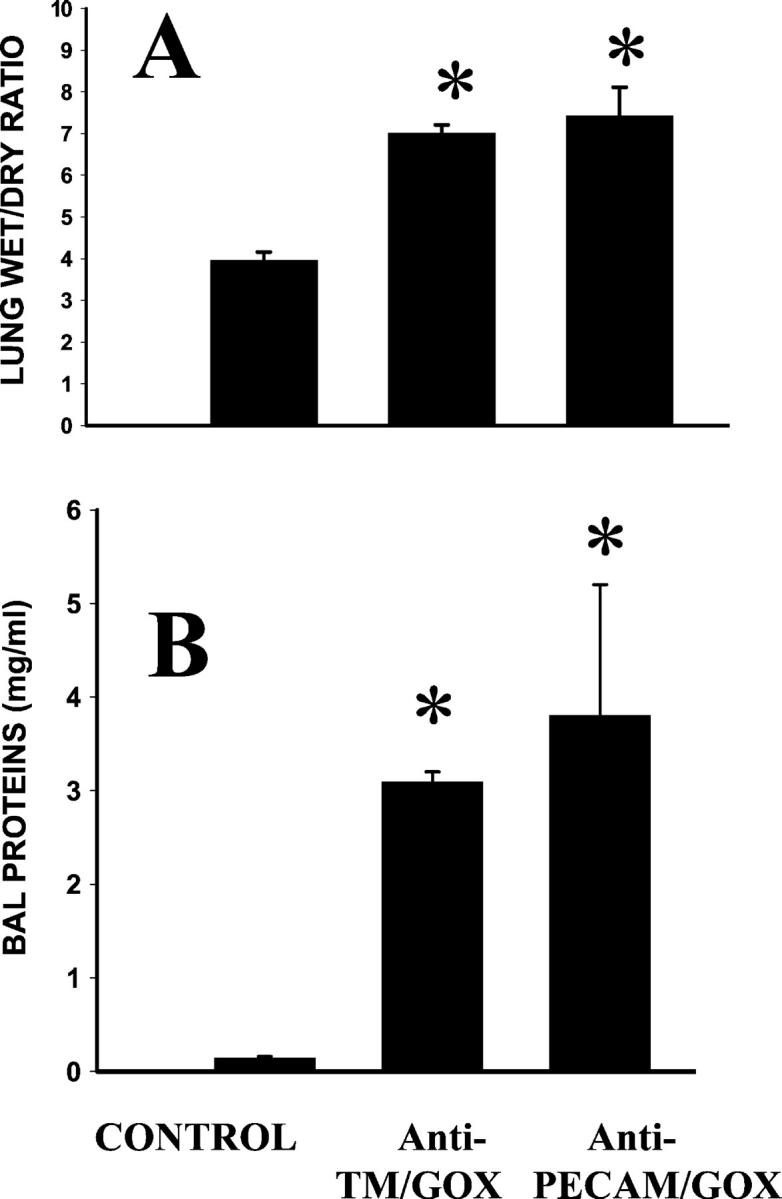
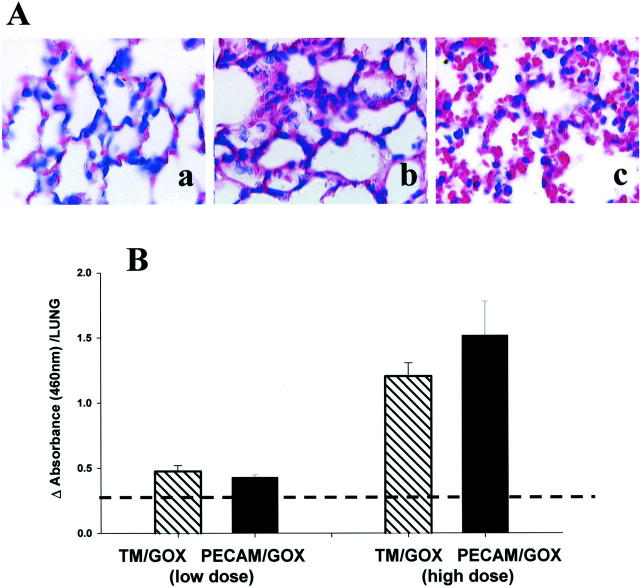
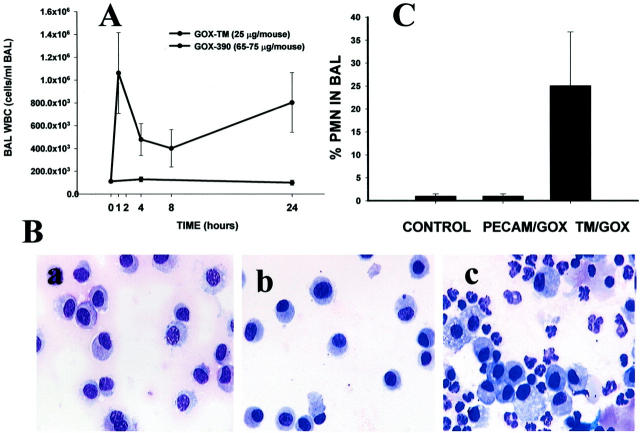
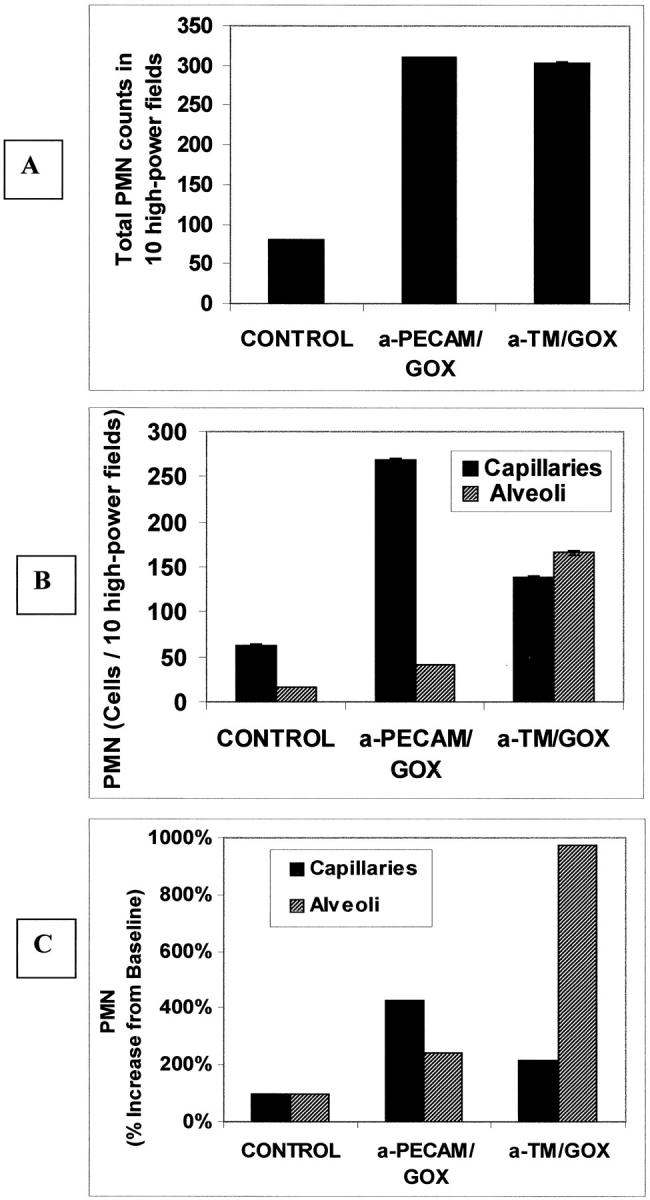
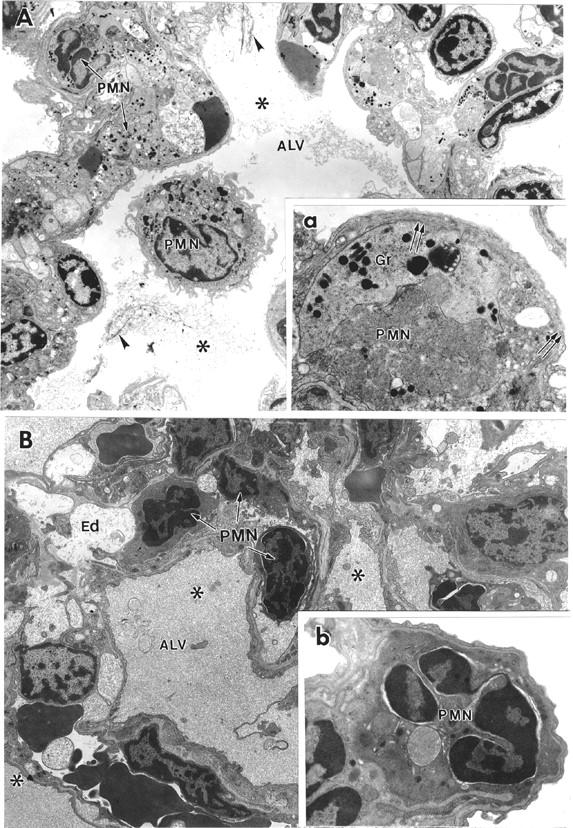
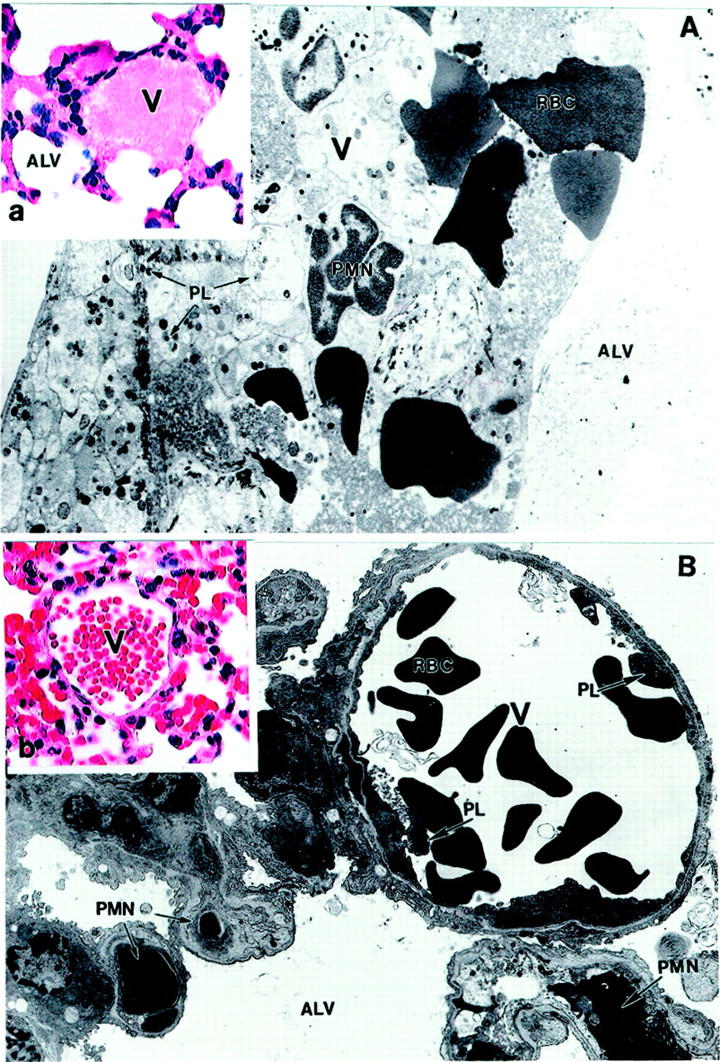
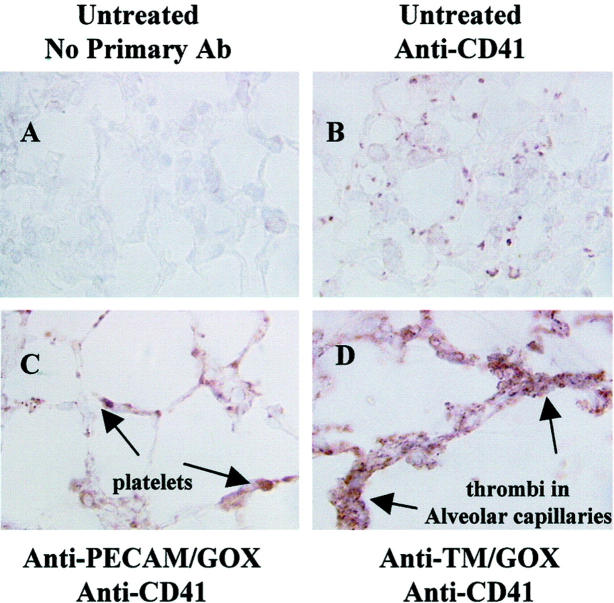
Oxidative endothelial stress, leukocyte transmigration, and pulmonary thrombosis are important pathological factors in acute lung injury/acute respiratory distress syndrome (ALI/ARDS). Vascular immunotargeting of the H(2)O(2)-generating enzyme glucose oxidase (GOX) to the pulmonary endothelium causes an acute oxidative lung injury in mice.(1) In the present study we compared the pulmonary thrombosis and leukocyte transmigration caused by GOX targeting to the endothelial antigens platelet-endothelial cell adhesion molecule (PECAM) and thrombomodulin (TM). Both anti-PECAM and anti-TM delivered similar amounts of (125)I-GOX to the lungs and caused a dose-dependent, tissue-selective lung injury manifested within 2 to 4 hours by high lethality, vascular congestion, polymorphonuclear neutrophil (PMN) sequestration in the pulmonary vasculature, severe pulmonary edema, and tissue oxidation, yet at an equal dose, anti-TM/GOX inflicted more severe lung injury than anti-PECAM/GOX. Moreover, anti-TM/GOX-induced injury was accompanied by PMN transmigration in the alveolar space, whereas anti-PECAM/GOX-induced injury was accompanied by PMN degranulation within vascular lumen without PMN transmigration, likely because of PECAM blockage. Anti-TM/GOX caused markedly more severe pulmonary thrombosis than anti-PECAM/GOX, likely because of TM inhibition. These results indicate that blocking of specific endothelial antigens by GOX immunotargeting modulates important pathological features of the lung injury initiated by local generation of H(2)O(2) and that this approach provides specific and robust models of diverse variants of human ALI/ARDS in mice. In particular, anti-TM/GOX causes lung injury combining oxidative, prothrombotic, and inflammatory components characteristic of the complex pathological picture seen in human ALI/ARDS.
Figures

References
-
- Christofidou-Solomidou M, Pietra G, Solomides C, Argiris E, Harshaw D, FitzGerald G, Albelda S, Muzykantov V: Immunotargeting of glucose oxidase to endothelium in vivo causes oxidative vascular injury in the lungs. Am J Physiol 2000, 278:L794-L805 - PubMed
-
- Ward P, Hanninghake G: Lung inflammation and fibrosis. Am J Respir Crit Care Med 1998, 157:S123-S129 - PubMed
-
- Rinaldo J, Christman J: ARDS: pathogenesis. Fishman AP eds. Pulmonary Diseases and Disorders. 1998, :pp 2537-2548 McGraw-Hill, New York
-
- Heinemann HO, Fishman AP: Nonrespiratory functions of mammalian lung. Physiol Rev 1969, 49:1-47
-
- Vesconi S, Rossi GP, Pesenti A, Fumagalli R, Gattinoni L: Pulmonary microthrombosis in severe adult respiratory distress syndrome. Crit Care Med 1988, 16:111-113 - PubMed
Publication types
MeSH terms
Substances
LinkOut - more resources
Full Text Sources
Other Literature Sources
Medical
Miscellaneous
