


Chronic alterations in serotonin function: dynamic neurochemical properties in agonistic behavior of the crayfish, Orconectes rusticus
- PMID: 11891663
- PMCID: PMC4782932
- DOI: 10.1002/neu.10035
Chronic alterations in serotonin function: dynamic neurochemical properties in agonistic behavior of the crayfish, Orconectes rusticus
Abstract
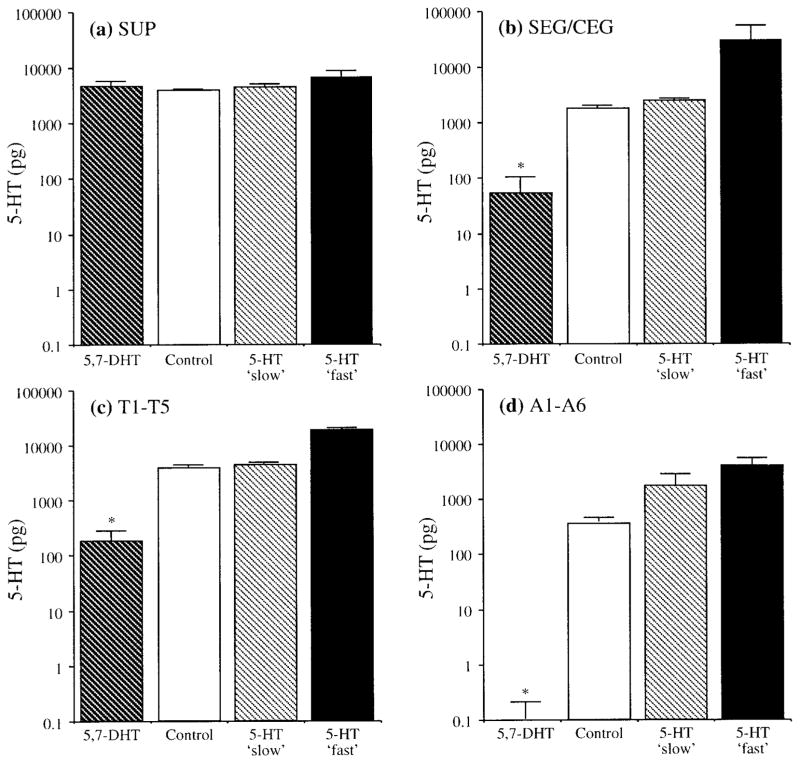
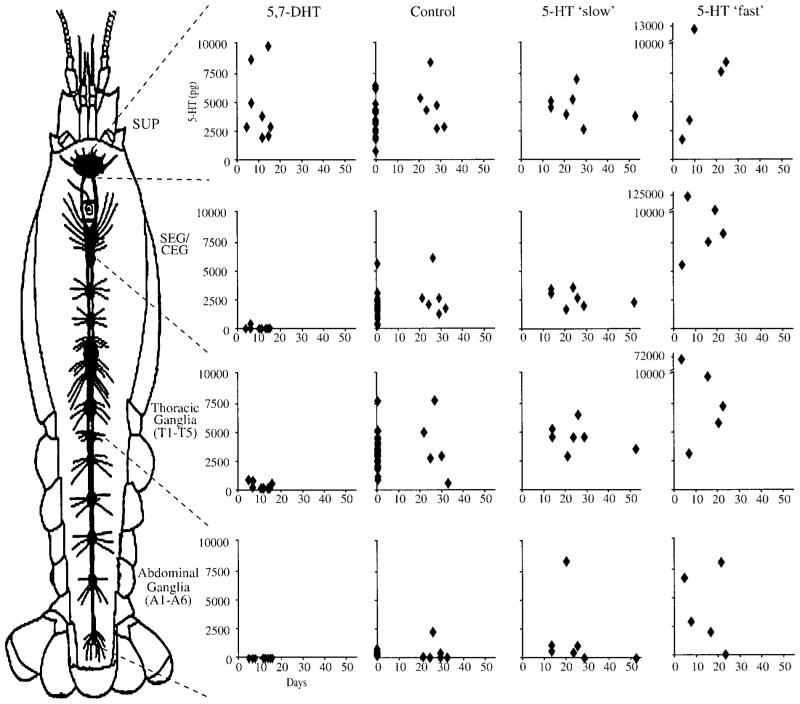
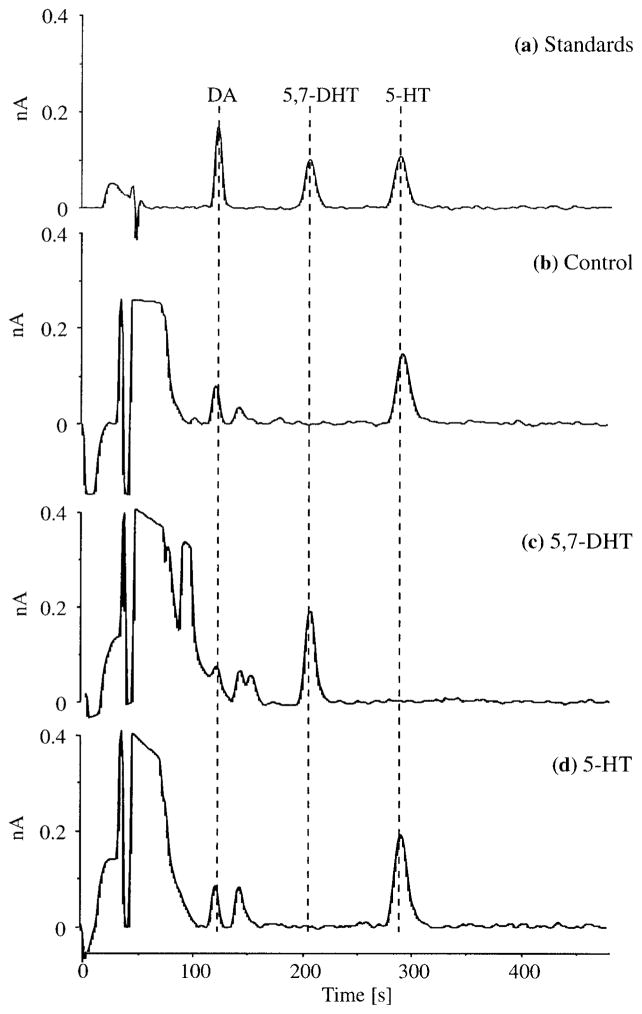
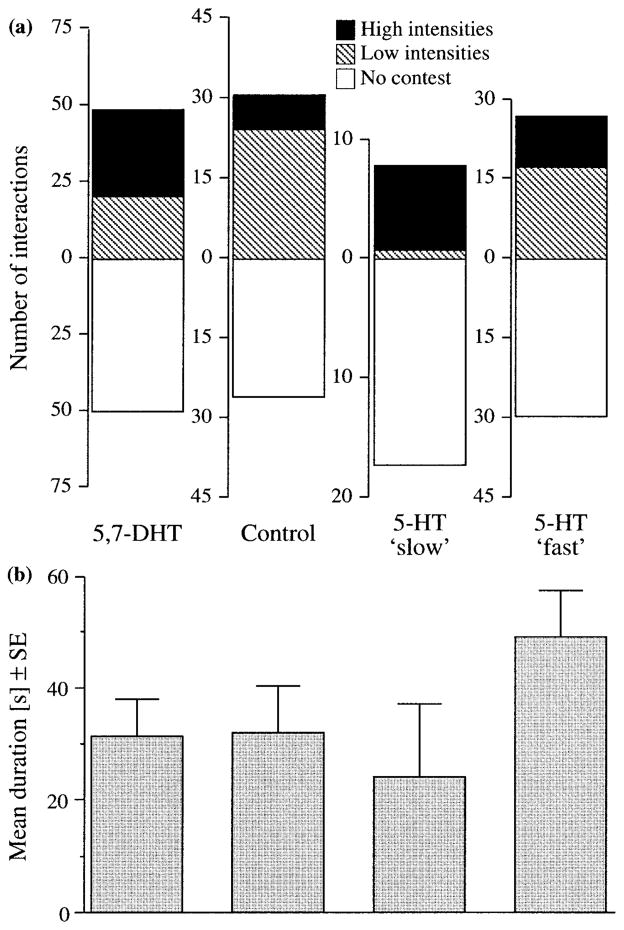
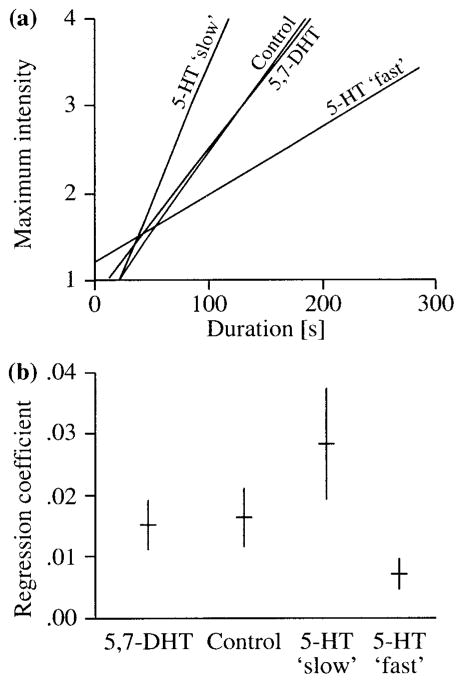
The biogenic amine serotonin [5-hydroxytryptamine (5-HT)] has received considerable attention for its role in behavioral phenomena throughout a broad range of invertebrate and vertebrate taxa. Acute 5-HT infusion decreases the likelihood of crayfish to retreat from dominant opponents. The present study reports the biochemical and behavioral effects resulting from chronic treatment with 5-HT-modifying compounds delivered for up to 5 weeks via silastic tube implants. High performance liquid chromatography with electrochemical detection (HPLC-ED) confirmed that 5,7-dihydroxytryptamine (5,7-DHT) effectively reduced 5-HT in all central nervous system (CNS) areas, except brain, while a concurrent accumulation of the compound was observed in all tissues analyzed. Unexpectedly, two different rates of chronic 5-HT treatment did not increase levels of the amine in the CNS. Behaviorally, 5,7-DHT treated crayfish exhibited no significant differences in measures of aggression. Although treatment with 5-HT did not elevate 5-HT content in the CNS, infusion at a slow rate caused animals to escalate more quickly while 5-HT treatment at a faster rate resulted in slower escalation. 5,7-DHT is commonly used in behavioral pharmacology and the present findings suggest its biochemical properties should be more thoroughly examined. Moreover, the apparent presence of powerful compensatory mechanisms indicates our need to adopt an increasingly dynamic view of the serotonergic bases of behavior like crayfish aggression.
Figures
References
-
- Amstislavskaya TG, Kudryavtseva NN. Effect of repeated experience of victory and defeat in daily agonistic confrontations on brain tryptophan hydroxylase activity. Fed Euro Biochem Soc. 1997;406:106–108. - PubMed
-
- Antonsen BL, Paul DH. Serotonin and octopamine elicit sterotypical agonistic behaviors in the squat lobster Munidia quadrispina (Anomura, Galatheidae) J Comp Physiol A. 1997;181:501–510.
-
- Arnold AP, Schlinger BA. Sexual-differentiation of brain and behavior: the zebra finch is not just a flying rat. Brain Behav Evol. 1993;42:231–241. - PubMed
-
- Ase AR, Reader TA, Hen R, Riad M, Descarries L. Altered serotonin and dopamine metabolism in the CNS of serotonin 5-HT1A or 5-HT1B receptor knockout mice. J Neurochem. 2000;75:2415–2426. - PubMed
-
- Austad SN. Game theory and the evolution of animal contests. Trends Ecol Evol. 1989;4:2–3.
Publication types
MeSH terms
Substances
Grants and funding
LinkOut - more resources
Full Text Sources
