


Lower sensitivity to stress and altered monoaminergic neuronal function in mice lacking the NMDA receptor epsilon 4 subunit
- PMID: 11896172
- PMCID: PMC6758257
- DOI: 10.1523/JNEUROSCI.22-06-02335.2002
Lower sensitivity to stress and altered monoaminergic neuronal function in mice lacking the NMDA receptor epsilon 4 subunit
Abstract
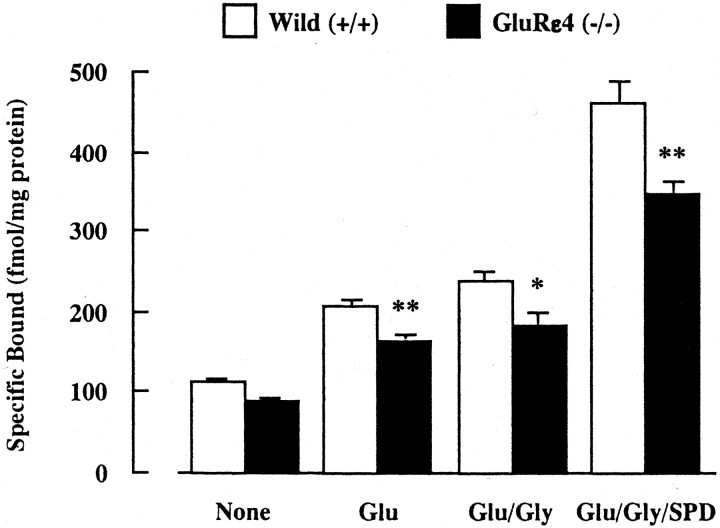
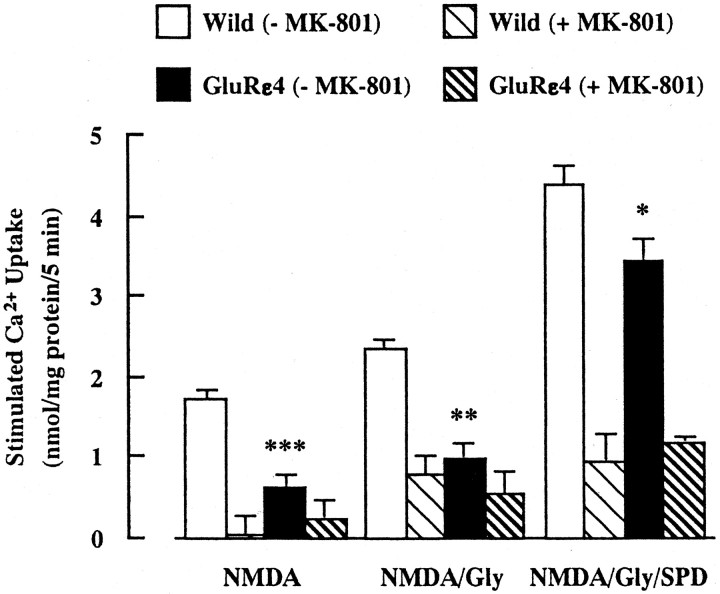
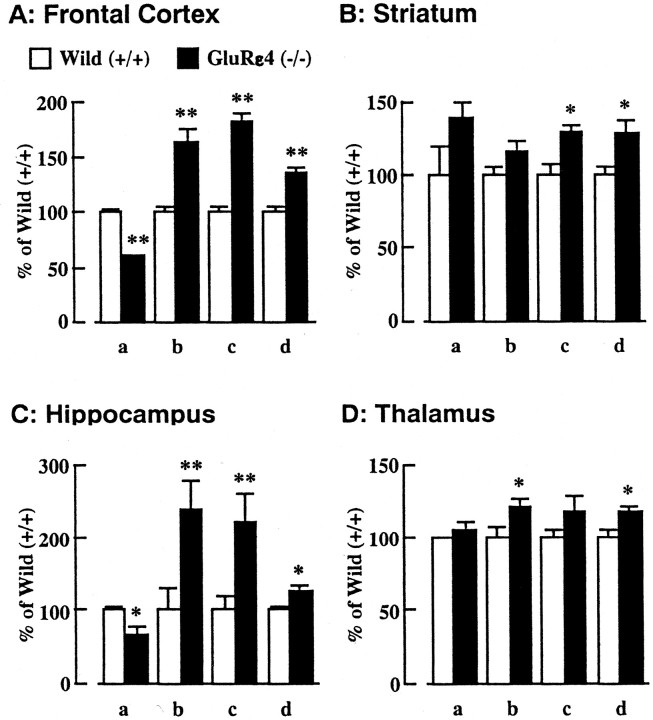
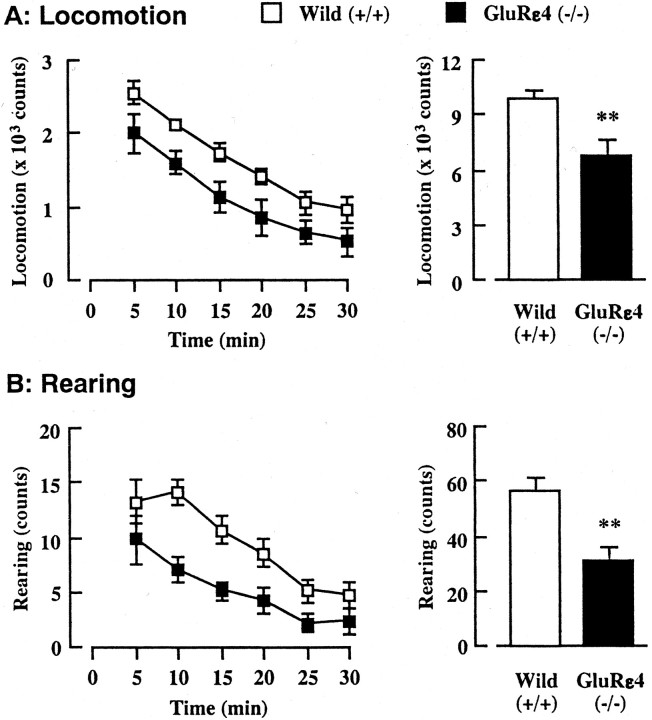
NMDA receptors, an ionotropic subtype of glutamate receptors (GluRs), play an important role in excitatory neurotransmission, synaptic plasticity, and brain development. They are composed of the GluRzeta subunit (NR1) combined with any one of four GluRepsilon subunits (GluRepsilon1-GluRepsilon4; NR2A-NR2D). Although the GluRzeta subunit exists in the majority of the CNS throughout all stages of development, the GluRepsilon subunits are expressed in distinct temporal and spatial patterns. In the present study, we investigated neuronal functions in mice lacking the embryonic GluRepsilon4 subunit. GluRepsilon4 mutant mice exhibited reductions of [(3)H]MK-801 [(+)-5-methyl-10,11-dihydro-5H-dibenzo [a,d] cyclohepten-5,10-imine maleate] binding and (45)Ca(2+) uptake through the NMDA receptors. The expression of GluRzeta subunit protein, but not GluRepsilon1 and GluRepsilon2 subunit proteins, was reduced in the frontal cortex and striatum of the mutant mice. A postmortem examination in GluRepsilon4 mutant mice revealed that tissue contents of norepinephrine, dopamine, serotonin, and their metabolites were reduced in the hippocampus and that dopamine, as well as serotonin, metabolism was upregulated in the frontal cortex, striatum, hippocampus, and thalamus. To clarify the phenotypical influences of the alteration in neuronal functions, performances in various behavioral tests were examined. GluRepsilon4 mutant mice showed reduced spontaneous locomotor activity in a novel environment and less sensitivity to stress induced by the elevated plus-maze, light-dark box, and forced swimming tests. These findings suggest that GluRepsilon4 mutant mice have dysfunctional NMDA receptors and altered emotional behavior probably caused by changes in monoaminergic neuronal activities in adulthood.
Figures


References
-
- Chaouloff F, Durand M, Mormede P. Anxiety- and activity-related effects of diazepam and chlordiazepoxide in the rat light/dark and dark/light tests. Behav Brain Res. 1997;85:27–35. - PubMed
-
- Contestabile A. Roles of NMDA receptor activity and nitric oxide production in brain development. Brain Res Rev. 2000;32:476–509. - PubMed
-
- Dalvi A, Rodgers RJ. GABAergic influences on plus-maze behaviour in mice. Psychopharmacology. 1996;128:380–397. - PubMed
-
- Forrest D, Yuzaki M, Soares HD, Hg L, Luk DC, Sheng M, Stewart CL, Morgan JI, Connor JA, Curran T. Targeted disruption of NMDA receptor 1 gene abolishes NMDA response and results in neonatal death. Neuron. 1994;13:325–338. - PubMed
Publication types
MeSH terms
Substances
LinkOut - more resources
Full Text Sources
Molecular Biology Databases
