


Broad-range bacterial detection and the analysis of unexplained death and critical illness
- PMID: 11897072
- PMCID: PMC2732447
- DOI: 10.3201/eid0802.010150
Broad-range bacterial detection and the analysis of unexplained death and critical illness
Abstract
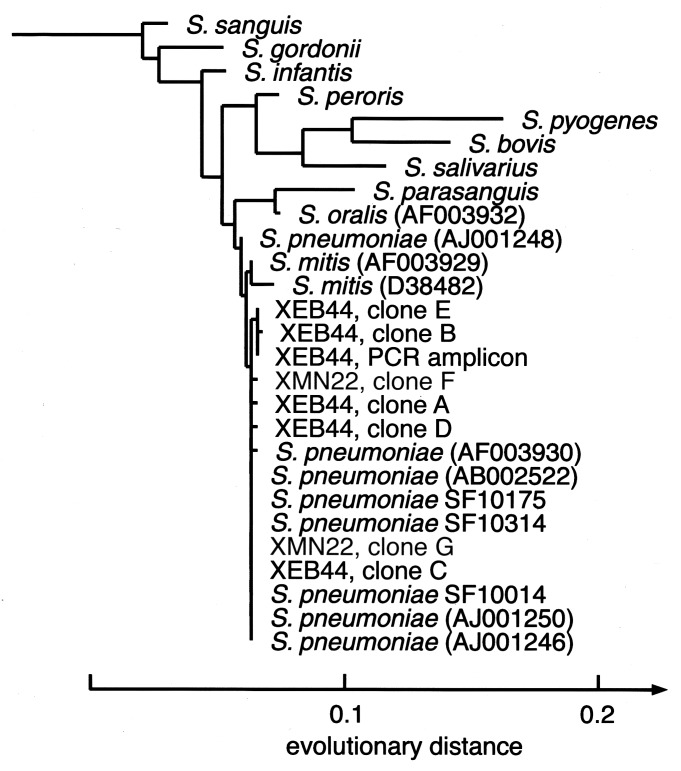
Broad-range rDNA polymerase chain reaction (PCR) provides an alternative, cultivation-independent approach for identifying pathogens. In 1995, the Centers for Disease Control and Prevention initiated population-based surveillance for unexplained life-threatening infections (Unexplained Death and Critical Illness Project [UNEX]). To address the causes of UNEX cases, we examined 59 specimens from 46 cases by using broad-range bacterial 16S rDNA PCR and phylogenetic analysis of amplified sequences. Specimens from eight cases yielded sequences from Neisseria meningitidis (cerebrospinal fluid from two patients with meningitis), Streptococcus pneumoniae (cerebrospinal fluid from one patient with meningitis2 and pleural fluid from two patients with pneumonia), or Stenotrophomonas maltophilia (bone marrow aspirate from one patient with pneumonia). Streptococcus pneumoniae rDNA sequence microheterogeneity was found in one pleural fluid specimen, suggesting the presence of multiple strains. In conclusion, known bacterial pathogens cause some critical illnesses and deaths that fail to be explained with traditional diagnostic methods.
Figures
References
-
- Perkins BA, Flood JM, Danila R, Holman RC, Reingold AL, Klug LA, et al. Unexplained deaths due to possibly infectious causes in the United States: defining the problem and designing surveillance and laboratory approaches. The Unexplained Deaths Working Group. Emerg Infect Dis. 1996;2:47–53. - PMC - PubMed
-
- Relman DA, Loutit JS, Schmidt TM, Falkow S, Tompkins LS. The agent of bacillary angiomatosis. An approach to the identification of uncultured pathogens. N Engl J Med. 1990;323:1573–80. - PubMed
-
- Relman DA, Schmidt TM, MacDermott RP, Falkow S. Identification of the uncultured bacillus of Whipple's disease. N Engl J Med. 1992;327:293–301. - PubMed
MeSH terms
Substances
LinkOut - more resources
Full Text Sources
Medical
Molecular Biology Databases