


Stimulation of pulmonary vagal C-fibres by anandamide in anaesthetized rats: role of vanilloid type 1 receptors
- PMID: 11897863
- PMCID: PMC2290177
- DOI: 10.1113/jphysiol.2001.013290
Stimulation of pulmonary vagal C-fibres by anandamide in anaesthetized rats: role of vanilloid type 1 receptors
Abstract
This study was carried out to determine the effect of intravenous injection of anandamide on pulmonary C-fibre afferents and the cardiorespiratory reflexes. In anaesthetized, spontaneously breathing rats, intravenous bolus injection of anandamide near the right atrium immediately elicited the pulmonary chemoreflex responses, characterized by apnoea, bradycardia and hypotension. After perineural treatment of both cervical vagi with capsaicin to block the conduction of C-fibres, anandamide no longer evoked these reflex responses. In open-chest, and artificially ventilated rats, anandamide injection evoked an abrupt and intense discharge in vagal pulmonary C-fibres in a dose-dependent manner. After injection of the high dose, the fibre discharge generally started within 1 s, reached a peak in approximately 2 s, and returned to baseline within 7 s. The stimulation of C-fibres by anandamide was completely and reversibly blocked by pretreatment with capsazepine, a competitive antagonist of the vanilloid type 1 receptor. Anandamide (0.4 mg kg(-1)) stimulated approximately 93 % of pulmonary C-fibres that were activated by capsaicin at a much lower dose (0.6 microg kg(-1)); the response to anandamide showed similar intensity, but had slightly longer latency and duration than that to capsaicin. In conclusion, intravenous bolus injection of anandamide evokes a consistent and distinct stimulatory effect on pulmonary C-fibre terminals, and this effect appears to be mediated through an activation of the vanilloid type 1 receptor.
Figures
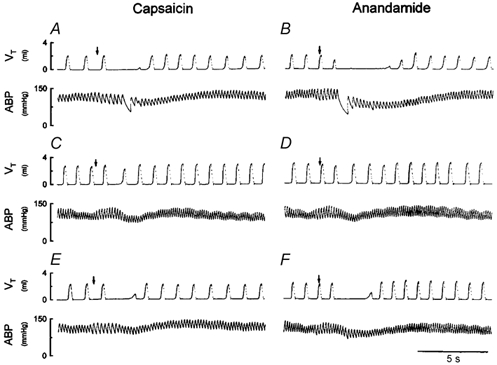
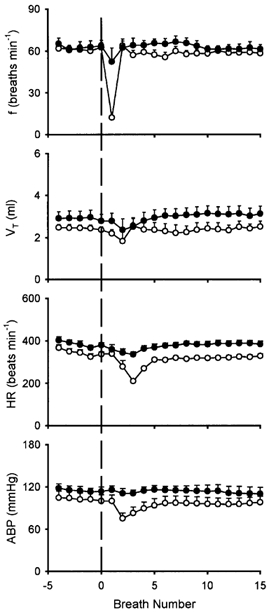
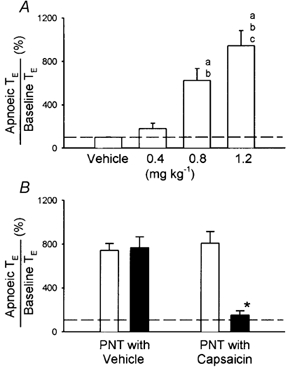
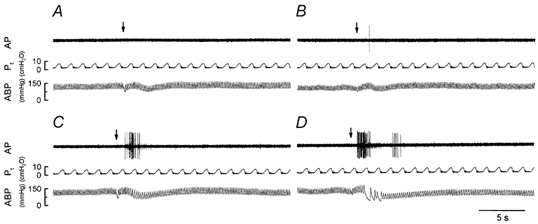
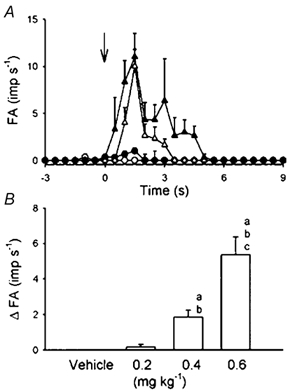
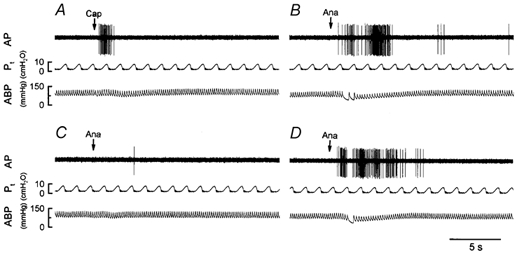
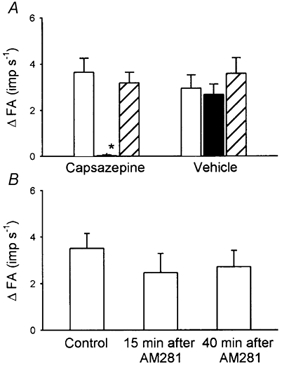
 ) after pretreatment with capsazepine (3 mg kg−1; n = 11) or vehicle (n = 7). B, afferent responses to injections of anandamide (0.4–0.6 mg kg−1) before, and 15 and 40 min after pretreatment with AM281 (0.3 mg kg−1; n = 7). *P < 0.05, compared with the corresponding control. Data of each group are means ±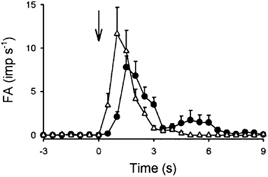
References
-
- Bevan S, Geppetti P. Protons: small stimulants of capsaicin-sensitive sensory nerves. Trends in Neurosciences. 1994;17:509–512. - PubMed
-
- Caterina MJ, Schumacher MA, Tominaga M, Rosen TA, Levine JD, Julius D. The capsaicin receptor: a heat-activated ion channel in the pain pathway. Nature. 1997;389:816–824. - PubMed
-
- Coleridge JC, Coleridge HM. Afferent vagal C fibre innervation of the lungs and airways and its functional significance. Reviews of Physiology Biochemistry and Pharmacology. 1984;99:1–110. - PubMed
-
- Cosenza M, Gifford AN, Gatley SJ, Pyatt B, Liu Q, Makriyannis A, Volkow ND. Locomotor activity and occupancy of brain cannabinoid CB1 receptors by the antagonist/inverse agonist AM281. Synapse. 2000;38:477–482. - PubMed
Publication types
MeSH terms
Substances
Grants and funding
LinkOut - more resources
Full Text Sources
