


Adrenaline suppression of the macrophage nitric oxide response to lipopolysaccharide is associated with differential regulation of tumour necrosis factor-alpha and interleukin-10
- PMID: 11899430
- PMCID: PMC1783325
- DOI: 10.1046/j.1365-2567.2001.01332.x
Adrenaline suppression of the macrophage nitric oxide response to lipopolysaccharide is associated with differential regulation of tumour necrosis factor-alpha and interleukin-10
Abstract
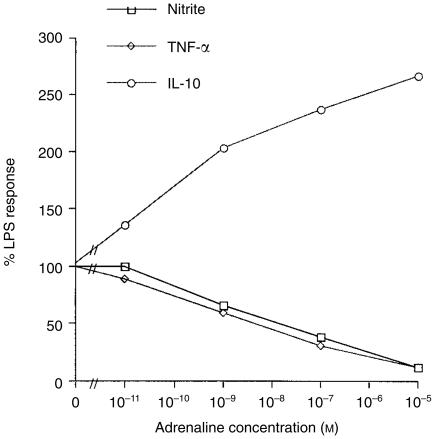
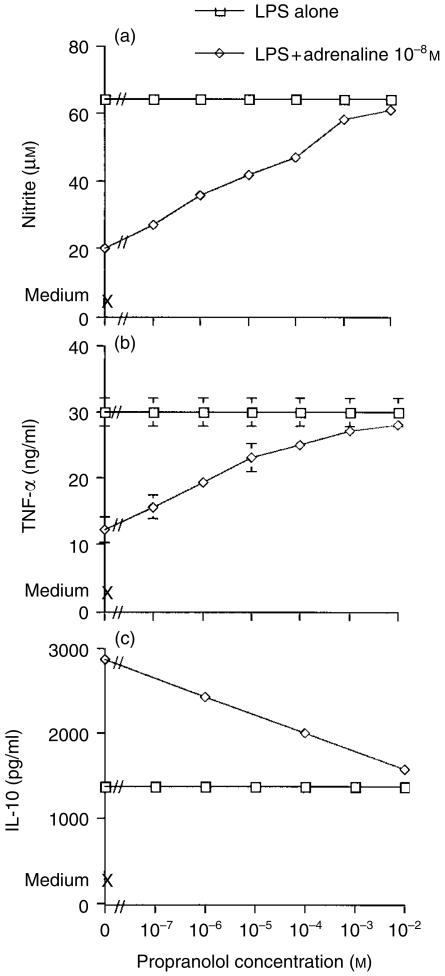
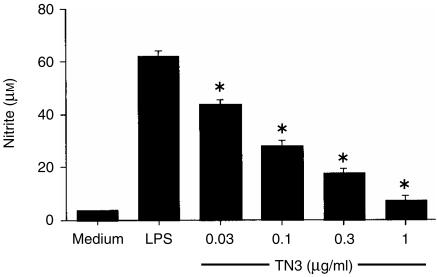
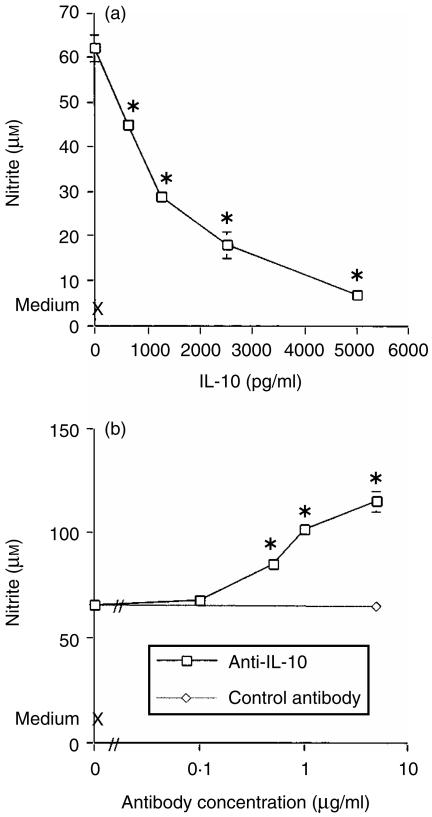
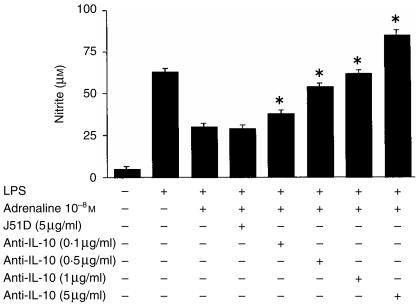
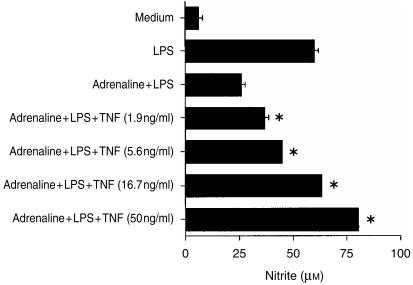
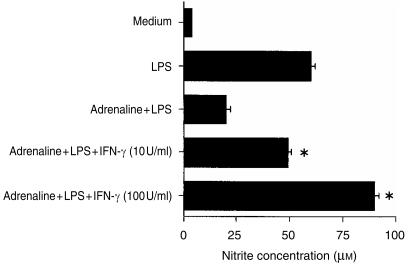
Adrenaline is a catecholamine hormone secreted by the adrenal medulla in response to acute stress. Previous studies have shown that adrenaline suppresses the nitric oxide (NO) response of murine macrophages (M phi s) stimulated in vitro with lipopolysaccharide (LPS). We have now extended these studies to examine the effects of adrenaline on the production of tumour necrosis factor alpha (TNF-alpha) and interleukin-10 (IL-10). Our results showed that NO, TNF-alpha and IL-10 were concurrently produced following in vitro LPS (10 micrograms/ml) stimulation of murine peritoneal M phi s. Adrenaline suppressed both NO and TNF-alpha with concomitant up-regulation of the IL-10 response above that seen with LPS alone. In this in vitro model of LPS stimulation we demonstrated that TNF-alpha was required for NO production, as the TNF-alpha neutralizing monoclonal antibody, TN3.19.12, abolished the response; in contrast, IL-10 suppressed NO. In order to determine any functional consequence of adrenaline-mediated IL-10 augmentation on NO production, M phi s were stimulated with LPS and specific neutralizing anti-IL-10 antibodies were added to the cultures. The LPS NO response was suppressed to 43% of the control value by adrenaline (10(-8) M) and an irrelevant control antibody had no effect on the adrenaline-mediated inhibition of NO, but anti-IL-10 treatment restored the NO response to levels similar to those observed with LPS alone. Furthermore, we demonstrated that exogenous TNF-alpha, at a dose range of 1.9-50 ng per ml, also restored the nitrite response to LPS in the presence of adrenaline. Together, the observations that neutralization of IL-10 and addition of TNF-alpha abrogate adrenaline's inhibition of NO, suggest that this hormone suppresses NO partly through up-regulation of IL-10 which, in turn, may suppress TNF-alpha that is required for NO production. Finally, we also observed that the M phi-activating cytokine, interferon-gamma (IFN-gamma), attenuated the inhibitory effect of adrenaline on the LPS NO response.
Figures
References
-
- Wei X, Charles IG, Smith A, et al. Altered immune response in mice lacking inducible nitric oxide synthetase. Nature. 1995;375:408–11. - PubMed
-
- Beutler B, Milsark IW, Cerami AC. Passive immunisation against cachectin/tumor necrosis factor protects mice from lethal effects of endotoxin. Science. 1985;229:869–71. - PubMed
-
- Casey LC, Balk RA, Bone RC. Plasma cytokine and endotoxin levels correlate with survival in patients with the sepsis syndrome. Ann Intern Med. 1993;119:771–8. - PubMed
-
- Wysocka M, Kubin M, Vieira LQ, Ozmen L, Garotta G, Scott P, Trinchieri G. Interleukin-12 is required for interferon-γ production and lethality in lipopolysaccharide-induced shock in mice. Eur J Immunol. 1995;25:672–6. - PubMed
Publication types
MeSH terms
Substances
LinkOut - more resources
Full Text Sources
