


Initial interaction of rotavirus strains with N-acetylneuraminic (sialic) acid residues on the cell surface correlates with VP4 genotype, not species of origin
- PMID: 11907248
- PMCID: PMC136071
- DOI: 10.1128/jvi.76.8.4087-4095.2002
Initial interaction of rotavirus strains with N-acetylneuraminic (sialic) acid residues on the cell surface correlates with VP4 genotype, not species of origin
Abstract
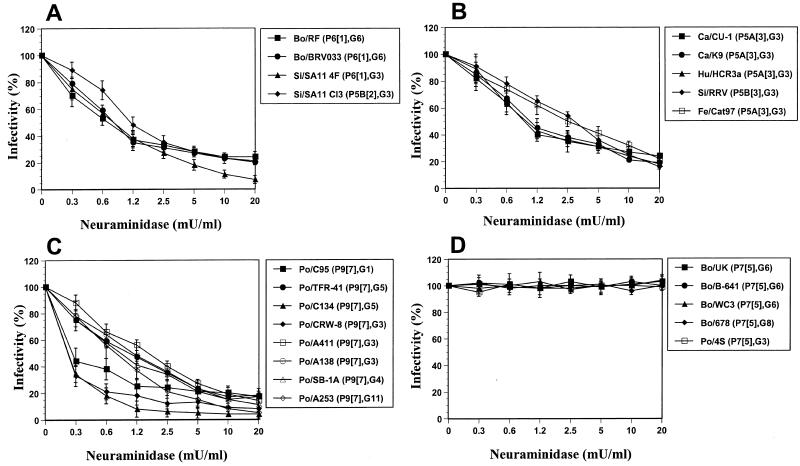
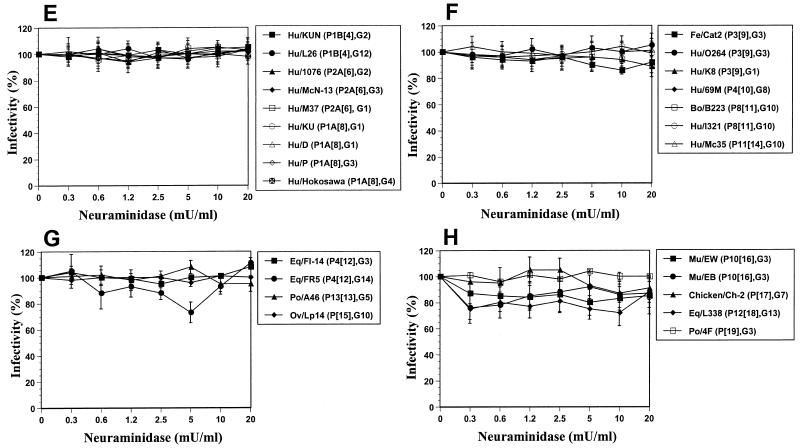
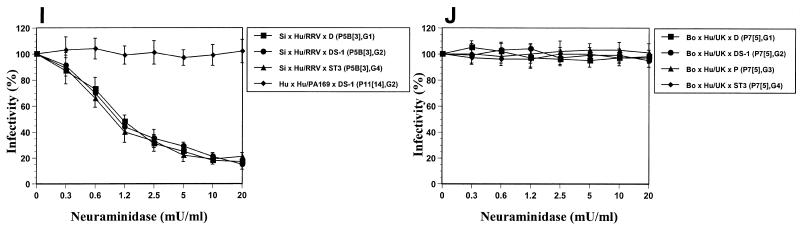
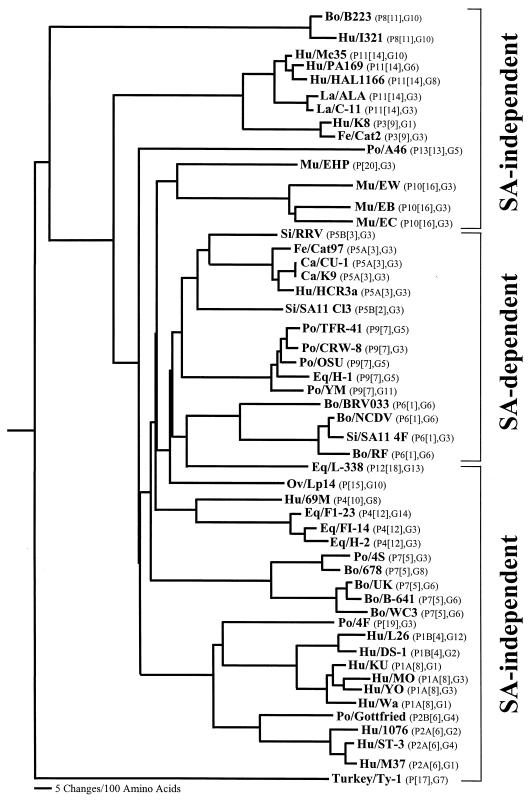
We examined 41 human and animal rotavirus strains representative of all known P genotypes for their dependency on cellular N-acetylneuraminic (sialic) acid (SA) residues for infectivity. Our results showed that all rotaviruses studied, whether of animal or human origin, belonging to P genotypes [1], [2], [3], and [7] depended on SA residues on the cell surface for efficient infectivity but that all human and animal rotavirus strains representative of the remaining known P genotypes were SA independent. The SA residue requirement for efficient infectivity did not change for reassortant rotavirus strains with altered VP4-VP7 combinations. The initial interaction of rotavirus strains with SA residues on the cell surface correlated with VP4 genotype specificity, not with species of origin or VP7 G serotype specificity (P = 0.001; r2 = 1.00, Pearson's correlation coefficient). In addition to being a requirement for infectivity, the presence of SA residues on the cell surface is a requirement for efficient growth in cell culture; recognition of the association of specific P genotypes with the binding of rotavirus to SA residues will facilitate our understanding of the molecular basis of the early events of rotavirus-cell interactions in cell culture models and of pathogenicity in vivo.
Figures
References
-
- Burke, B., M. A. McCrae, and U. Desselberger. 1994. Sequence analysis of two porcine rotaviruses differing in growth in vitro and in pathogenicity: distinct VP4 sequences and conservation of NS53, VP6, and VP7 genes. J. Gen. Virol. 75:2205-2212. - PubMed
-
- Ciarlet, M., and M. K. Estes. 1999. Human and most animal rotavirus strains do not require the presence of sialic acid on the cell surface for efficient infectivity. J. Gen. Virol. 80:943-948. - PubMed
-
- Ciarlet, M., and M. K. Estes. 2001. Interactions between rotavirus and gastrointestinal cells. Curr. Opin. Microbiol. 4:435-441. - PubMed
Publication types
MeSH terms
Substances
Grants and funding
LinkOut - more resources
Full Text Sources
Medical
