


Development, validation, and application of PCR primers for detection of tetracycline efflux genes of gram-negative bacteria
- PMID: 11916697
- PMCID: PMC123860
- DOI: 10.1128/AEM.68.4.1786-1793.2002
Development, validation, and application of PCR primers for detection of tetracycline efflux genes of gram-negative bacteria
Abstract
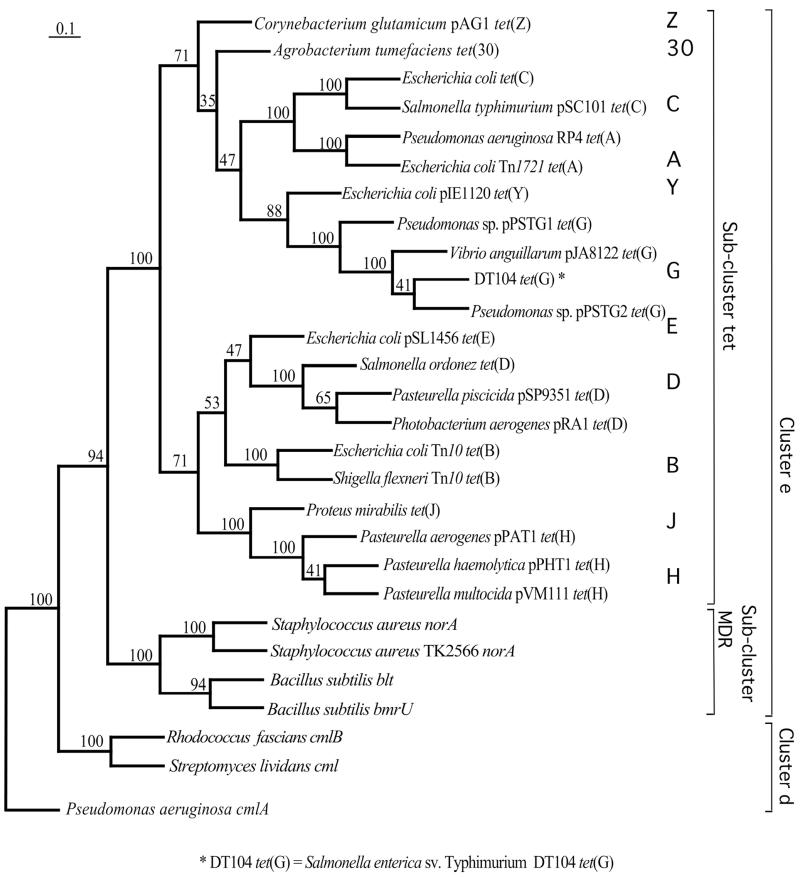
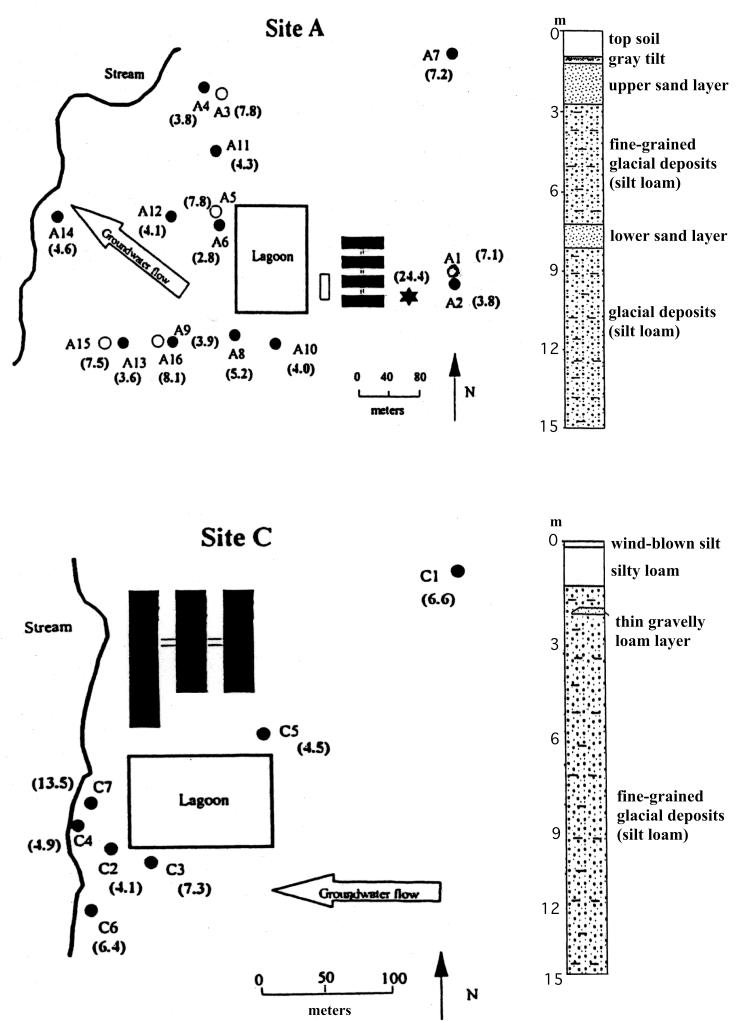
Phylogenetic analysis of tetracycline resistance genes, which confer resistance due to the efflux of tetracycline from the cell catalyzed by drug:H(+) antiport and share a common structure with 12 transmembrane segments (12-TMS), suggested the monophyletic origin of these genes. With a high degree of confidence, this tet subcluster unifies 11 genes encoding tet efflux pumps and includes tet(A), tet(B), tet(C), tet(D), tet(E), tet(G), tet(H), tet(J), tet(Y), tet(Z), and tet(30). Phylogeny-aided alignments were used to design a set of PCR primers for detection, retrieval, and sequence analysis of the corresponding gene fragments from a variety of bacterial and environmental sources. After rigorous validation with the characterized control tet templates, this primer set was used to determine the genotype of the corresponding tetracycline resistance genes in total DNA of swine feed and feces and in the lagoons and groundwater underlying two large swine production facilities known to be impacted by waste seepage. The compounded tet fingerprint of animal feed was found to be tetCDEHZ, while the corresponding fingerprint of total intestinal microbiota was tetBCGHYZ. Interestingly, the tet fingerprints in geographically distant waste lagoons were identical (tetBCEHYZ) and were similar to the fecal fingerprint at the third location mentioned above. Despite the sporadic detection of chlortetracycline in waste lagoons, no auxiliary diversity of tet genes in comparison with the fecal diversity could be detected, suggesting that the tet pool is generated mainly in the gut of tetracycline-fed animals, with a negligible contribution from selection imposed by tetracycline that is released into the environment. The tet efflux genes were found to be percolating into the underlying groundwater and could be detected as far as 250 m downstream from the lagoons. With yet another family of tet genes, this study confirmed our earlier findings that the antibiotic resistance gene pool generated in animal production systems may be mobile and persistent in the environment with the potential to enter the food chain.
Figures
References
-
- Bolivar, F., R. L. Rodriguez, P. J. Greene, M. C. Betlach, H. L. Heyneker, H. W. Boyer, J. H. Crosa, and S. Falkow. 1977. Construction and characterization of new cloning vehicles. II. A multipurpose cloning system. Gene 2:95-113. - PubMed
Publication types
MeSH terms
Substances
LinkOut - more resources
Full Text Sources
Other Literature Sources
