A genome-wide screen for normally methylated human CpG islands that can identify novel imprinted genes
- PMID: 11932239
- PMCID: PMC187522
- DOI: 10.1101/gr.224102
A genome-wide screen for normally methylated human CpG islands that can identify novel imprinted genes
Abstract
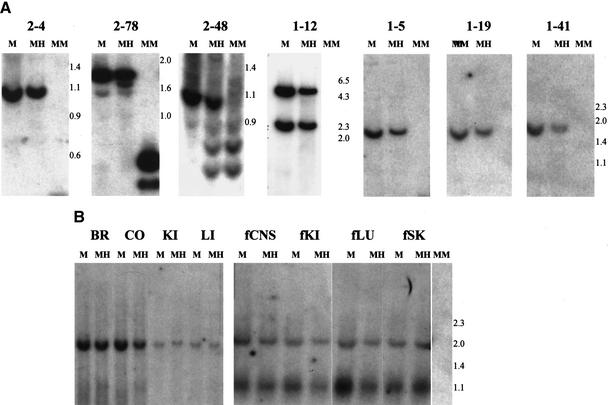
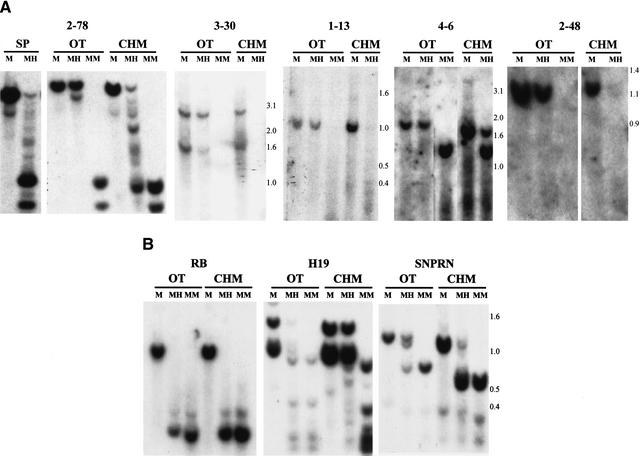
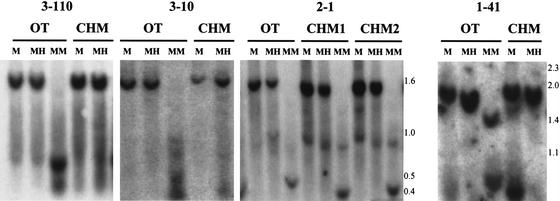
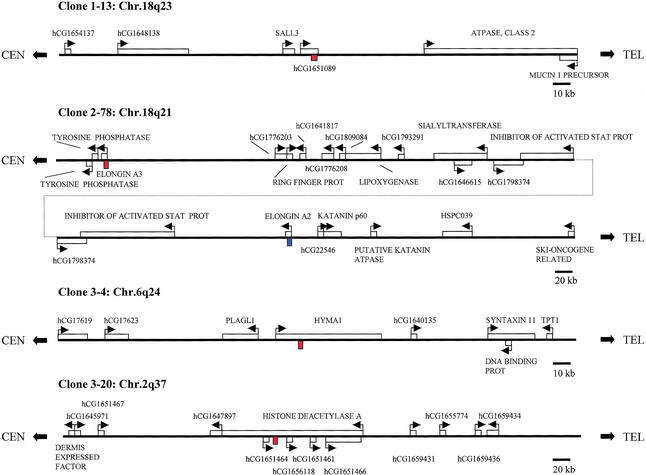
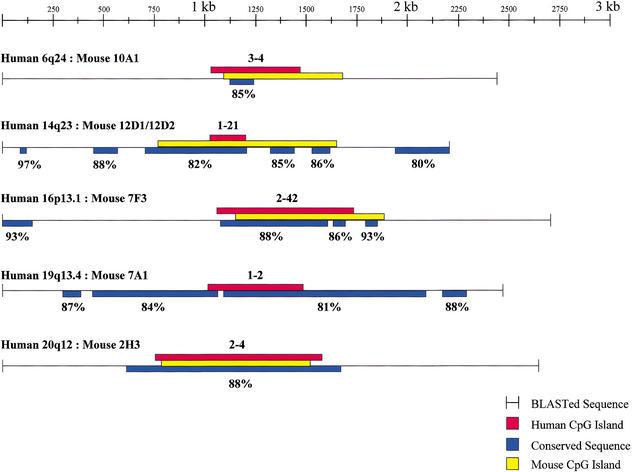
DNA methylation is a covalent modification of the nucleotide cytosine that is stably inherited at the dinucleotide CpG by somatic cells, and 70% of CpG dinucleotides in the genome are methylated. The exception to this pattern of methylation are CpG islands, CpG-rich sequences that are protected from methylation, and generally are thought to be methylated only on the inactive X-chromosome and in tumors, as well as differentially methylated regions (DMRs) in the vicinity of imprinted genes. To identify chromosomal regions that might harbor imprinted genes, we devised a strategy for isolating a library of normally methylated CpG islands. Most of the methylated CpG islands represented high copy number dispersed repeats. However, 62 unique clones in the library were characterized, all of which were methylated and GC-rich, with a GC content >50%. Of these, 43 clones also showed a CpG(obs)/CpG(exp) >0.6, of which 30 were studied in detail. These unique methylated CpG islands mapped to 23 chromosomal regions, and 12 were differentially methylated regions in uniparental tissues of germline origin, i.e., hydatidiform moles (paternal origin) and complete ovarian teratomas (maternal origin), even though many apparently were methylated in somatic tissues. We term these sequences gDMRs, for germline differentially methylated regions. At least two gDMRs mapped near imprinted genes, HYMA1 and a novel homolog of Elongin A and Elongin A2, which we term Elongin A3. Surprisingly, 18 of the methylated CpG islands were methylated in germline tissues of both parental origins, representing a previously uncharacterized class of normally methylated CpG islands in the genome, and which we term similarly methylated regions (SMRs). These SMRs, in contrast to the gDMRs, were significantly associated with telomeric band locations (P =.0008), suggesting a potential role for SMRs in chromosome organization. At least 10 of the methylated CpG islands were on average 85% conserved between mouse and human. These sequences will provide a valuable resource in the search for novel imprinted genes, for defining the molecular substrates of the normal methylome, and for identifying novel targets for mammalian chromatin formation.
Figures



Comment in
-
New twists on the epigenetics of CpG islands.Genome Res. 2002 Apr;12(4):525-6. doi: 10.1101/gr.18002. Genome Res. 2002. PMID: 11932236 Review. No abstract available.
References
-
- Altschul SF, Gish W, Miller W, Myers EW, Lipman DJ. Basic local alignment search tool. J Mol Biol. 1990;215:403–410. - PubMed
-
- Arima T, Drewell RA, Arney KL, Inoue J, Makita Y, Hata A, Oshimura M, Wake N, Surani MA. A conserved imprinting control region at the HYMAI/ZAC domain is implicated in transient neonatal diabetes mellitus. Hum Mol Genet. 2001;10:1475–1483. - PubMed
-
- Arima T, Drewell RA, Oshimura M, Wake N, Surani MA. A novel imprinted gene, HYMAI, is located within an imprinted domain on human chromosome 6 containing ZAC. Genomics. 2000;67:248–255. - PubMed
-
- Aso T, Yamazaki K, Amimoto K, Kuroiwa A, Higashi H, Matsuda Y, Kitajima S, Hatakeyama M. Identification and characterization of Elongin A2, a new member of the Elongin family of transcription elongation factors, specifically expressed in the testis. J Biol Chem. 2000;275:6546–6552. - PubMed
Publication types
MeSH terms
Substances
Associated data
- Actions
- Actions
- Actions
- Actions
- Actions
- Actions
- Actions
- Actions
- Actions
- Actions
- Actions
- Actions
- Actions
- Actions
- Actions
- Actions
- Actions
- Actions
- Actions
- Actions
- Actions
- Actions
- Actions
- Actions
- Actions
- Actions
- Actions
Grants and funding
LinkOut - more resources
Full Text Sources
Other Literature Sources
Medical
Miscellaneous