


Extending life: scientific prospects and political obstacles
- PMID: 11933792
- PMCID: PMC2690099
- DOI: 10.1111/1468-0009.00006
Extending life: scientific prospects and political obstacles
Abstract
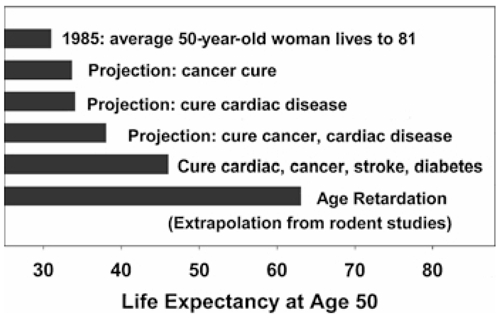
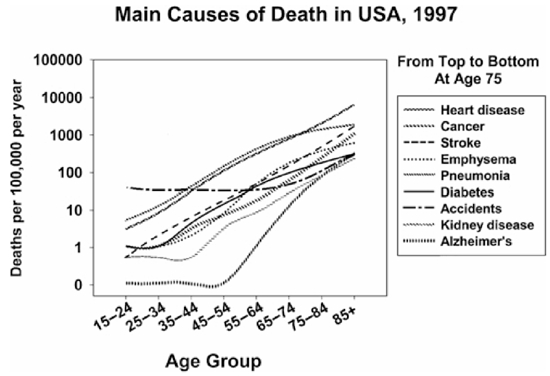
Aging can be slowed in laboratory rodents by low-calorie diets, and changes in single genes can extend mouse life span by 40 percent or more. Therefore, despite its surface complexity and effects on multiple cells and intercellular systems, aging in mammals might also be retarded by both genetic and nongenetic means. If human aging could be slowed pharmacologically to the extent now possible in rodents, the effect on healthy life expectancy would exceed that of abolishing cancer, cardiovascular disease, and adult-onset diabetes. Why, then, is research on the biological control of aging and longevity poorly funded and shunned by both most scientists and those setting national research priorities? Economic disincentives, disease-specific lobby groups, scientific careerism, and ineffective nostrums, together with gerontologiphobia, must be overcome before such research can improve public health.
Figures
References
-
- Austad SN. Retarded Senescence in an Insular Population of Virginia Opossums Didelphis virginiana. Journal of Zoology. 1993;229:695–708.
-
- Austad SN, Fischer KE. Mammalian Aging, Metabolism, and Ecology: Evidence from the Bats and Marsupials. Journals of Gerontology Series A: Biological Sciences and Medical Sciences. 1991;46:B47–53. - PubMed
-
- Brown-Borg HM, Borg KE, Meliska CJ, Bartke A. Dwarf Mice and the Ageing Process. Nature. 1996;384:33. - PubMed
-
- Carey JR, Judge DS. Longevity Records: Life Spans of Mammals, Birds, Amphibians, Reptiles, and Fish. Odense, Denmark: Odense University Press; 2000.
-
- Coschigano KT, Clemmons D, Bellush LL, Kopchick JJ. Assessment of Growth Parameters and Life Span of GHR/BP Gene-Disrupted Mice. Endocrinology. 2000;141:2608–13. - PubMed
MeSH terms
Substances
LinkOut - more resources
Full Text Sources
Other Literature Sources
Medical
