. 2002 May;22(9):2984-92.
doi: 10.1128/MCB.22.9.2984-2992.2002.

Carboxyl-terminal transactivation activity of hypoxia-inducible factor 1 alpha is governed by a von Hippel-Lindau protein-independent, hydroxylation-regulated association with p300/CBP

Affiliations

Carboxyl-terminal transactivation activity of hypoxia-inducible factor 1 alpha is governed by a von Hippel-Lindau protein-independent, hydroxylation-regulated association with p300/CBP

Nianli Sang et al. Mol Cell Biol. 2002 May.

Abstract

Hypoxia-inducible factor 1 complex (HIF-1) plays a pivotal role in oxygen homeostasis and adaptation to hypoxia. Its function is controlled by both the protein stability and the transactivation activity of its alpha subunit, HIF-1 alpha. Hydroxylation of at least two prolyl residues in the oxygen-dependent degradation domain of HIF-1 alpha regulates its interaction with the von Hippel-Lindau protein (VHL) that targets HIF-1 alpha for ubiquitination and proteasomal degradation. Several prolyl hydroxylases have been found to specifically hydroxylate HIF-1 alpha. In this report, we investigated possible roles of VHL and hydroxylases in the regulation of the transactivation activity of the C-terminal activating domain (CAD) of HIF-1 alpha. We demonstrate that regulation of the transactivation activity of HIF-1 alpha CAD also involves hydroxylase activity but does not require functional VHL. In addition, stimulation of the CAD activity by a hydroxylase inhibitor, hypoxia, and desferrioxamine was severely blocked by the adenoviral oncoprotein E1A but not by an E1A mutant defective in targeting p300/CBP. We further demonstrate that a hydroxylase inhibitor, hypoxia, and desferrioxamine promote the functional and physical interaction between HIF-1 alpha CAD and p300/CBP in vivo. Taken together, our data provide evidence that hypoxia-regulated stabilization and transcriptional stimulation of HIF-1 alpha function are regulated through partially overlapping but distinguishable pathways.


Figures
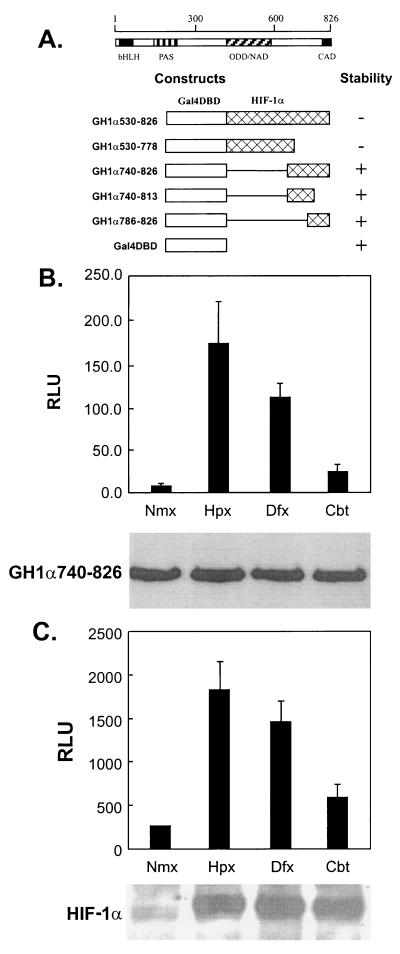
FIG. 1.
FIG. 1.
(A) Schematic structures of HIF-1α and GAL4-H1α constructs used in this study. (B) Effects of hypoxia and hypoxia mimics on the transactivation activity of GH1α740-826. HeLa cells were cotransfected with GH1α740-826 (2.5 μg), pFR-luc reporter (2.5 μg), and pCMVLacZ (0.5 μg). Twenty-four hours later the transfected cells were trypsinized. Fifty percent of the cells were split equally into 12-well culture plates for luciferase assays (top), and the other 50% of the cells were split into 60-mm-diameter dishes to extract proteins for Western blotting with monoclonal antibody against GAL4-DBD (bottom). The cells were cultured under either normoxic (Nmx) or hypoxic (Hpx) (0.5% O2) conditions or with desferrioxamine (Dfx) (130 μM)or cobalt chloride (Cbt) (75 μM), respectively, for 16 h before harvest. (C) Response of endogenous HIF-1 to hypoxia and hypoxic mimics in Hep3B cells. Hep3B cells were transfected with a pEpo-luc reporter (5 μg) and pCMVLacZ (0.5 μg), and the transfected cells were treated as described in panel B. The protein levels of HIF-1α in whole-cell lysates were detected with anti-HIF-1α monoclonal antibody. The luciferase activity was corrected by β-galactosidase activity. RLU, relative luciferase activity.
FIG. 2.
FIG. 2.
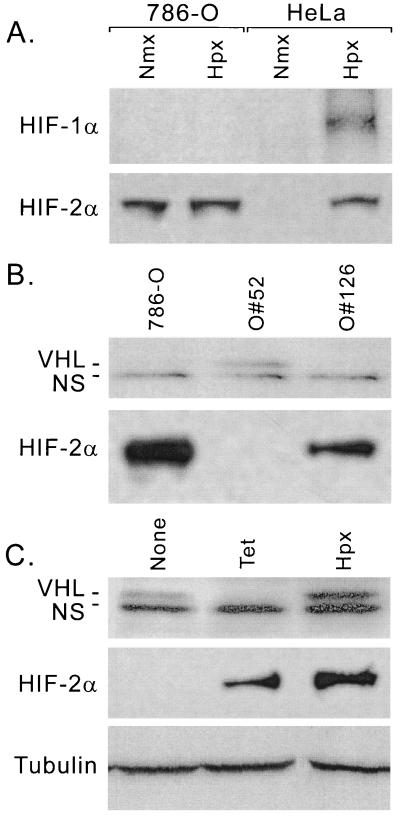
(A) Hypoxia-regulated expression of HIF-α proteins in VHL-deficient cells (786-O). 786-O cells and HeLa cells were cultured under either normoxic (Nmx) (21% O2) or hypoxic (Hpx) (0.5% O2) conditions for 6 h. Whole-cell lysates were prepared and examined for the expression levels of HIF-1α and HIF-2α. (B) Expression of VHL and HIF-2α in 786-O-derived cell lines. Whole-cell lysates prepared from 786-O, 786-O#52, and 786-O#126 cells were fractionated on an SDS-10% polyacrylamide gel and transferred onto a PVDF membrane, and the expression of VHL and HIF-2α was detected by immunoblotting. (C) Regulated expression of VHL in 786-O#52 cells by tetracycline. Cells were seeded and cultured in DMEM with or without 3 μg of tetracycline/ml for a total of 36 h, and the media were changed every 12 h to maintain the tetracycline concentration. Immediately before harvest, cells were exposed to normoxia (21% O2) (lanes 1 and 2) or hypoxia (2% O2) (lane 3) for 12 h. The expression status of VHL and HIF-2α was detected by immunoblot. The same membrane was stripped and detected by a monoclonal antibody against β-tubulin (bottom). NS, nonspecific band.
FIG. 3.
FIG. 3.
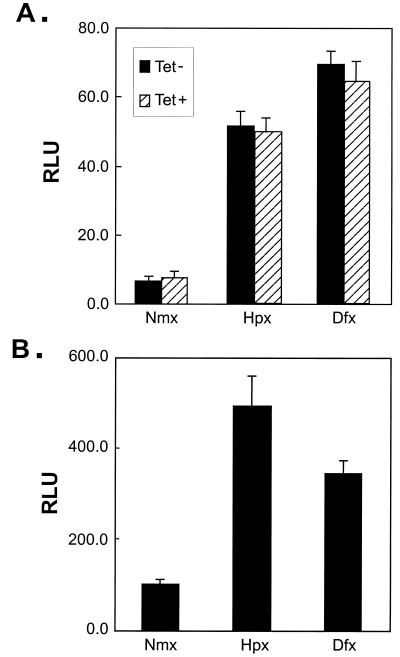
(A) Regulation of CAD activity in 786-O#52 (Tet-off VHL). Cells were seeded and cotransfected with GH1α740-826 and pFR-Luc reporter. After transfection, cells were cultured in DMEM with or without tetracycline (3 μg/ml) for 36 h. Twelve hours before harvest and luciferase assay, cells were treated with hypoxia (Hpx) (2% O2) or desferrioxamine (Dfx) (130 μM). The activity was corrected by cotransfected pRL-CMV. (B) Regulation of CAD activity in 786#126 (VHL) cells. Cells were transfected, treated, and assayed as for panel A, except for the addition of tetracycline. Nmx, normoxic conditions.
FIG. 4.
FIG. 4.
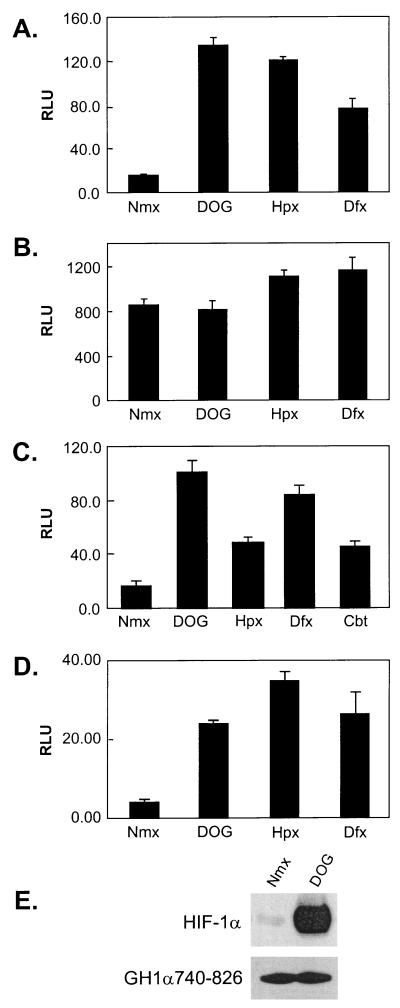
PHD inhibitor induces CAD activity under normoxic conditions. (A and B) HeLa cells were transfected with GH1α740-826 and pFR-luc reporter (A) or GH1α786-826 and pFR-luc (B). Luciferase assays were performed after the cells were treated with DOG (1 mM), hypoxia (Hpx) (2% O2), and desferrioxamine (Dfx) (130 μM) for 12 h. (C and D) Effects of hydroxylase inhibitor on GH1α740-826 in 786-O#52 (VHL+) and 786-O#126 (VHL) cells. (E) Effect of hydroxylase inhibitor on protein stability of GH1α740-826. HeLa cells were transfected with GH1α740-826, pooled, and reseeded in two dishes that were treated with or without DOG. Whole-cell lysates were prepared, and the expression levels of HIF-1α and GH1α740-826 were examined by Western blotting by using anti-HIF-1α and anti-GAL4-DBD monoclonal antibodies, respectively. Cbt, cobalt chloride.
FIG. 5.
FIG. 5.
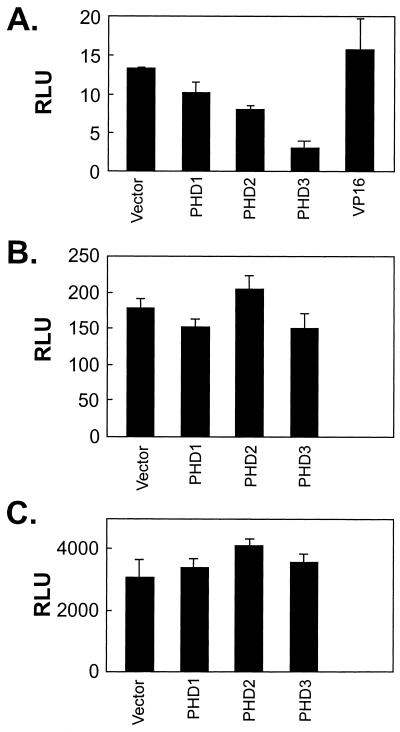
Effects of overexpression of PHDs on CAD activity. HeLa cells were cotransfected with GH1α740-826 (1 μg), pFR-Luc (1 μg), and pRL-CMV (0.1 μg). In addition, either empty vector (3 μg) or plasmids coding for PHD1, PHD2, PHD3, or VP16 (3 μg) was cotransfected (A). Similarly, the effects of PHDs on GH1α786-826 and GVP16 were examined (B and C). RLU, relative luciferase activity.
FIG. 6.
FIG. 6.
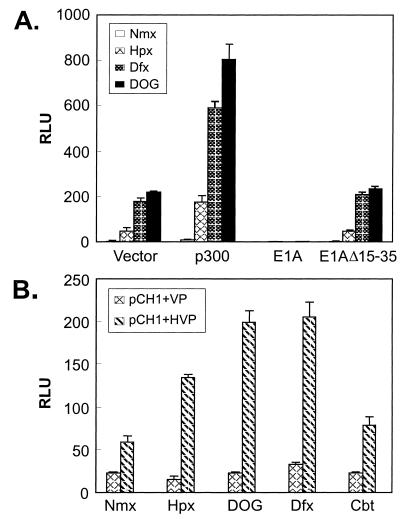
(A) Hydroxylase inhibitor enhances the ability of p300 to potentiate CAD activity. HeLa cells were cotransfected with GH1α740-826 and pFR-Luc. In addition, empty vector, p300, E1A, or an E1A mutant was cotransfected to test its effects on CAD activity. The transfected cells were split and exposed to various conditions as indicated. (B) Hydroxylase inhibitor enhances functional interaction between HIF-1α and the CH1 domain of p300. Indicated combinations of mammalian two-hybrid partners (2 μg of each) were cotransfected with pFR-luc reporter (1.5 μg). Twenty-four hours after transfection, cells were split and subjected to various conditions as indicated. The relative luciferase activity in pDBD-, pHVP-transfected cells was too low to be seen in the chart. Nmx, normoxia; Hpx, hypoxia; Dfx, desferrioxamine; Cbt, cobalt chloride.
FIG. 7.
FIG. 7.
Hydroxylase inhibitor enhances the physical interaction between HIF-1α and p300 in vivo. HeLa cells were transfected with GH1α786-826 (A) or GH1α740-826 (B). Twenty-four hours after transfection, transfected dishes were trypsinized, pooled, and reseeded to fresh dishes to normalize the transfection efficiency. The dishes then were treated overnight with various conditions as indicated (samples 1 to 5). As controls, none-transfected HeLa cells were exposed to normoxia (Nmx) or hypoxia (Hpx) (samples 6 and 7). Whole-cell lysates (WCL) were prepared. WCL (5%) were separated directly through an SDS-10% polyacrylamide gel (top) to check the expression of transgenes. The remaining lysates (95%) were immunoprecipitated (IMP) with a monoclonal antibody against human p300 (bottom, (lanes 1 to 4, 6, and 7) or an anti-E1A monoclonal antibody as the control (bottom, lane 5). The precipitated protein complexes were resolved through an SDS-10% polyacrylamide gel and transferred onto PVDF membranes. The membranes were detected with a monoclonal antibody specific for GAL4-DBD and developed by an ECL kit. Dfx, desferrioxamine.
FIG. 8.
FIG. 8.
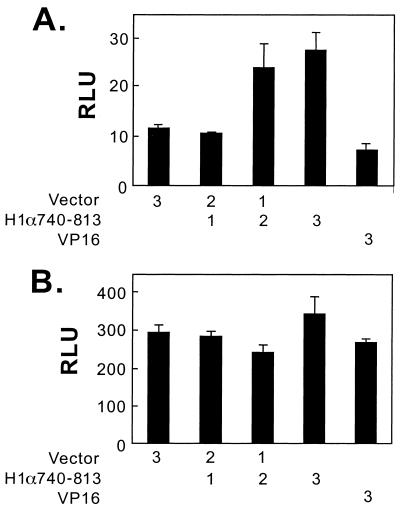
Effect of overexpression of NRR on CAD activity. In Hep3B cells, pFR-Luc (1 μg) and pRL-CMV (0.1 μg) were cotransfected with either GH1α740-826 (1 μg) (A) or GH1α786-826 (B). In addition, the indicated amount (in micrograms) of empty vector, plasmids expressing HIF-1α740-813, or VP16 was cotransfected. Luciferase assays were performed 48 h after transfection, and the luciferase activity (RLU) was corrected by cotransfected pRL-CMV.
FIG. 9.
FIG. 9.
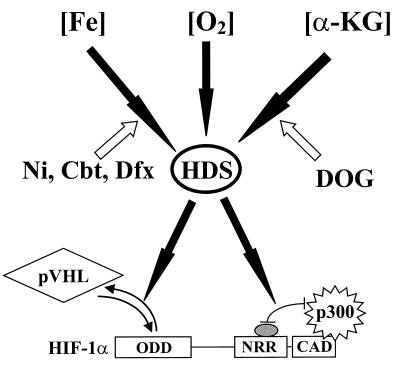
Proposed roles of VHL and hydroxylases (HDS) in HIF-1α stabilization and transactivation. Filled arrows indicate stimulation or enhancement, and empty arrows stand for inhibition or repression.

References

    1. Arany, Z., L. E. Huang, R. Eckner, S. Bhattacharya, C. Jiang, M. A. Goldberg, H. F. Bunn, and D. M. Livingston. 1996. An essential role for p300/CBP in the cellular response to hypoxia. Proc. Natl. Acad. Sci. USA 93:12969-12973. - PMC - PubMed
    1. Avantaggiati, M. L., V. Ogryzko, K. Gardner, A. Giordano, A. S. Levine, and K. Kelly. 1997. Recruitment of p300/CBP in p53-dependent signal pathways. Cell 89:1175-1184. - PubMed
    1. Beck, I., S. Ramirez, R. Weinmann, and J. Caro. 1991. Enhancer element at the 3′ flanking region controls transcriptional response to hypoxia in the human erythropoietin gene. J. Biol. Chem. 266:15563-15566. - PubMed
    1. Bhattacharya, S. M., C. L. Michels, M. K. Leung, Z. P. Arany, A. L. Kung, and D. M. Livingston. 1999. Functional role of p35srj, a novel p300/CBP binding protein, during transactivation by HIF-1. Genes Dev. 13:64-75. - PMC - PubMed
    1. Bruick, R. K., and S. L. McKnight. 2001. A conserved family of prolyl-4-hydroxylases that modify HIF. Science 294:1337-1340. - PubMed

Publication types

MeSH terms

Substances

LinkOut - more resources