NORCCAP (Norwegian colorectal cancer prevention): a randomised trial to assess the safety and efficacy of carbon dioxide versus air insufflation in colonoscopy
- PMID: 11950803
- PMCID: PMC1773222
- DOI: 10.1136/gut.50.5.604
NORCCAP (Norwegian colorectal cancer prevention): a randomised trial to assess the safety and efficacy of carbon dioxide versus air insufflation in colonoscopy
Abstract
Background: To eliminate the risk of combustion during electrosurgical procedures and to reduce patient discomfort, carbon dioxide (CO2) insufflation has been recommended during colonoscopy. However, air insufflation is still the standard method, perhaps due to the lack of suitable equipment and shortage of randomised studies.
Aims: This randomised controlled trial was conducted to assess patient tolerance and safety when using CO2 insufflation during colonoscopy.
Patients: Over an eight month period a successive series of patients referred for a baseline colonoscopy due to findings in a flexible sigmoidoscopy screening trial were randomly assigned to the use of either air or CO2 insufflation during colonoscopy.
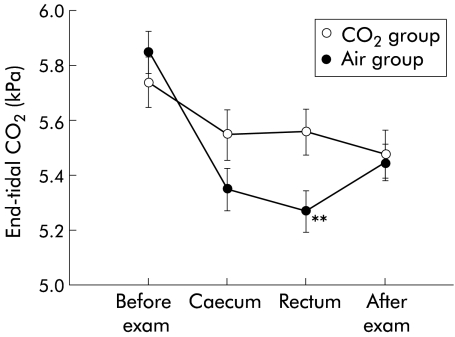
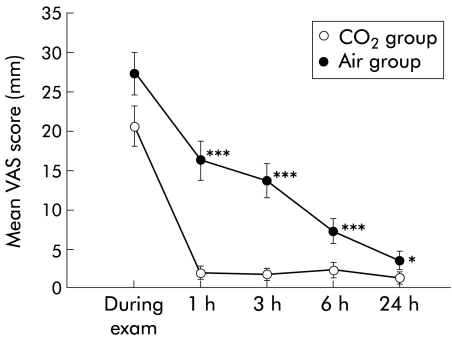
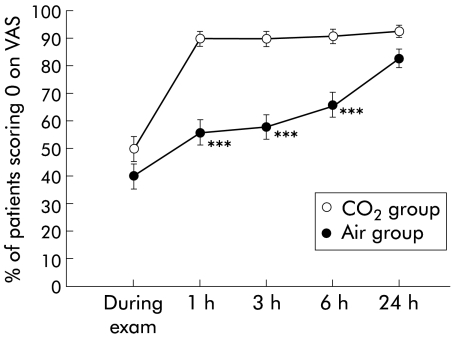
Methods: End tidal CO2 (ETCO2), a non-invasive parameter of arterial pCO2, was registered before and repeatedly during and after the examination. The patient's experience of pain during and after the examination was registered using a visual analogue scale (VAS). Sedation was not used routinely.
Results: CO2 insufflation was used in 121 patients (51%) and air in 119 patients (49%). The groups were similar in age, sex, and caecal intubation rate. No rise in ETCO2 was registered. There were statistically significant differences in VAS scores between the groups with less pain reported when using CO2.
Conclusions: This randomised study of unsedated patients shows that CO2 insufflation is safe during colonoscopy with no rise in ETCO2 level. CO2 was found to be superior to air in terms of pain experienced after the examination.
Figures
References
-
- Carter HG. Explosion in the colon during electrodesiccation of polyps. Am J Surg 1952;11:514–16. - PubMed
-
- Becker GL. Prevention of gas explosions in the large bowel during electrosurgery. Surg Gynecol Obstet 1953;97:463. - PubMed
-
- Williams CB. Who's for CO2? Gastrointest Endosc 1986;32:365–7. - PubMed
-
- Magno R, Medegard A, Bengtsson R, et al. Acid base balance during laparoscopy: The effect of intraperitoneal insufflation of carbon dioxide and nitrous oxide on acid-base balance during controlled ventilation. Acta Obstet Gynecol Scand 1979;58:81–5. - PubMed
-
- Wolf JS Jr. Pathophysiologic effects of prolonged laparoscopic operation. Semin Surg Oncol 1996;12:86–95. - PubMed
Publication types
MeSH terms
Substances
LinkOut - more resources
Full Text Sources
Other Literature Sources
Medical