A survey on gastroenterology training in Europe
- PMID: 11950824
- PMCID: PMC1773215
- DOI: 10.1136/gut.50.5.724
A survey on gastroenterology training in Europe
Abstract
Background: Specialist training in gastroenterology and hepatology is not standardised in different European countries.
Aim: The aim of this survey was to assess the different teaching and socioeconomic aspects of training programmes in Europe.
Methods: Seventy questionnaires were distributed to last year trainees or newly graduated gastroenterologists. Forty two respondents (60%) from 34 major training centres in 10 different European countries replied.
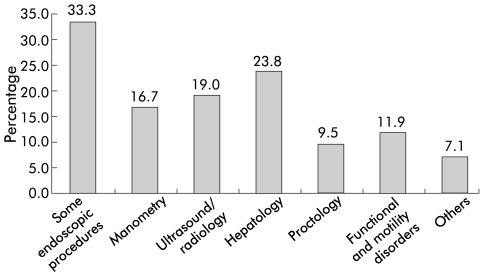
Results: Overall, the data revealed major diversity for all aspects analysed, between and within the different European countries. Both the duration of training (range 4-10.4 years) and workload (range 48.5-89.2 hours per week) differed markedly between countries. The average number of endoscopic procedures (gastroscopies, range 300-2600; colonoscopies, range 73-550; endoscopic retrograde cholangiopancreatographies, range 1-385) differed also. One third of last year trainees reported that they felt uncertain in some endoscopic procedure. The European trainee was on call for 5-6 nights a month on average (range 1-8). Monthly wages differed considerably between countries, ranging from 767 to 2180 Euro.
Conclusion: We found major differences in the professional aspects and socioeconomic conditions of gastroenterologist/hepatologist training in 10 different European countries, probably leading to differences in quality of training. In several countries or centres the average number of procedures was below the threshold issued by the European Board of Gastroenterology or the American Gastroenterological Association. Issuing a European diploma for gastroenterology is a valuable effort towards meeting this problem. Further studies are needed to re-evaluate the training programmes in Europe and to define threshold numbers and technical end points for assessment of endoscopic skills.
Figures
References
-
- European Board of Gastroenterology. General information: The European Board of Gastroenterology and The European Diploma of Gastroenterology. European Board of Gastroenterology, December 1993.
-
- American Society for Gastrointestinal Endoscopy. Statement on endoscopic training. Gastrointest Endosc 1988;88:12. - PubMed
-
- American Society for Gastrointestinal Endoscopy. Standards of practice of gastrointestinal endoscopy. Gastrointest Endosc 1988;88:8.
-
- The Gastroenterology Leadership Council. Training the gastroenterologist of the future: the gastroenterology core curriculum. Gastroenterlogy 1996;110:1266–300. - PubMed
-
- Marshall JB. Technical proficiency of trainees performing colonoscopy: a learning curve. Gastrointest Endosc 1995;42:287–91. - PubMed
MeSH terms
LinkOut - more resources
Full Text Sources
Miscellaneous