


Emergence of group A streptococcus strains with different mechanisms of macrolide resistance
- PMID: 11959545
- PMCID: PMC127159
- DOI: 10.1128/AAC.46.5.1199-1203.2002
Emergence of group A streptococcus strains with different mechanisms of macrolide resistance
Abstract
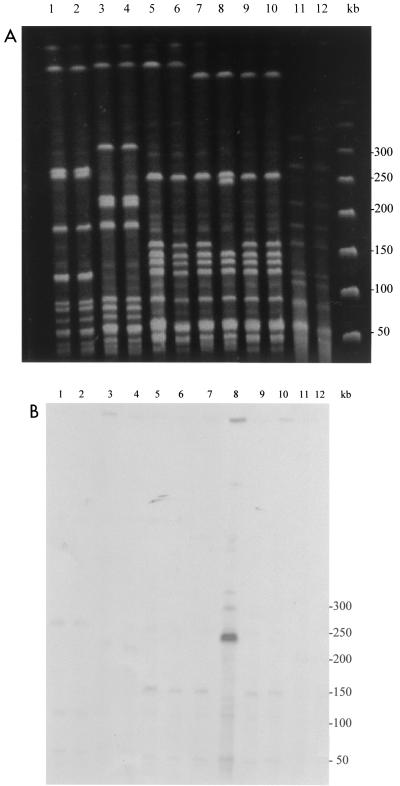
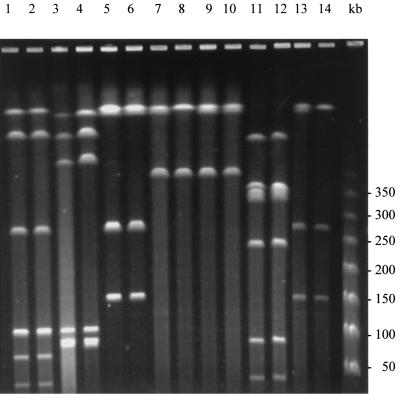
The mechanisms of resistance to macrolides in seven group A streptococcal (Streptococcus pyogenes) isolates that were the cause of pharyngitis in children who were unsuccessfully treated with azithromycin (10 mg/kg of body weight/day for 3 days) were evaluated. All posttreatment strains were found to be genetically related to the pretreatment isolates by random amplified polymorphism DNA analysis and pulsed-field gel electrophoresis. Two isolates had acquired either a mef(A) or an erm(B) gene, responsible for macrolide efflux and ribosomal modification, respectively. Three isolates displayed mutations in the gene encoding the L4 ribosomal protein that is part of the exit tunnel within the 50S subunit of the bacterial ribosome. In the two remaining posttreatment strains, the mechanisms of macrolide resistance could not be elucidated.
Figures
References
-
- Aracil, B., M. Minambres, J. Oteo, C. Torres, J. L. Gomez-Garces, and J. I. Alos. 2001. High prevalence of erythromycin-resistant and clindamycin-susceptible (M phenotype) viridans group streptococci from pharyngeal samples: a reservoir of mef genes in commensal bacteria. J. Antimicrob. Chemother. 48:587-595. - PubMed
-
- Bert, F., C. Branger, and N. Lambert-Zechovsky. 1997. Pulsed-field gel electrophoresis is more discriminating than multilocus enzyme electrophoresis and random amplified polymorphic DNA analysis for typing phylogenic streptococci. Curr. Microbiol. 34:226-229. - PubMed
-
- Boccazzi, A., P. Tonelli, M. De Angelis, L. Bellussi, D. Passali, and P. Careddu. 2000. Short course therapy with ceftibuten versus azythromycin in pediatric streptococcal pharyngitis. Pediatr. Infect. Dis. J. 19:963-967. - PubMed
MeSH terms
Substances
LinkOut - more resources
Full Text Sources
Medical
