


Characterization of wild-type and cidofovir-resistant strains of camelpox, cowpox, monkeypox, and vaccinia viruses
- PMID: 11959564
- PMCID: PMC127179
- DOI: 10.1128/AAC.46.5.1329-1335.2002
Characterization of wild-type and cidofovir-resistant strains of camelpox, cowpox, monkeypox, and vaccinia viruses
Abstract
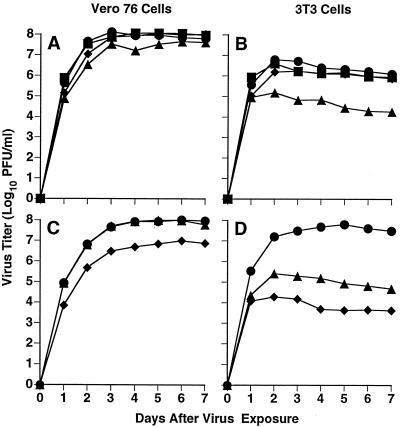
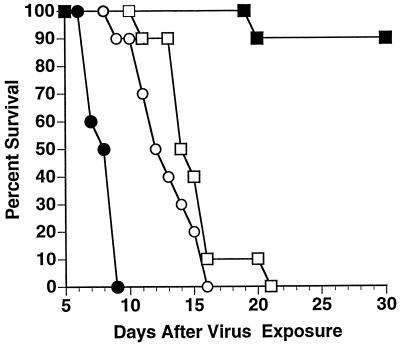
Cidofovir ([(S)-1-(3-hydroxy-2-phosphonylmethoxypropyl)cytosine] [HPMPC])-resistant forms of camelpox, cowpox, monkeypox, and vaccinia viruses were developed by prolonged passage in Vero 76 cells in the presence of drug. Eight- to 27-fold-higher concentrations of cidofovir were required to inhibit the resistant viruses than were needed to inhibit the wild-type (WT) viruses. Resistant viruses were characterized by determining their cross-resistance to other antiviral compounds, examining their different replication abilities in two cell lines, studying the biochemical basis of their drug resistance, and assessing the degrees of their virulence in mice. These viruses were cross resistant to cyclic HPMPC and, with the exception of vaccinia virus, to (S)-1-(3-hydroxy-2-phosphonylmethoxypropyl)adenine. Three of the four resistant cowpox and monkeypox viruses exhibited reduced abilities to infect and replicate in 3T3 cells compared to their abilities in Vero 76 cells. Compared to the WT virus polymers the resistant cowpox virus DNA polymerase was 8.5-fold less sensitive to inhibition by cidofovir diphosphate, the active form of the drug. Intracellular phosphorylation of [3H]cidofovir was not stimulated or inhibited by infection with resistant cowpox virus. In intranasally infected BALB/c mice, WT cowpox virus was 80-fold more virulent than the resistant virus. Cidofovir treatment (100 mg/kg of body weight, given one time only as early as 5 min after virus challenge) of a resistant cowpox virus infection could not protect mice from mortality. However, the drug prevented mortality in 80 to 100% of the mice treated with a single 100-mg/kg dose at 1, 2, 3, or 4 days after WT virus challenge. By application of these results to human orthopoxvirus infections, it is anticipated that resistant viruses may be untreatable with cidofovir but their virulence may be attenuated. Studies will need to be conducted with cidofovir-resistant monkeypox virus in monkeys to further support these hypotheses.
Figures
References
-
- Altman, S., and L. S. Lerman. 1970. Kinetics and intermediates in the intracellular synthesis of bacteriophage T4 deoxyribonucleic acid. J. Mol. Biol. 50:235-261. - PubMed
-
- Andrei, G., R. Snoeck, and E. De Clercq. 1997. Differential susceptibility of several drug-resistant strains of herpes simplex virus type 2 to various antiviral compounds. Antivir. Chem. Chemother. 8:457-461.
-
- Biron, K. K. 1991. Ganciclovir-resistant human cytomegalovirus clinical isolates; resistance mechanisms and in vitro susceptibility to antiviral agents. Transplant. Proc. 23:162-167. - PubMed
-
- Bischofberger, N., M. J. M. Hitchcock, M. S. Chen, D. B. Barkhimer, K. C. Cundy, K. M. Kent, S. A. Lacy, W. A. Lee, Z.-H. Li, D. B. Mendel, D. F. Smee, and J. L. Smith. 1994. 1-[((S)-2-Hydroxy-2-oxo-1,4,2-dioxaphosphorinan-5-yl)methyl]cytosine, an intracellular prodrug for (S)-1-(3-hydroxy-2-phosphonylmethoxypropyl)cytosine with improved therapeutic index in vivo. Antimicrob. Agents Chemother. 38:2387-2391. - PMC - PubMed
-
- Bray, M., M. Martinez, D. F. Smee, D. Kefauver, E. Thompson, and J. W. Huggins. 2000. Cidofovir (HPMPC) protects mice against lethal aerosol or intranasal cowpox virus challenge. J. Infect. Dis. 181:10-19. - PubMed
Publication types
MeSH terms
Substances
Grants and funding
LinkOut - more resources
Full Text Sources
Other Literature Sources
