


Arabidopsis disrupted in SQD2 encoding sulfolipid synthase is impaired in phosphate-limited growth
- PMID: 11960029
- PMCID: PMC122840
- DOI: 10.1073/pnas.082696499
Arabidopsis disrupted in SQD2 encoding sulfolipid synthase is impaired in phosphate-limited growth
Abstract
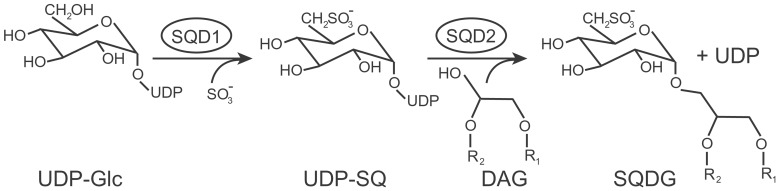
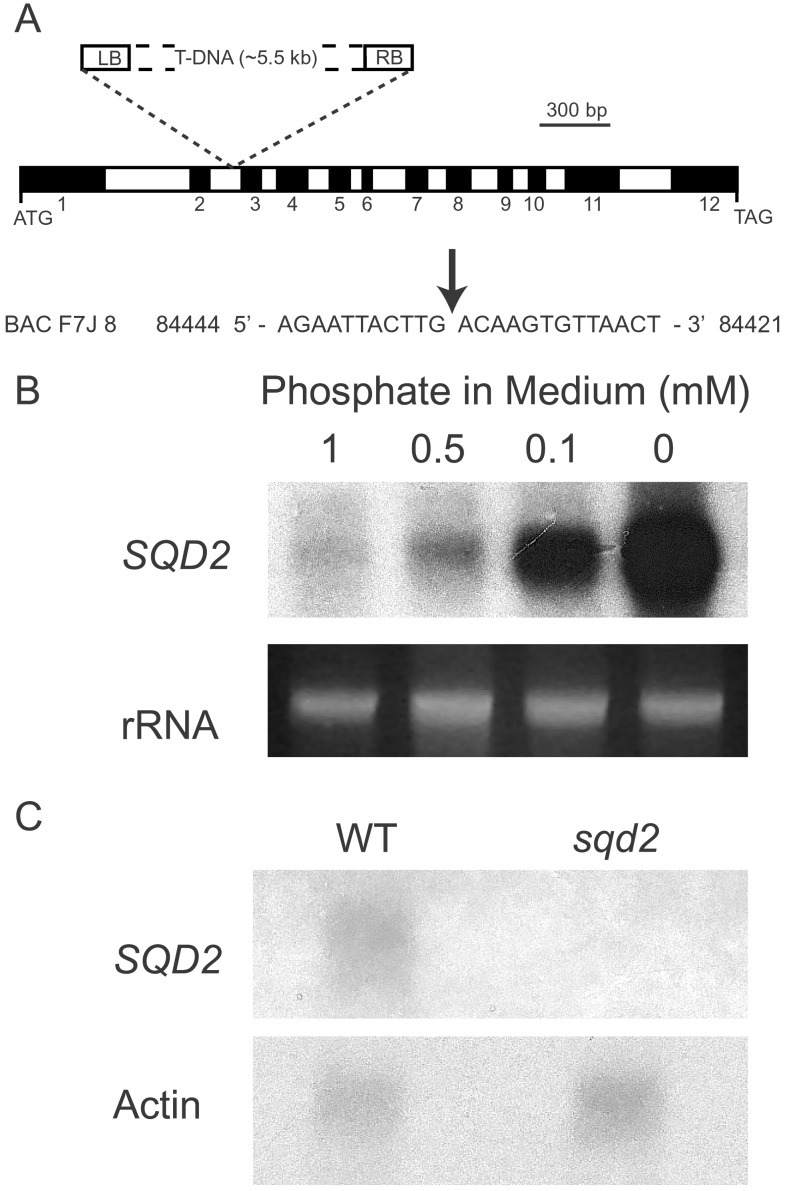
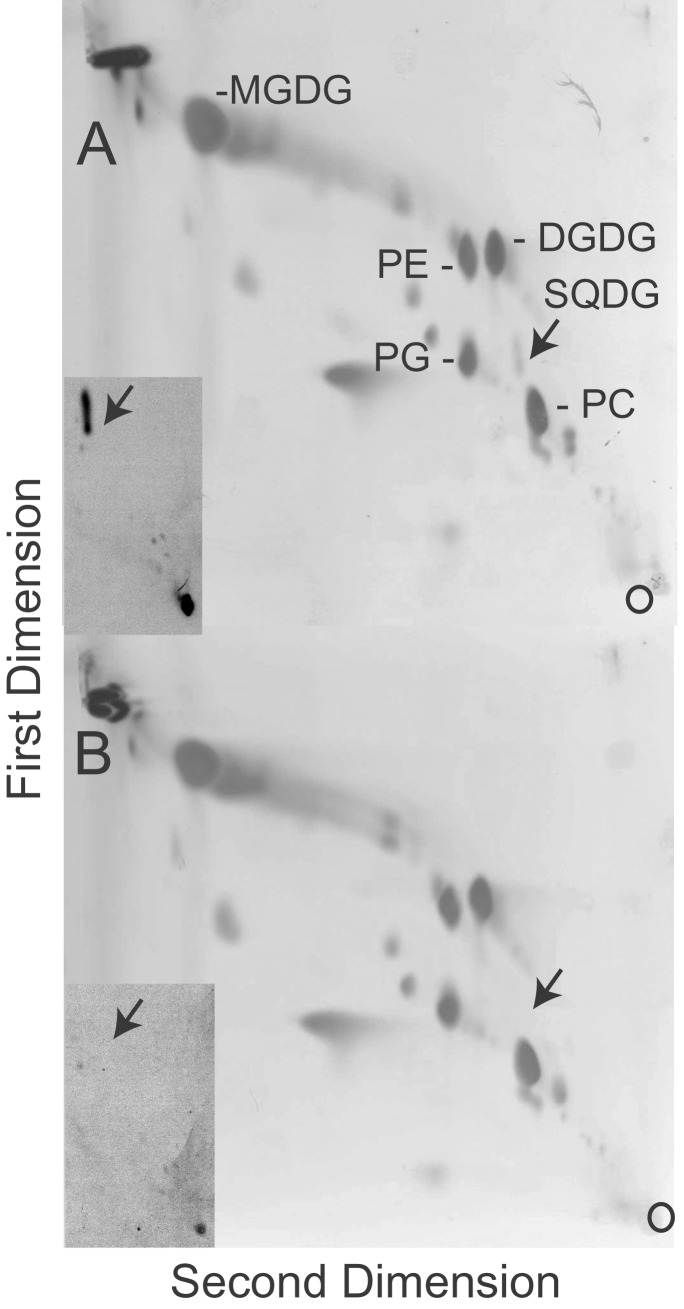
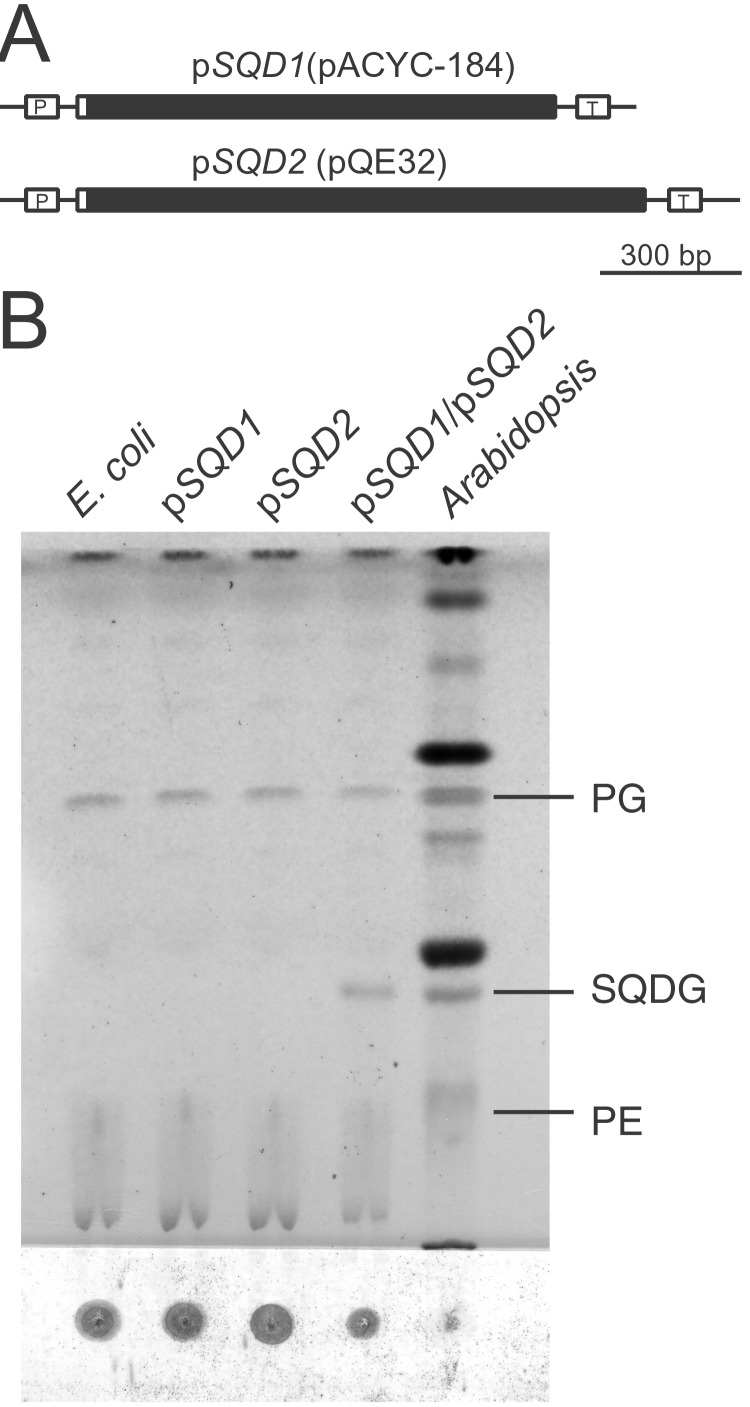
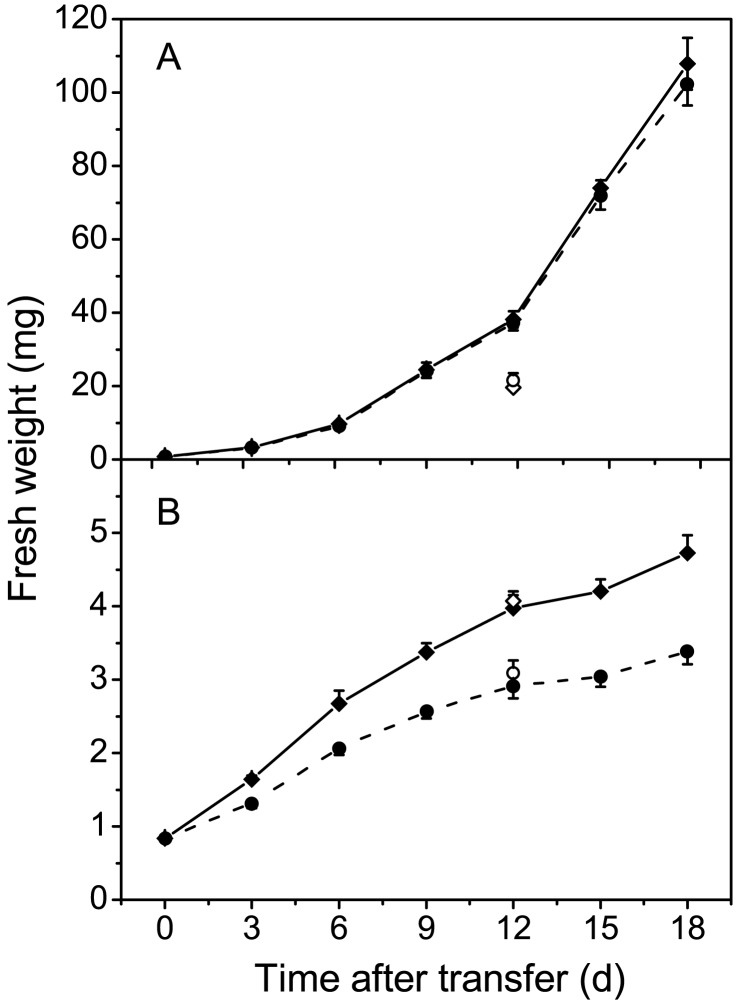
The sulfolipid sulfoquinovosyldiacylglycerol is one of the three nonphosphorous glycolipids that provide the bulk of the structural lipids in photosynthetic membranes of seed plants. Unlike the galactolipids, sulfolipid is anionic at physiological pH because of its 6-deoxy-6-sulfonate-glucose (sulfoquinovose) head group. The biosynthesis of this lipid proceeds in two steps: first, the assembly of UDP-sulfoquinovose from UDP-glucose and sulfite, and second, the transfer of the sulfoquinovose moiety from UDP-sulfoquinovose to diacylglycerol. The first reaction is catalyzed by the SQD1 protein in Arabidopsis. Here we describe the identification of the SQD2 gene of Arabidopsis. We propose that this gene encodes the sulfoquinovosyltransferase catalyzing the second step of sulfolipid biosynthesis. Expression of SQD1 and SQD2 in Escherichia coli reconstituted plant sulfolipid biosynthesis in this bacterium. Insertion of a transfer DNA into this gene in Arabidopsis led to complete lack of sulfolipid in the respective sqd2 mutant. This mutant showed reduced growth under phosphate-limited growth conditions. The results support the hypothesis that sulfolipid can function as a substitute of anionic phospholipids under phosphate-limited growth conditions. Along with phosphatidylglycerol, sulfolipid contributes to maintaining a negatively charged lipid-water interface, which presumably is required for proper function of photosynthetic membranes.
Figures
References
-
- Barber J, Gounaris K. Photosynth Res. 1986;9:239–249. - PubMed
-
- Benning C. Annu Rev Plant Physiol Plant Mol Biol. 1998;49:53–75. - PubMed
-
- Güler S, Seeliger A, Härtel H, Renger G, Benning C. J Biol Chem. 1996;271:7501–7507. - PubMed
-
- Sato N, Sonoike K, Tsuzuki M, Kawaguchi A. Eur J Biochem. 1995;234:16–23. - PubMed
Publication types
MeSH terms
Substances
Associated data
- Actions
LinkOut - more resources
Full Text Sources
Other Literature Sources
Molecular Biology Databases
