


Factors affecting breeding soundness classification of beef bulls examined at the Western College of Veterinary Medicine
- PMID: 11963661
- PMCID: PMC339235
Factors affecting breeding soundness classification of beef bulls examined at the Western College of Veterinary Medicine
Abstract
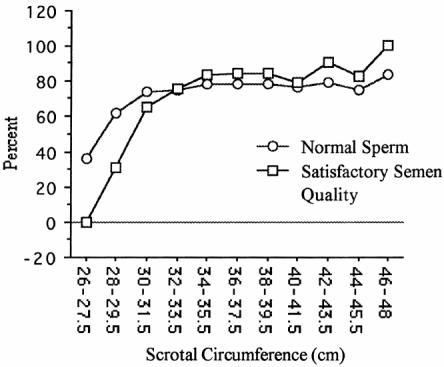
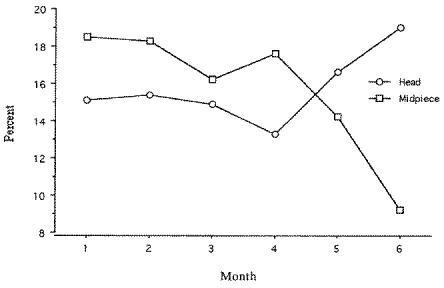
Breeding soundness evaluation records from 2110 beef bulls, for the period of 1986 to 1999, were analyzed to determine the prevalence and importance of factors affecting breeding soundness classification. The percentage of all bulls classified as satisfactory ranged from 49.0% in January to 73.3% in May. The percentage of physically normal bulls with satisfactory semen quality ranged from 65.7% in January to 87.5% in June. Poor body condition or excessive body condition, below average or below the recommended minimum scrotal circumference, lameness, and severe scrotal frostbite significantly reduced the probability of a satisfactory breeding soundness classification. The percentage of sperm with midpiece defects declined significantly and the percentage of sperm with head defects increased significantly with the approach of summer. Photoperiod, cold stress, poor or excessive body condition, and reduced feed quality may interact to reduce semen quality in the winter months.
Figures
References
-
- Williams WW, Savage A. Methods of determining the reproductive health and fertility of bulls. Cornell Vet 1927;17:374–385.
-
- McCosker TH, Turner AF, McCool CJ, Post TB, Bell K. Brahman bull fertility in a North Australian rangeland herd. Theriogenology 1989;32:285–300. - PubMed
-
- Chenoweth PJ. Bull fertility. Mod Vet Pract 1980;61:987–991. - PubMed
-
- Farin PW, Chenoweth PJ, Tomky DF, Ball L, Pexton JE. Breeding soundness, libido and performance of beef bulls mated to estrus synchronized females. Theriogenology 1989;32:717–725. - PubMed
-
- Larsen RE, Littell R, Rooks E, Adams EL, Falcon C, Warnick AC. Bull influences on conception percentage and calving date in Angus, Hereford, Brahman and Senepol single-sire herds. Theriogenology 1990;34:549–568. - PubMed
MeSH terms
LinkOut - more resources
Full Text Sources
Medical