


Molecular epidemiology and drug resistance of Mycobacterium tuberculosis isolates from Ethiopian pulmonary tuberculosis patients with and without human immunodeficiency virus infection
- PMID: 11980933
- PMCID: PMC130945
- DOI: 10.1128/JCM.40.5.1636-1643.2002
Molecular epidemiology and drug resistance of Mycobacterium tuberculosis isolates from Ethiopian pulmonary tuberculosis patients with and without human immunodeficiency virus infection
Abstract
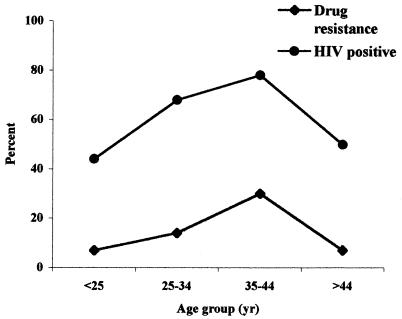
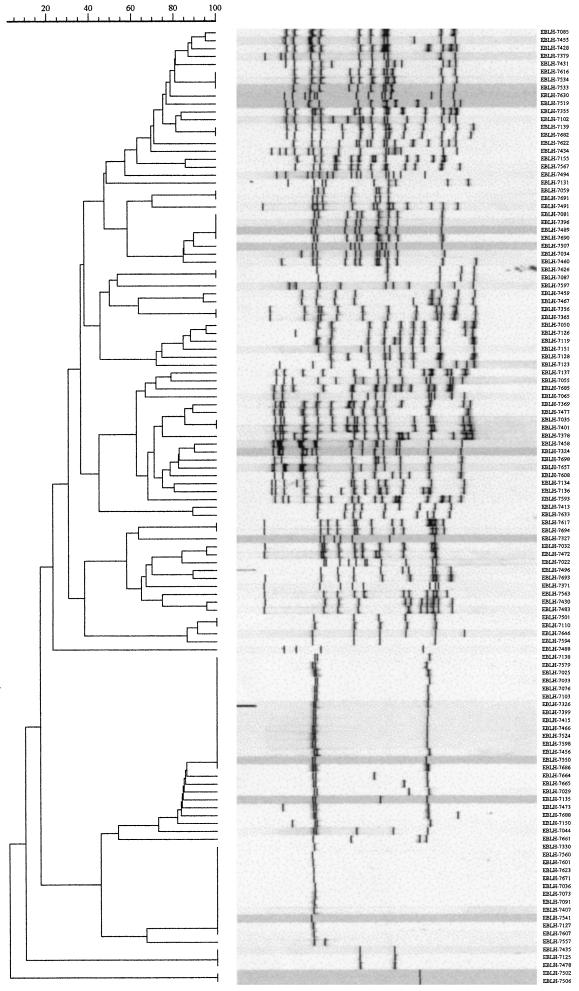
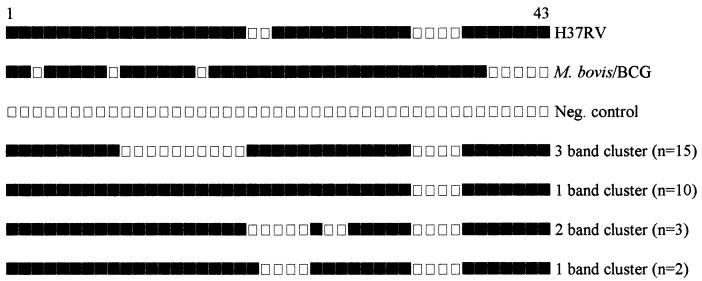
We have analyzed the molecular epidemiology and drug resistance of 121 Mycobacterium tuberculosis isolates from consecutive patients with culture-positive pulmonary tuberculosis attending a university hospital outpatient department in Addis Ababa, Ethiopia. Restriction fragment length polymorphism analysis and spoligotyping were used to analyze the DNA fingerprinting patterns. Fifty-one (41.2%) of the isolates were found in 13 clusters with two or more identical DNA patterns. Two such clusters contained 49.0% of all clustered isolates. In a multivariate logistic regression model, human immunodeficiency virus (HIV)-positive serostatus was significantly associated with clustering of isolates for patients of both sexes (odds ratio [OR], 2.55; 95% confidence interval [CI], 1.17 to 5.80). There was a trend toward increased clustering of isolates from tuberculous women residing in Addis Ababa (OR, 2.10; 95% CI, 0.85 to 5.25). In total, 17 of 121 isolates (14.0%) were resistant to one or more of the antituberculosis drugs isoniazid (8.3%), streptomycin (7.4%), rifampin (2.5%), and ethambutol (1.7%). The high rate of drug-resistant isolates (29.6%) coincided with the peak prevalence of HIV infection (77.8%) in patients 35 to 44 years old. The majority (62.5%) of resistant isolates in this group were found within clusters. The simultaneous accumulation of certain bacterial clones in a patient population likely reflects recent transmission. Hence, we conclude that tuberculosis is commonly caused by recent infection with M. tuberculosis in HIV-positive Ethiopian patients. Furthermore, with the rapidly increasing prevalence of HIV infection in Ethiopia, the burden of tuberculosis, including drug-resistant tuberculosis, is likely to increase. Strengthening of classical tuberculosis control measures by promoting active case finding among HIV-positive adults with tuberculosis is warranted to reduce rates of transmission.
Figures
References
-
- Abate, G., H. Miörner, O. Ahmed, and S. E. Hoffner. 1998. Drug resistance in Mycobacterium tuberculosis strains isolated from re-treatment cases of pulmonary tuberculosis in Ethiopia: susceptibility to first-line and alternative drugs. Int. J. Tuberc. Lung Dis. 2:580-584. - PubMed
-
- Alland, D., G. E. Kalkut, A. R. Moss, R. A. McAdam, J. A. Hahn, W. Bosworth, E. Drucker, and B. R. Bloom. 1994. Transmission of tuberculosis in New York City. An analysis by DNA fingerprinting and conventional epidemiologic methods. N. Engl. J. Med. 330:1710-1716. - PubMed
-
- Bruchfeld, J., G. Aderaye, I. Berggren Palme, B. Bjorvatn, G. Källenius, and L. Lindquist. 2000. Sputum concentration improves diagnosis of tuberculosis in a high HIV prevalence setting. Trans. R. Soc. Trop. Med. Hyg. 94:677-680. - PubMed
-
- Churchyard, G. J., E. L. Corbett, I. Kleinschmidt, D. Mulder, and K. M. De Cock. 2000. Drug-resistant tuberculosis in South African gold miners: incidence and associated factors. Int. J. Tuberc. Lung Dis. 4:433-440. - PubMed
-
- Cohn, D. L., and R. J. O'Brien. 1998. The use of restriction fragment length polymorphism (RFLP) analysis for epidemiological studies of tuberculosis in developing countries. Int. J. Tuberc. Lung Dis. 2:16-26. - PubMed
Publication types
MeSH terms
Substances
LinkOut - more resources
Full Text Sources
