


Multidrug resistance related molecules in human and murine lung
- PMID: 11986335
- PMCID: PMC1769658
- DOI: 10.1136/jcp.55.5.332
Multidrug resistance related molecules in human and murine lung
Abstract
Aims: Transporter proteins known to mediate multidrug resistance (MDR) in tumour cells--MDR1 P-glycoprotein (P-gp) and multidrug resistance related protein 1 (MRP1)--are thought to be involved in protecting the lungs against inhaled toxic pollutants. Recently, several new transporter family members have been identified--for example, MRP2, MRP3, and breast cancer resistance protein (BCRP). To study the possible contribution of these proteins and the earlier defined MDR1 and MDR3 P-gp molecules, MRP1, and the major vault protein (MVP) to lung functioning, their expression was analysed in normal lung tissue of humans and several animal species.
Methods: Frozen sections of normal lung tissues were examined for the expression of the multidrug resistance associated proteins, using an extended panel of monoclonal antibodies that specifically detect these proteins in immunohistochemical techniques.
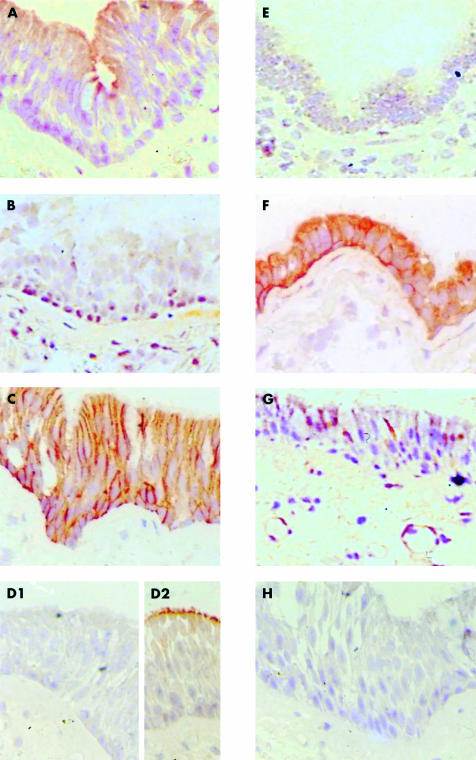
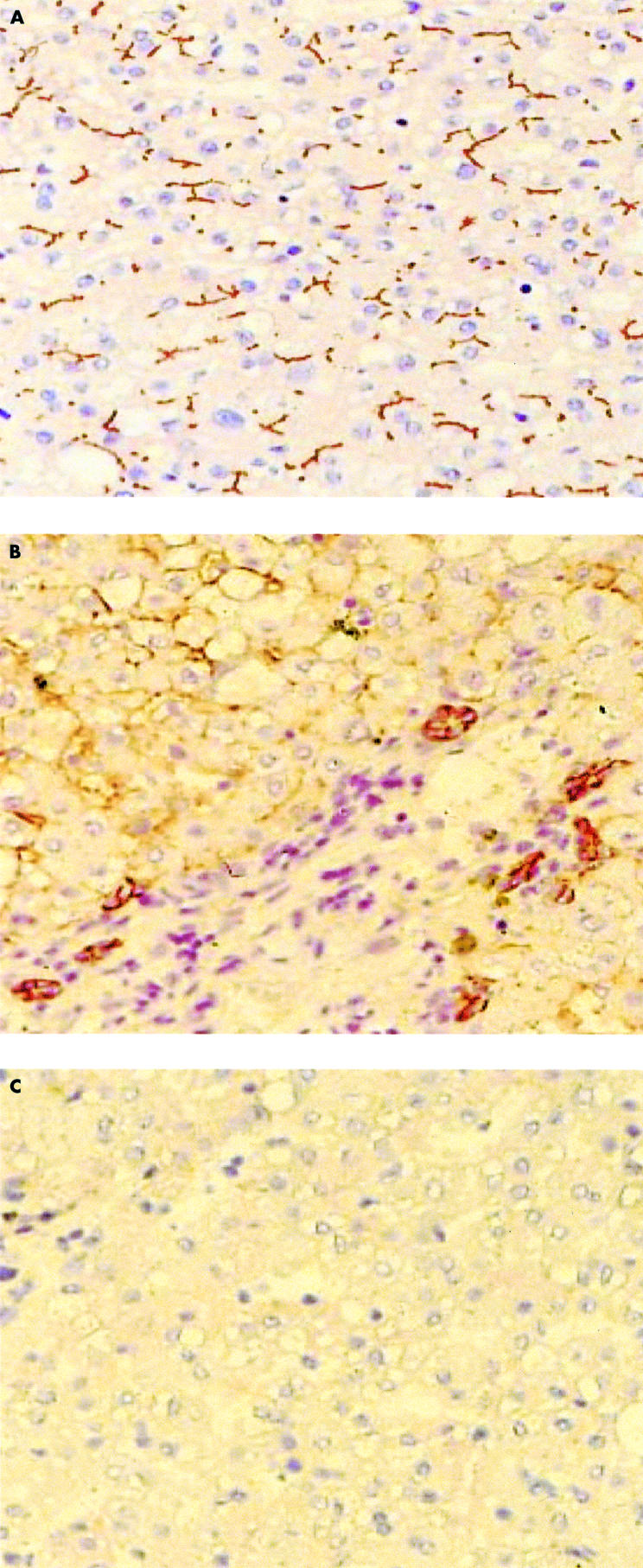
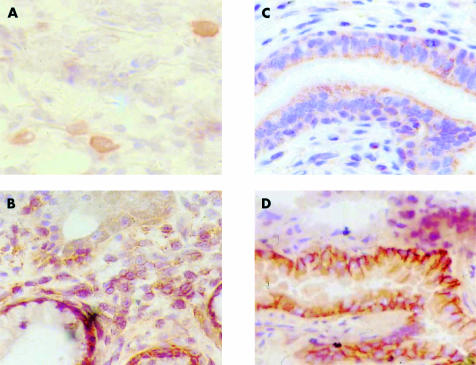
Results: In line with earlier reports, the expression of MDR1 P-gp and MRP1 was readily detected in the apical and basolateral membranes, respectively, of the epithelial cell layers of the lungs. In addition, prominent cytoplasmic MVP staining was detected in these layers. In contrast, the recently discovered transporters were either undetectable or they were present at very low values in lung tissue. Immunohistochemical staining in tissues from mice, rats, and guinea pigs points to a strong evolutionary conservation for these transporter proteins.
Conclusions: These results show that the "classic" MDR related molecules, MDR1 P-gp, MRP1, and MVP, should be considered the most important transporters in normal lung physiology. It will be of great interest to investigate differences in expression of both classic and newly defined transporters between normal individuals and-for example, patients with various bronchopulmonary pathological conditions.
Figures
References
-
- Moscow JA, Schneider E, Ivy SP, et al. Multidrug resistance. Cancer Chemother Biol Response Modif 1997;17:139–77. - PubMed
-
- Ambudkar SV, Dey S, Hrycyna CA, et al. Biochemical, cellular, and pharmacological aspects of the multidrug transporter. Annu Rev Pharmacol Toxicol 1999;39:361–98. - PubMed
-
- Cole SP, Deeley RG. Multidrug resistance mediated by the ATP-binding cassette transporter protein MRP. Bioessays 1998;20:931–40. - PubMed
-
- Scheffer GL, Wijngaard PL, Flens MJ, et al. The drug resistance-related protein LRP is the human major vault protein. Nat Med 1995;1:578–82. - PubMed
-
- Paulusma CC, Bosma PJ, Zaman GJ, et al. Congenital jaundice in rats with a mutation in a multidrug resistance-associated protein gene. Science 1996;271:1126–8. - PubMed
Publication types
MeSH terms
Substances
LinkOut - more resources
Full Text Sources
Other Literature Sources
Research Materials
Miscellaneous
