


Analysis of an Autographa californica multicapsid nucleopolyhedrovirus lef-6-null virus: LEF-6 is not essential for viral replication but appears to accelerate late gene transcription
- PMID: 11991978
- PMCID: PMC137020
- DOI: 10.1128/jvi.76.11.5503-5514.2002
Analysis of an Autographa californica multicapsid nucleopolyhedrovirus lef-6-null virus: LEF-6 is not essential for viral replication but appears to accelerate late gene transcription
Abstract
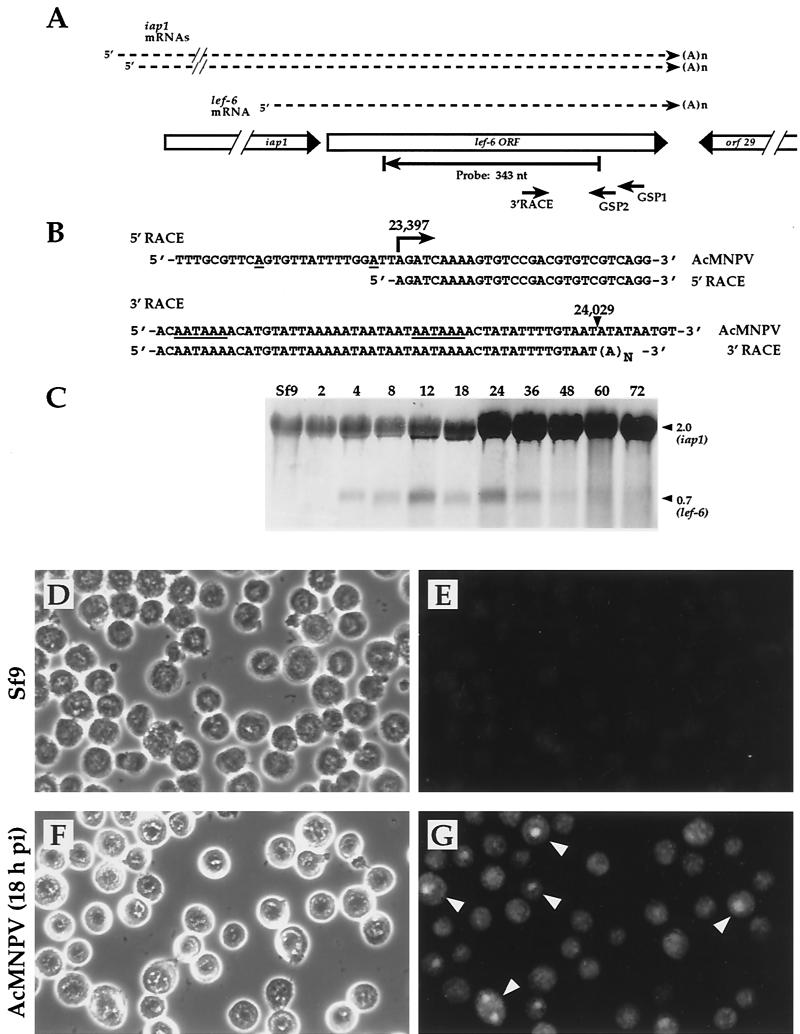
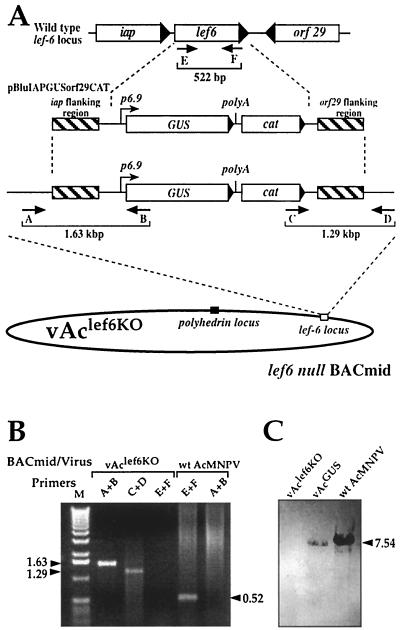
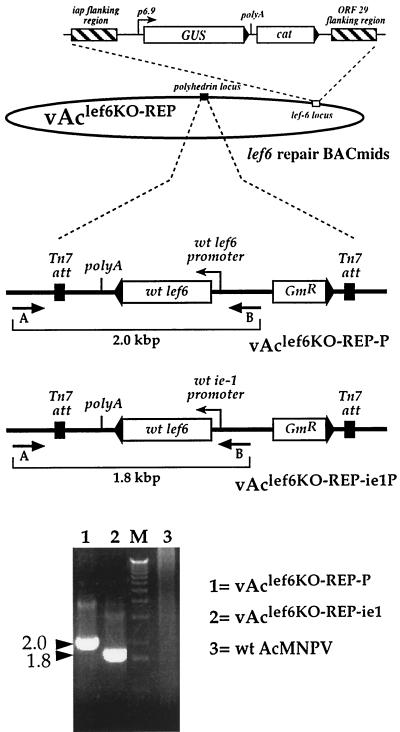
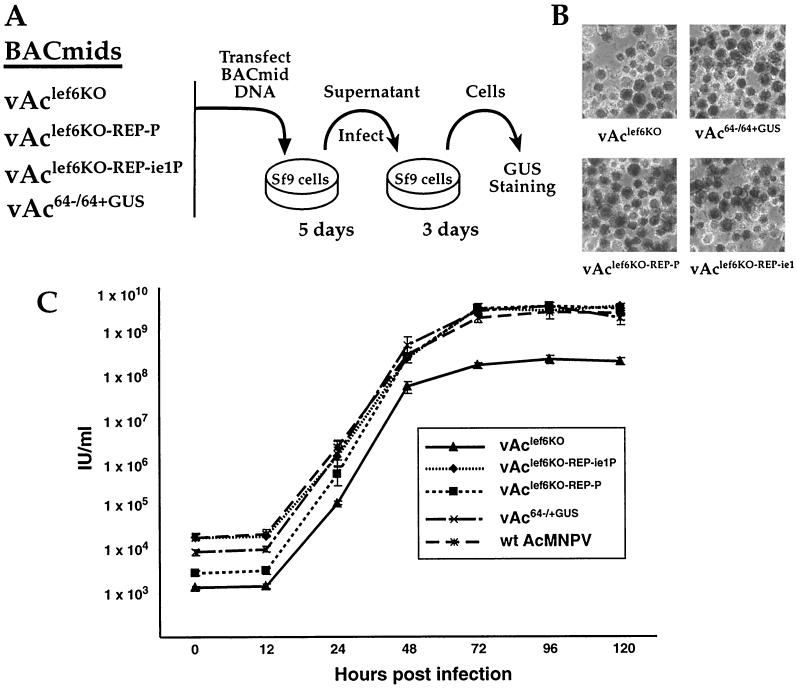
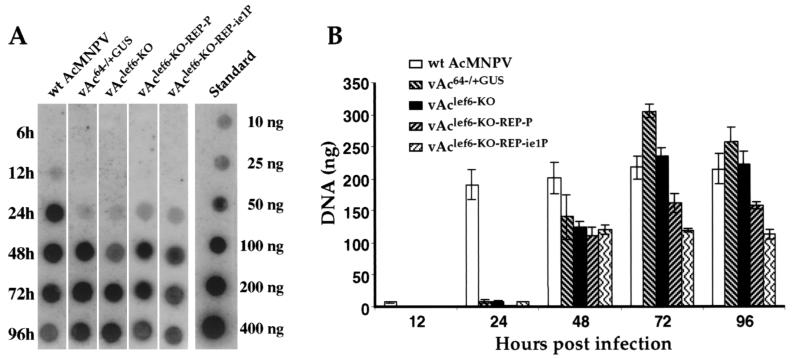
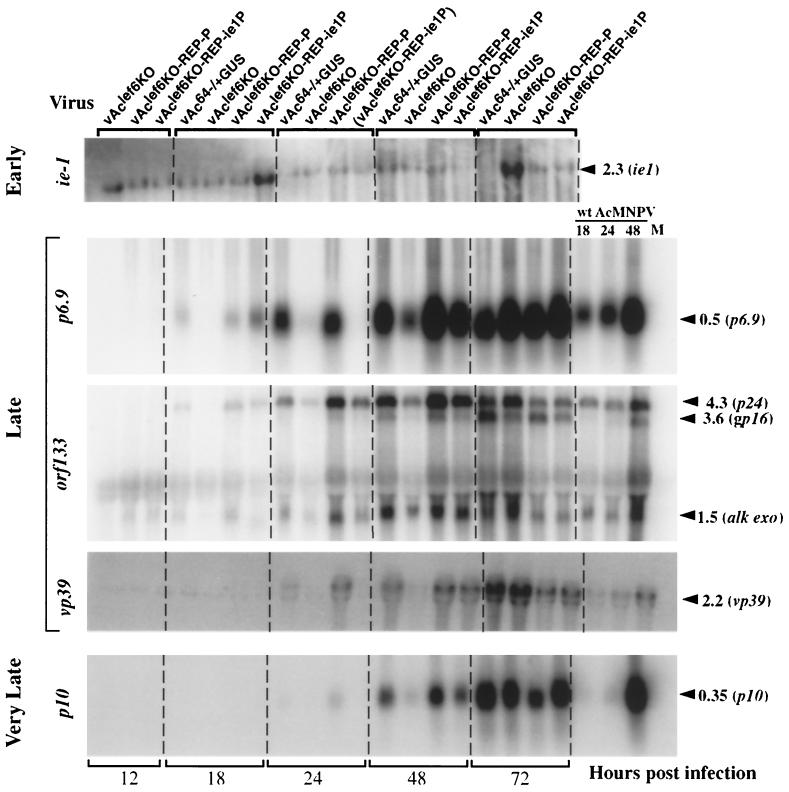
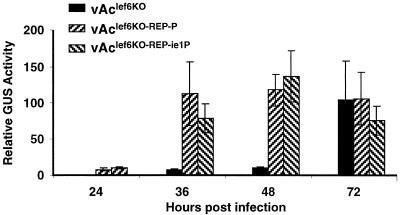
The Autographa californica multicapsid nucleopolyhedrovirus (AcMNPV) lef-6 gene was previously shown to be necessary for optimal transcription from an AcMNPV late promoter in transient late expression assays. In the present study, we examined the expression and cellular localization of lef-6 during the AcMNPV infection cycle and generated a lef-6-null virus for studies of the role of lef-6 in the infection cycle. Transcription of lef-6 was detected from 4 to 48 h postinfection, and the LEF-6 protein was identified in dense regions of infected cell nuclei, a finding consistent with its potential role as a late transcription factor. To examine lef-6 in the context of the AcMNPV infection cycle, we deleted the lef-6 gene from an AcMNPV genome propagated as an infectious BACmid in Escherichia coli. Unexpectedly, the resulting AcMNPV lef-6-null BACmid (vAc(lef6KO)) was able to propagate in cell culture, although virus yields were substantially reduced. Thus, the lef-6 gene is not essential for viral replication in Sf9 cells. Two "repair" AcMNPV BACmids (vAc(lef6KO-REP-P) and vAc(lef6KO-REP-ie1P)) were generated by transposition of the lef-6 gene into the polyhedrin locus of the vAc(lef6KO) BACmid. Virus yields from the two repair viruses were similar to those from wild-type AcMNPV or a control (BACmid-derived) virus. The lef-6-null BACmid (vAc(lef6KO)) was further examined to determine whether the deletion of lef-6 affected DNA replication or late gene transcription in the context of an infection. The lef-6 deletion did not appear to affect viral DNA replication. Using Northern blot analysis, we found that although early transcription was apparently unaffected, both late and very late transcription were delayed in cells infected with the lef-6-null BACmid. This phenotype was rescued in viruses containing the lef-6 gene reinserted into the polyhedrin locus. Thus, the lef-6 gene was not essential for either viral DNA replication or late gene transcription, but the absence of lef-6 resulted in a substantial delay in the onset of late transcription. Therefore, lef-6 appears to accelerate the infection cycle of AcMNPV.
Figures
References
-
- Ahrens, C. H., D. J. Leisy, and G. F. Rohrmann. 1996. Baculovirus DNA replication, p. 855-872. In M. L. DePamphilis (ed.), DNA replication in eukaryotic cells. Cold Spring Harbor Laboratory Press, Cold Spring Harbor, N.Y.
-
- Ayres, M. D., S. C. Howard, J. Kuzio, M. Lopez-Ferber, and R. D. Possee. 1994. The complete DNA sequence of Autographa californica nuclear polyhedrosis virus. Virology 202:586-605. - PubMed
-
- Bideshi, D. K., and B. A. Federici. 2000. The Trichoplusia ni granulovirus helicase is unable to support replication of Autographa californica multicapsid nucleopolyhedrovirus in cells and larvae of T. ni. J. Gen. Virol. 81: 1593-1599. - PubMed
-
- Blissard, G. W., R. L. Quant-Russell, G. F. Rohrmann, and G. S. Beaudreau. 1989. Nucleotide sequence, transcriptional mapping, and temporal expression of the gene encoding P39, a major structural protein of the multicapsid nuclear polyhedrosis virus of Orgyia pseudotsugata. Virology 168:354-362. - PubMed
Publication types
MeSH terms
Substances
Grants and funding
LinkOut - more resources
Full Text Sources
