


Identification of novel adhesins from Group B streptococci by use of phage display reveals that C5a peptidase mediates fibronectin binding
- PMID: 12010974
- PMCID: PMC128012
- DOI: 10.1128/IAI.70.6.2869-2876.2002
Identification of novel adhesins from Group B streptococci by use of phage display reveals that C5a peptidase mediates fibronectin binding
Erratum in
- Infect Immun 2002 Jun;70(6):3309
Abstract
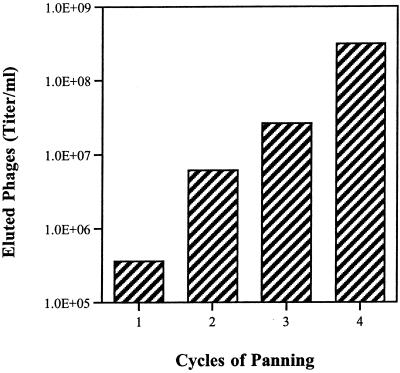
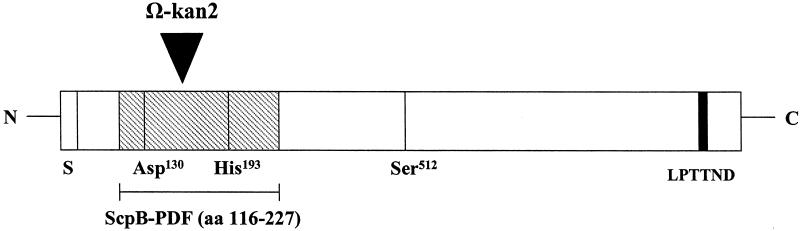
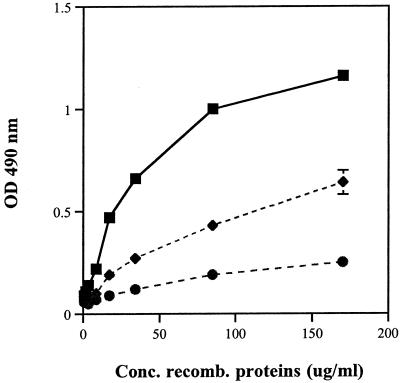
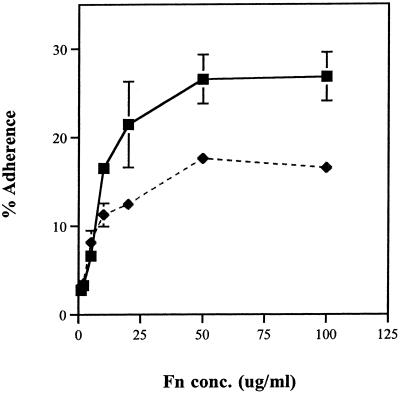
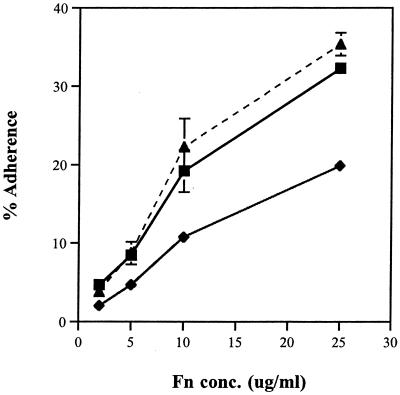
Group B streptococci (GBS) are a major cause of pneumonia, sepsis, and meningitis in newborns and infants. GBS initiate infection of the lung by colonizing mucosal surfaces of the respiratory tract; adherence of the bacteria to host cells is presumed to be the initial step in and prerequisite for successful colonization (G. S. Tamura, J. M. Kuypers, S. Smith, H. Raff, and C. E. Rubens, Infect. Immun. 62:2450-2458, 1994). We have performed a genome-wide screen to identify novel genes of GBS that mediate adherence to fibronectin. A shotgun phage display library was constructed from chromosomal DNA of a serotype Ia GBS strain and affinity selected on immobilized fibronectin. DNA sequence analysis of different clones identified 19 genes with homology to known bacterial adhesin genes, virulence genes, genes involved in transport or metabolic processes, and genes with yet-unknown function. One of the isolated phagemid clones showed significant homology to the gene (scpB) for the GBS C5a peptidase, a surface-associated serine protease that specifically cleaves the complement component C5a, a chemotaxin for polymorphonuclear leukocytes. In this work we have demonstrated that affinity-purified recombinant ScpB and a peptide ScpB fragment (ScpB-PDF), similar to the peptide identified in the phagemid, bound fibronectin in a concentration-dependent manner. Adherence assays to fibronectin were performed, comparing an isogenic scpB mutant to the wild-type strain. Approximately 50% less binding was observed with the mutant than with the wild-type strain. The mutant phenotype could be fully restored by in trans complementation of the mutant with the cloned wild-type scpB gene, providing further evidence for the role of ScpB in fibronectin adherence. Our results suggest that C5a peptidase is a bifunctional protein, which enzymatically cleaves C5a and mediates adherence to fibronectin. Since binding of fibronectin has been implicated in attachment and invasion of eukaryotic cells by streptococci, our results may imply a second important role for this surface protein in the pathogenesis of GBS infections.
Figures
References
-
- Baker, C. J., and M. S. Edwards. 1991. Group B streptococcal infections, p. 820-881. In J. S. Remington and J. O. Klein (ed.), Infectious diseases of the fetus and newborn infant. W. B. Saunders Co., Philadelphia, Pa.
-
- Chaffin, D. O., and C. E. Rubens. 1998. Blue/white screening of recombinant plasmids in Gram-positive bacteria by interruption of alkaline phosphatase gene (phoZ) expression. Gene 219:91-99. - PubMed
Publication types
MeSH terms
Substances
Grants and funding
LinkOut - more resources
Full Text Sources
Other Literature Sources
