Selective bowel decontamination for the prevention of infection in acute myelogenous leukemia: a prospective randomized trial
- PMID: 12014211
- PMCID: PMC4531660
- DOI: 10.3904/kjim.2002.17.1.38
Selective bowel decontamination for the prevention of infection in acute myelogenous leukemia: a prospective randomized trial
Abstract
Background: Infection is still a frequent cause of morbidity and mortality in acute myelogenous leukemia (AML) patients receiving chemotherapy. Recently the main cause of infection has changed from gram-negative to gram-positive bacteria and the resistance to antibiotics has increased. This study aimed to access the effectiveness of antimicrobial prophylaxis (AP) with orally absorbable antibiotics.
Methods: Ninety-five AML patients receiving chemotherapy at Catholic Hemopoietic Stem Cell Transplantation Center from March 1999 to July 1999 were randomly divided into the AP group (250 mg ciprofloxacin twice a day, 150 mg roxithromycin twice a day, 50 mg fluconazole once a day) and the control group for a prospective analysis.
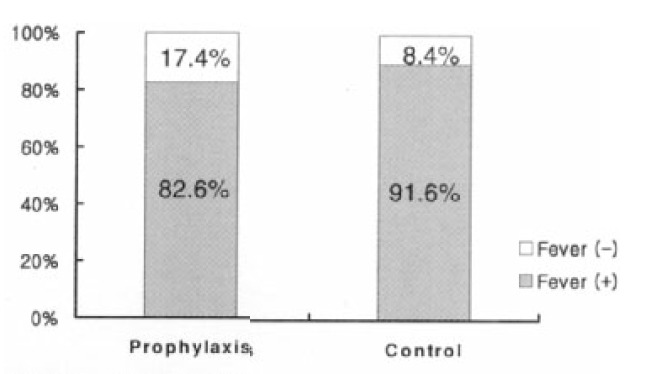
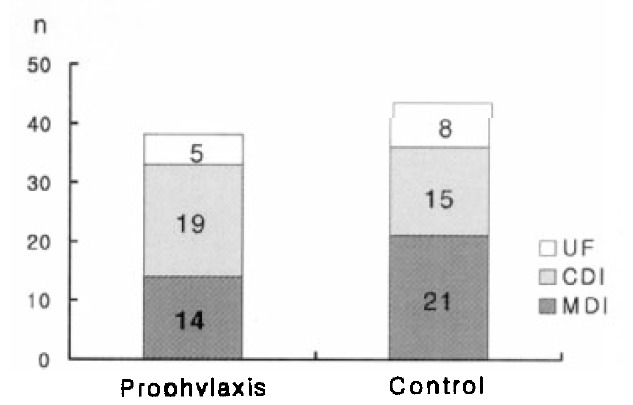
Results: The incidence of fever was 82.6% in the AP group and 91.6% in the control group (p = 0.15). Though classification and sites of infections showed no difference between the two groups, the catheter associated infection occurred more frequently in the AP group in significance. The time interval between initiation of chemotherapy and onset of fever, white blood cell (WBC) count at the onset of fever, duration of leukopenia (WBC < 1,000/mm3), duration of systemic antibiotic therapy, mortality due to infection and hospitalization period from the data starting chemotherapy showed no differences between the two groups. Infections due to gram negative bacteria decreased to 33.3% in the AP group (vs. 92% in the control group), but infections due to gram positive bacteria increased to 66.7% (vs. 8% in the control group). Gram negative bacteria showed 100% resistance to ciprofloxacin in the AP group and gram-positive bacteria showed 90-100% resistance to erythromycin, regardless of the presence of AP.
Conclusion: The AP could not reduce the occurrence of infection or infection associated death in AML patients receiving chemotherapy. On considering increased gram-positive infection and resistance to fluoroquinolone and macrolide, routine prescription of AP should be reconsidered. Further studies that assess the effectiveness of AP in other malignancies, aplastic anemia and bone marrow transplantation are required.
Figures
References
-
- Arnow PM. Prevention of bacterial infection in the transplant recipient: the role of selective bowel decontamination. Infect Dis Clin din North Am. 1995;9:849–862. - PubMed
-
- Kerr KG. The prophylaxis of bacterial infections in neutropenic patients. J Antimicrob Chemother. 1999;44:587–591. - PubMed
-
- Verhoef J. Prevention of infections in the neutropenic patient. Clin infect Dis. 1993;17(Suppl 2):S359–367. - PubMed
-
- Bow EJ, Loewen R, Vaughan D. Reduced requirement for antibiotic therapy targeting Gram-negative organisms in febrile, neutropenic patients with cancer who are receiving antibacterial chemoprophylaxis with oral quinolones. Clin infect Dis. 1995;20:907–912. - PubMed
-
- Cruciani M, Rampazzo R, Malena M, Lazzarini L, Todeschini G, Messori A, Concia E. Prophylaxis with fluroquinolones for bacterial infections in neutropenic patients: a meta-analysis. Clin Infect Dis. 1996;23:795–805. - PubMed
Publication types
MeSH terms
Substances
LinkOut - more resources
Full Text Sources
Medical