Review
doi: 10.1136/bmj.324.7348.1258.
Management of genital prolapse
Affiliations
- PMID: 12028982
- PMCID: PMC1123216
- DOI: 10.1136/bmj.324.7348.1258
Item in Clipboard
Review
Management of genital prolapse
BMJ.
.
No abstract available
Figures
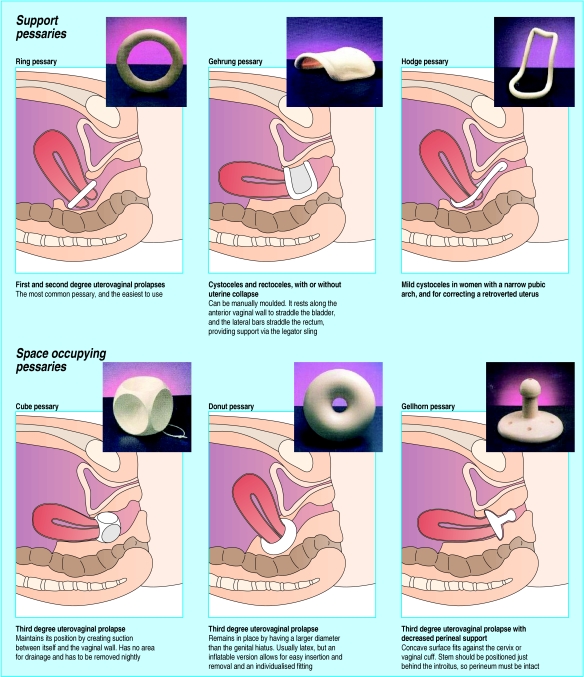
Types of pessaries
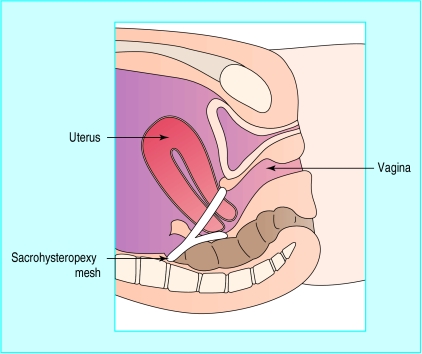
Sagittal section of the pelvis showing sacrohysteropexy mesh in place between the junction of the cervix and uterus and the anterior longitudinal ligament over the first sacral vertebra
References
-
- Beck RP. Pelvic relaxation prolapse. In: Kase NG, Weingold AB, editors. Principles and practice of clinical gynecology. New York: John Wiley; 1983. pp. 677–685.
-
- Cardozo L. Prolapse. In: Whitfield CR, editor. Dewhurst's textbook of obstetrics and gynaecology for postgraduates. Oxford: Blackwell Science; 1995. pp. 642–652.
-
- Mant J, Painter R, Vessey M. Epidemiology of genital prolapse: observations from the Oxford Family Planning Association Study. Br J Obstet Gynaecol. 1997;104:579–585. - PubMed
-
- Olsen AL, Smith VJ, Bergstrom JO, Colling JC, Clark AL. Epidemiology of surgically managed pelvic organ prolapse and urinary incontinence. Obstet Gynecol. 1997;89:501–506. - PubMed
-
- Samuelsson EC, Arne V, Tibblin G, Svardsudd KF. Signs of genital prolapse in a Swedish population of women 20 to 59 years of age and possible related factors. Am J Obstet Gynecol. 1999;180:299–305. - PubMed
Publication types
MeSH terms
LinkOut - more resources
Full Text Sources
Other Literature Sources
Medical