


Variola virus immune evasion design: expression of a highly efficient inhibitor of human complement
- PMID: 12034872
- PMCID: PMC124380
- DOI: 10.1073/pnas.112220499
Variola virus immune evasion design: expression of a highly efficient inhibitor of human complement
Abstract
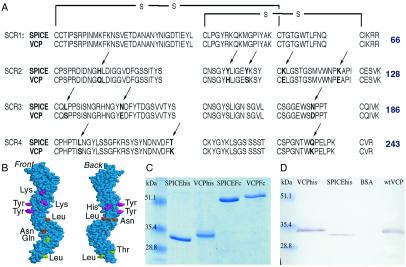
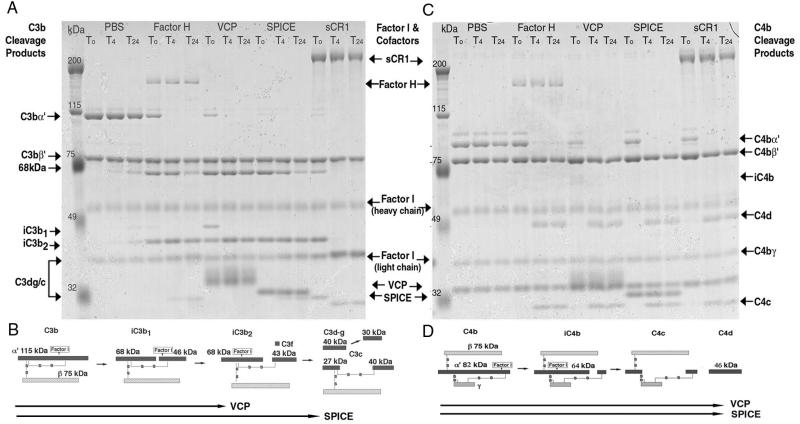
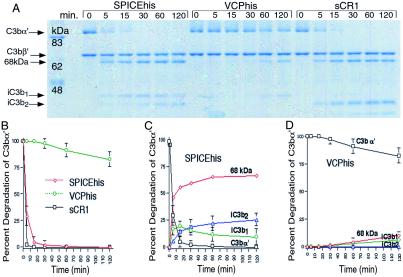
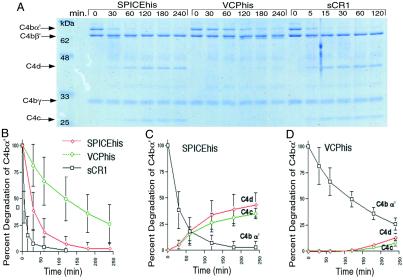
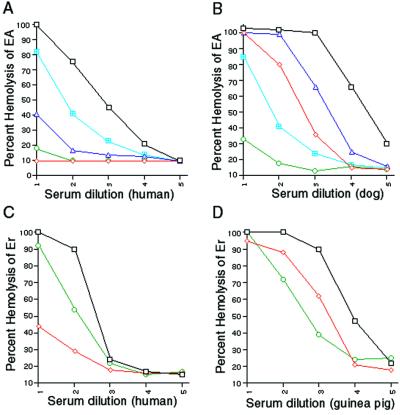
Variola virus, the most virulent member of the genus Orthopoxvirus, specifically infects humans and has no other animal reservoir. Variola causes the contagious disease smallpox, which has a 30-40% mortality rate. Conversely, the prototype orthopoxvirus, vaccinia, causes no disease in immunocompetent humans and was used in the global eradication of smallpox, which ended in 1977. However, the threat of smallpox persists because clandestine stockpiles of variola still exist. Although variola and vaccinia share remarkable DNA homology, the strict human tropism of variola suggests that its proteins are better suited than those of vaccinia to overcome the human immune response. Here, we demonstrate the functional advantage of a variola complement regulatory protein over that of its vaccinia homologue. Because authentic variola proteins are not available for study, we molecularly engineered and characterized the smallpox inhibitor of complement enzymes (SPICE), a homologue of a vaccinia virulence factor, vaccinia virus complement control protein (VCP). SPICE is nearly 100-fold more potent than VCP at inactivating human C3b and 6-fold more potent at inactivating C4b. SPICE is also more human complement-specific than is VCP. By inactivating complement components, SPICE serves to inhibit the formation of the C3/C5 convertases necessary for complement-mediated viral clearance. SPICE provides the first evidence that variola proteins are particularly adept at overcoming human immunity, and the decreased function of VCP suggests one reason why the vaccinia virus vaccine was associated with relatively low mortality. Disabling SPICE may be therapeutically useful if smallpox reemerges.
Figures
Comment in
-
Microbial subversion of the immune response.Proc Natl Acad Sci U S A. 2002 Jun 25;99(13):8461-2. doi: 10.1073/pnas.132284499. Epub 2002 Jun 19. Proc Natl Acad Sci U S A. 2002. PMID: 12077314 Free PMC article. No abstract available.
References
Publication types
MeSH terms
Substances
Grants and funding
LinkOut - more resources
Full Text Sources
Other Literature Sources
Miscellaneous
