


Domain 2 of Drosophila para voltage-gated sodium channel confers insect properties to a rat brain channel
- PMID: 12040042
- PMCID: PMC6758777
- DOI: 10.1523/JNEUROSCI.22-11-04364.2002
Domain 2 of Drosophila para voltage-gated sodium channel confers insect properties to a rat brain channel
Abstract
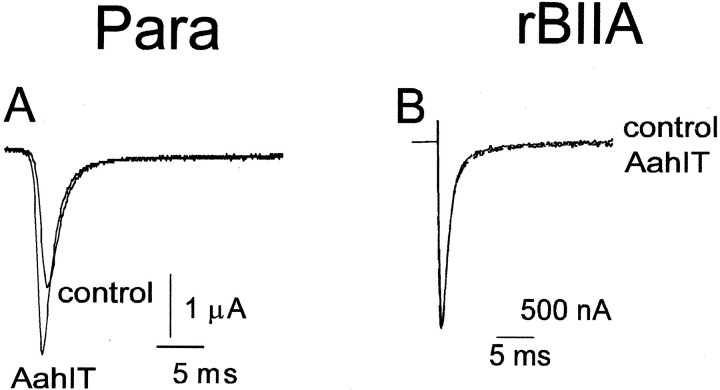
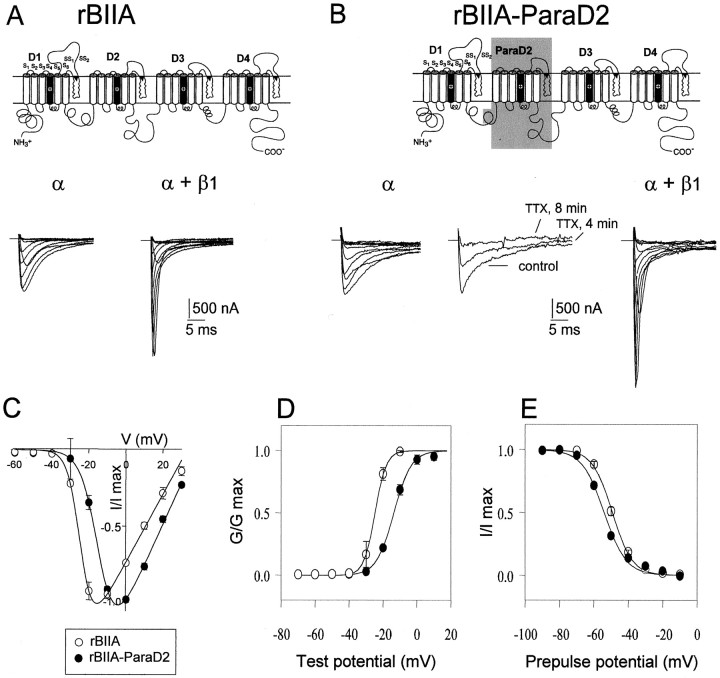
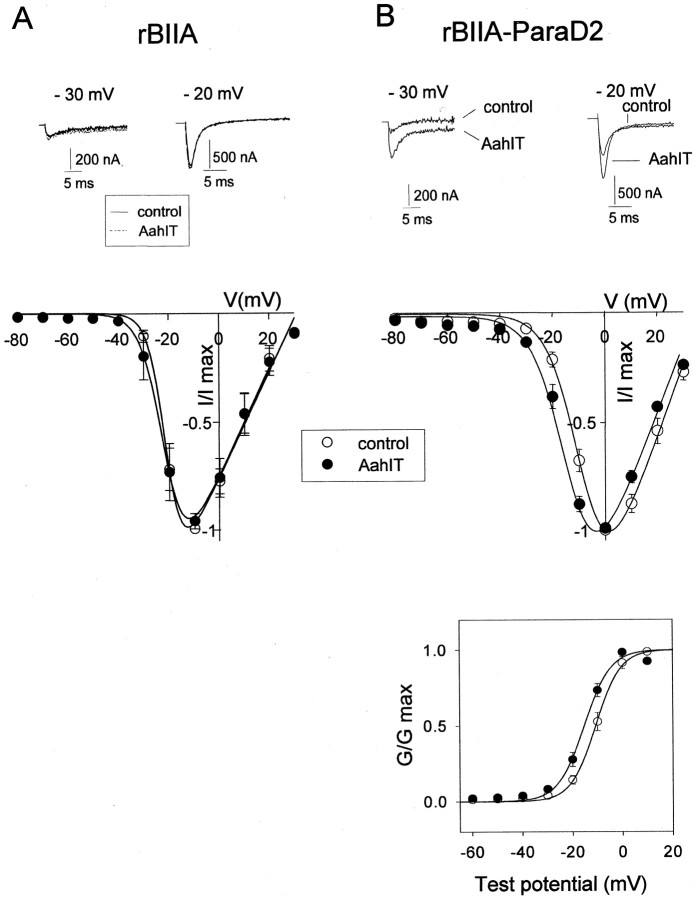
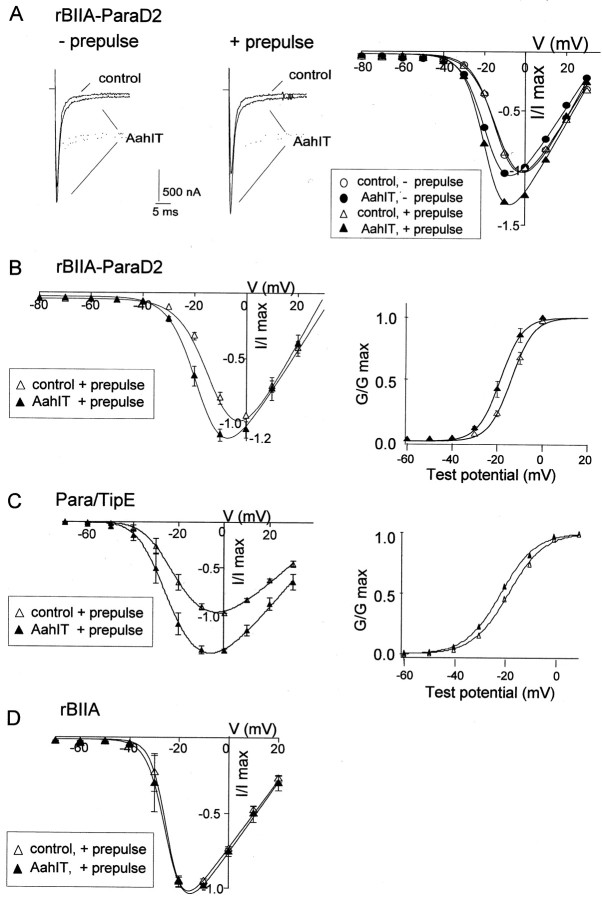
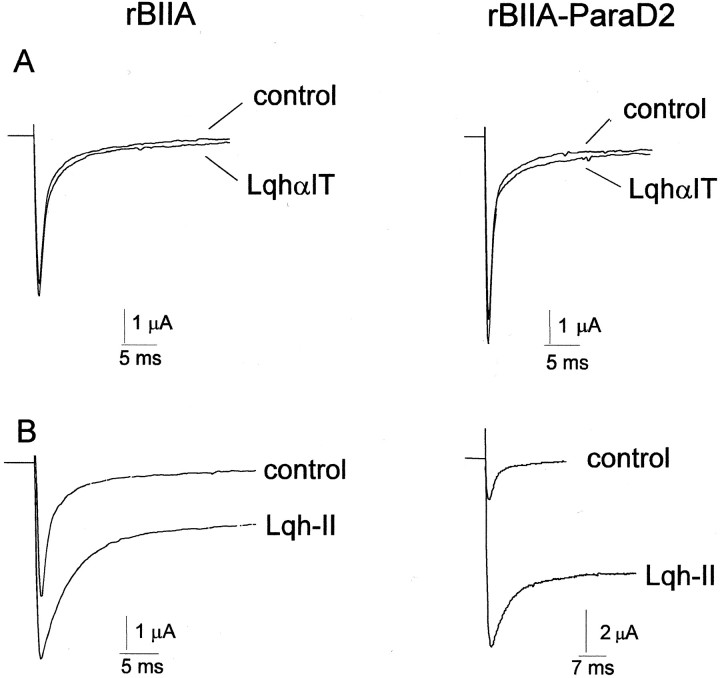
The ability of the excitatory anti-insect-selective scorpion toxin AahIT (Androctonus australis hector) to exclusively bind to and modify the insect voltage-gated sodium channel (NaCh) makes it a unique tool to unravel the structural differences between mammalian and insect channels, a prerequisite in the design of selective pesticides. To localize the insect NaCh domain that binds AahIT, we constructed a chimeric channel composed of rat brain NaCh alpha-subunit (rBIIA) in which domain-2 (D2) was replaced by that of Drosophila Para (paralytic temperature-sensitive). The choice of D2 was dictated by the similarity between AahIT and scorpion beta-toxins pertaining to both their binding and action and the essential role of D2 in the beta-toxins binding site on mammalian channels. Expression of the chimera rBIIA-ParaD2 in Xenopus oocytes gave rise to voltage-gated and TTX-sensitive NaChs that, like rBIIA, were sensitive to scorpion alpha-toxins and regulated by the auxiliary subunit beta(1) but not by the insect TipE. Notably, like Drosophila Para/TipE, but unlike rBIIA/beta(1), the chimera gained sensitivity to AahIT, indicating that the phyletic selectivity of AahIT is conferred by the insect NaCh D2. Furthermore, the chimera acquired additional insect channel properties; its activation was shifted to more positive potentials, and the effect of alpha-toxins was potentiated. Our results highlight the key role of D2 in the selective recognition of anti-insect excitatory toxins and in the modulation of NaCh gating. We also provide a methodological approach to the study of ion channels that are difficult to express in model expression systems.
Figures
References
-
- Auld VJ, Goldin AL, Krafte DS, Marshall J, Dunn J, Catterall WA, Lester HA, Davidson N, Dunn RJ. A rat brain Na+ channel α subunit with novel gating properties. Neuron. 1988;1:449–461. - PubMed
-
- Catterall WA. Cellular and molecular biology of voltage-gated sodium channels. Physiol Rev. 1992;72:S15–S48. - PubMed
-
- Catterall WA. Structure and function of voltage-gated ion channels. Annu Rev Biochem. 1995;64:493–531. - PubMed
Publication types
MeSH terms
Substances
LinkOut - more resources
Full Text Sources
Molecular Biology Databases
