


Bidirectional alterations in cerebellar synaptic transmission of tottering and rolling Ca2+ channel mutant mice
- PMID: 12040045
- PMCID: PMC6758816
- DOI: 10.1523/JNEUROSCI.22-11-04388.2002
Bidirectional alterations in cerebellar synaptic transmission of tottering and rolling Ca2+ channel mutant mice
Abstract
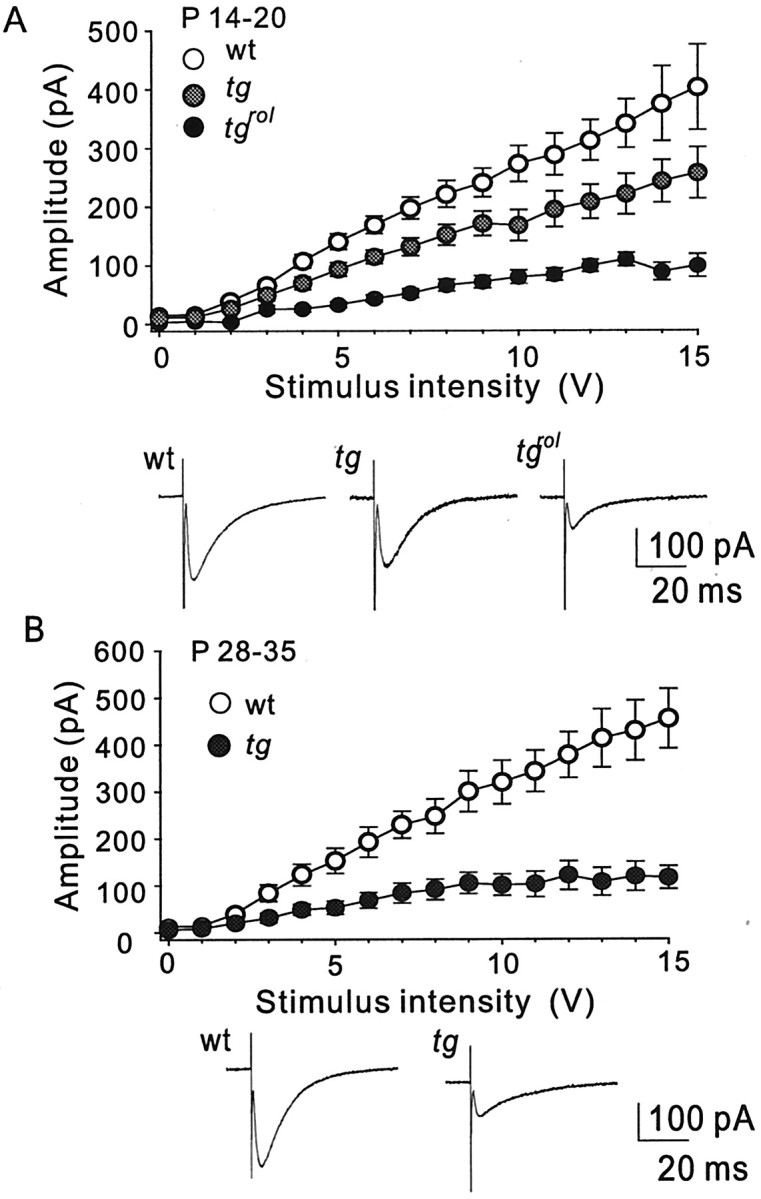
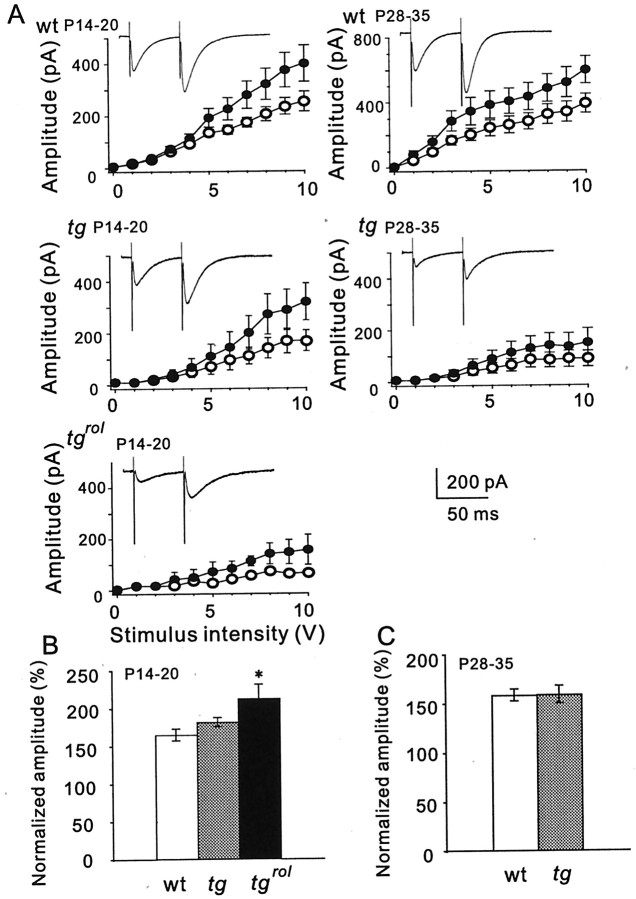
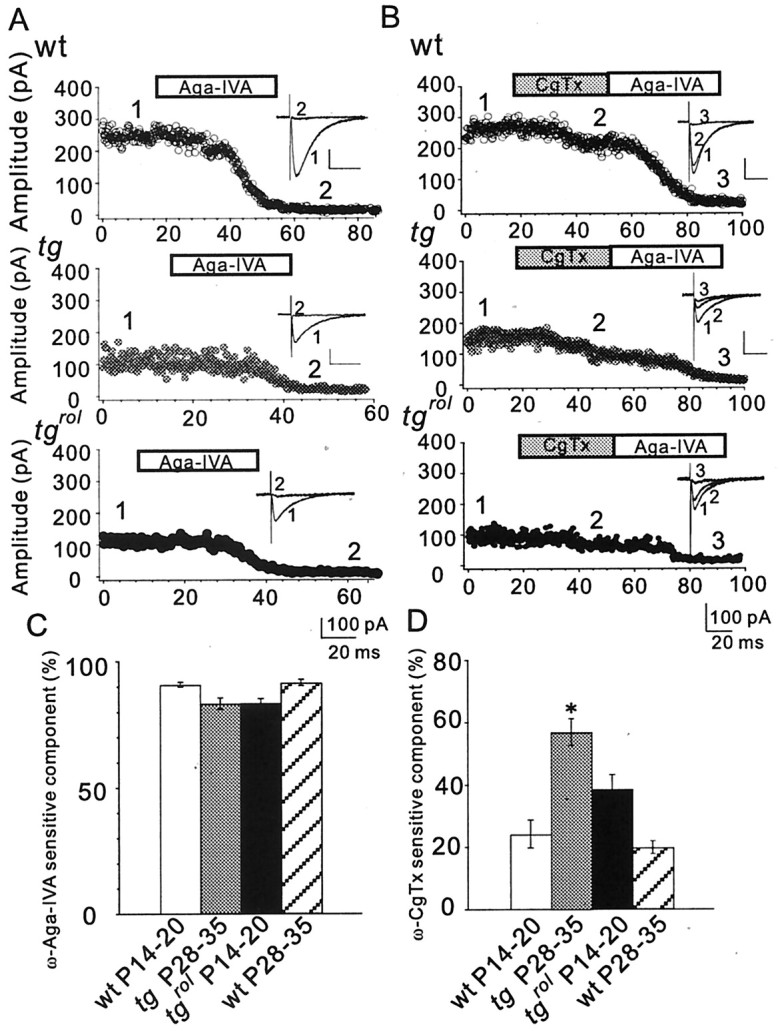
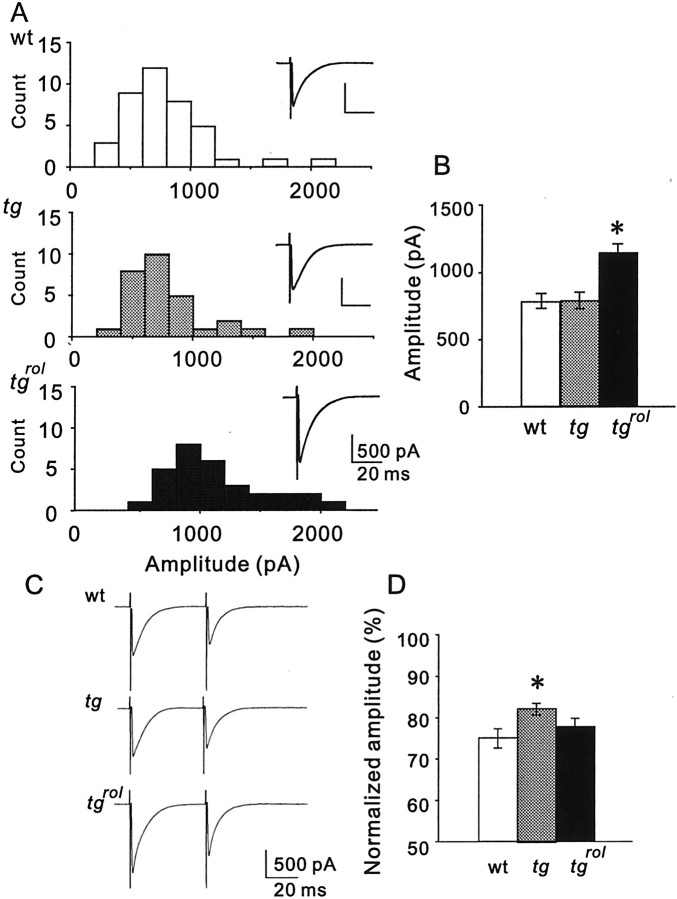
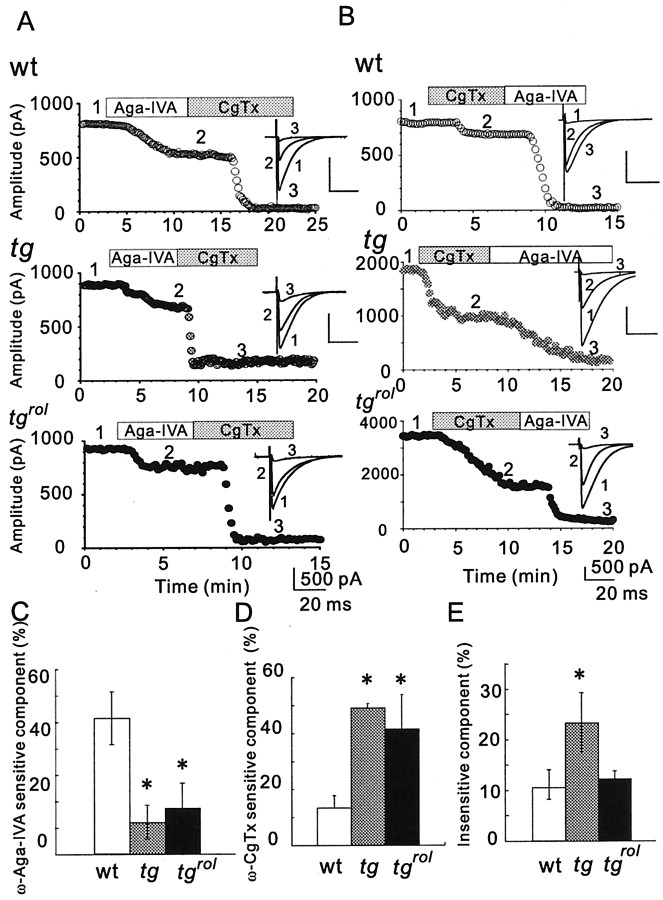
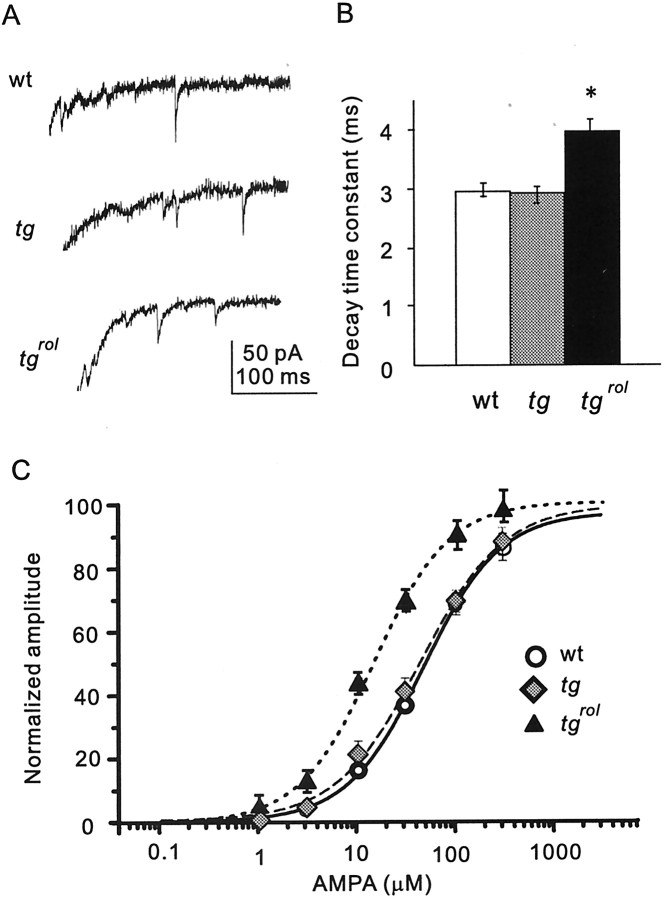
Hereditary ataxic mice, tottering (tg) and rolling Nagoya (tg(rol)), carry mutations in the P/Q-type Ca(2+) channel alpha(1A) subunit gene. The positions of the mutations and the neurological phenotypes are known, but the mechanisms of how the mutations cause the symptoms and how the different mutations lead to various onset and severity have remained unsolved. Here we compared fundamental properties of excitatory synaptic transmission in the cerebellum and roles of Ca(2+) channel subtypes therein among wild-type control, tg, and tg(rol) mice. The amplitude of EPSC of the parallel fiber-Purkinje cell (PF-PC) synapses was considerably reduced in ataxic tg(rol). Although the amplitude of the parallel fiber-mediated EPSC was only mildly decreased in young non-ataxic tg mice, it was drastically diminished in adult ataxic tg mice of postnatal day 28-35, showing a good correlation between the impairment of the PF-PC synaptic transmission and manifestation of ataxia. In contrast, the EPSC amplitude of the climbing fiber-Purkinje cell (CF-PC) synapses was preserved in tg, and it was even increased in tg(rol), which was associated with altered properties of the postsynaptic glutamate receptors. The climbing fiber-mediated EPSC was more dependent on other Ca(2+) channel subtypes in mutant mice, suggesting that such compensatory mechanisms contribute to maintaining the CF-PC synaptic transmission virtually intact. The results indicate that different mutations of the P/Q-type Ca(2+) channel not only cause the primary effect of different severity but also lead to diverse additional secondary effects, resulting in disruption of well balanced neural networks.
Figures
References
-
- Aiba A, Kano M, Chen C, Stanton ME, Fox GD, Herrup K, Zwingman TA, Tonegawa S. Deficient cerebellar long-term depression and impaired motor learning in mGluR1 mutant mice. Cell. 1994;79:377–388. - PubMed
-
- Altman J, Bayer SA. Development of the cerebellar system. CRC; Boca Raton, FL: 1997.
-
- Artalejo CR, Adams ME, Fox AP. Three types of Ca2+ channel trigger secretion with different efficacies in chromaffin cells. Nature. 1994;367:72–76. - PubMed
-
- Bourinet E, Soong TW, Sutton K, Slaymaker S, Mathews E, Monteil A, Zamponi GW, Nargeot J, Snutch TP. Splicing of α1A subunit gene generates phenotypic variants of P- and Q-type calcium channels. Nat Neurosci. 1999;2:407–415. - PubMed
Publication types
MeSH terms
Substances
LinkOut - more resources
Full Text Sources
Other Literature Sources
Molecular Biology Databases
Miscellaneous
