Effect of routine zinc supplementation on pneumonia in children aged 6 months to 3 years: randomised controlled trial in an urban slum
- PMID: 12052800
- PMCID: PMC115208
- DOI: 10.1136/bmj.324.7350.1358
Effect of routine zinc supplementation on pneumonia in children aged 6 months to 3 years: randomised controlled trial in an urban slum
Abstract
Objectives: To evaluate the effect of daily zinc supplementation in children on the incidence of acute lower respiratory tract infections and pneumonia.
Design: Double masked, randomised placebo controlled trial.
Setting: A slum community in New Delhi, India.
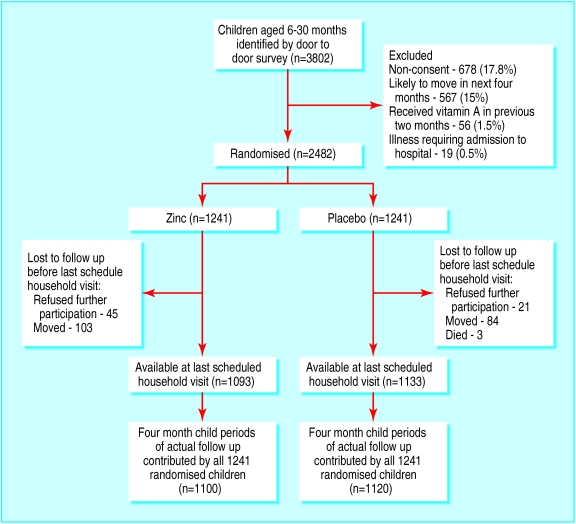
Participants: 2482 children aged 6 to 30 months.
Interventions: Daily elemental zinc, 10 mg to infants and 20 mg to older children or placebo for four months. Both groups received single massive dose of vitamin A (100 000 IU for infants and 200 000 IU for older children) at enrollment.
Main outcome measures: All households were visited weekly. Any children with cough and lower chest indrawing or respiratory rate 5 breaths per minute less than the World Health Organization criteria for fast breathing were brought to study physicians.
Results: At four months the mean plasma zinc concentration was higher in the zinc group (19.8 (SD 10.1) v 9.3 (2.1) micromol/l, P<0.001). The proportion of children who had acute lower respiratory tract infection during follow up was no different in the two groups (absolute risk reduction -0.2%, 95% confidence interval -3.9% to 3.6%). Zinc supplementation resulted in a lower incidence of pneumonia than placebo (absolute risk reduction 2.5%, 95% confidence interval 0.4% to 4.6%). After correction for multiple episodes in the same child by generalised estimating equations analysis the odds ratio was 0.74, 95% confidence interval 0.56 to 0.99.
Conclusions: Zinc supplementation substantially reduced the incidence of pneumonia in children who had received vitamin A.
References
-
- Black RE. Therapeutic and preventive effects of zinc on serious childhood infectious diseases in developing countries. Am J Clin Nutr. 1998;68(suppl 2):S476–S479. - PubMed
-
- Bhutta ZA, Black RE, Brown KN, Gardner JM, Gore S, Hidayat A, et al. Zinc Investigators' Collaborative Group. Prevention of diarrhoea and pneumonia by supplementation in children in developing countries: pooled analysis of randomized controlled trials. J Pediatr. 1999;155:689–697. - PubMed
-
- Bhandari N, Bahl R, Hambidge KM, Bhan MK. Increased diarrhoeal and respiratory morbidity in association with zinc deficiency—a preliminary report. Acta Paediatr. 1996;85:148–150. - PubMed
-
- Prasad AS. Clinical, biochemical, and pharmacological role of zinc. Annu Rev Pharmacol Toxicol. 1979;19:393–426. - PubMed
Publication types
MeSH terms
Substances
LinkOut - more resources
Full Text Sources
Medical